The US Department of Defense has entered into an $8.5-billion contract with Boeing to supply F-15IA combat aircraft to the Israeli Air Force. This agreement, part of a foreign military sales initiative, encompasses the assembly, integration, instrumentation, and testing of 25 airframes for the military, with an option to produce 25 additional jets.
Boeing will conduct the manufacturing and related operations at its St. Louis facility in Missouri, targeting a completion date by December 2035. Throughout the project, Boeing will collaborate with the Air Force Life Cycle Management Center located at Wright-Patterson Air Force Base in Ohio.
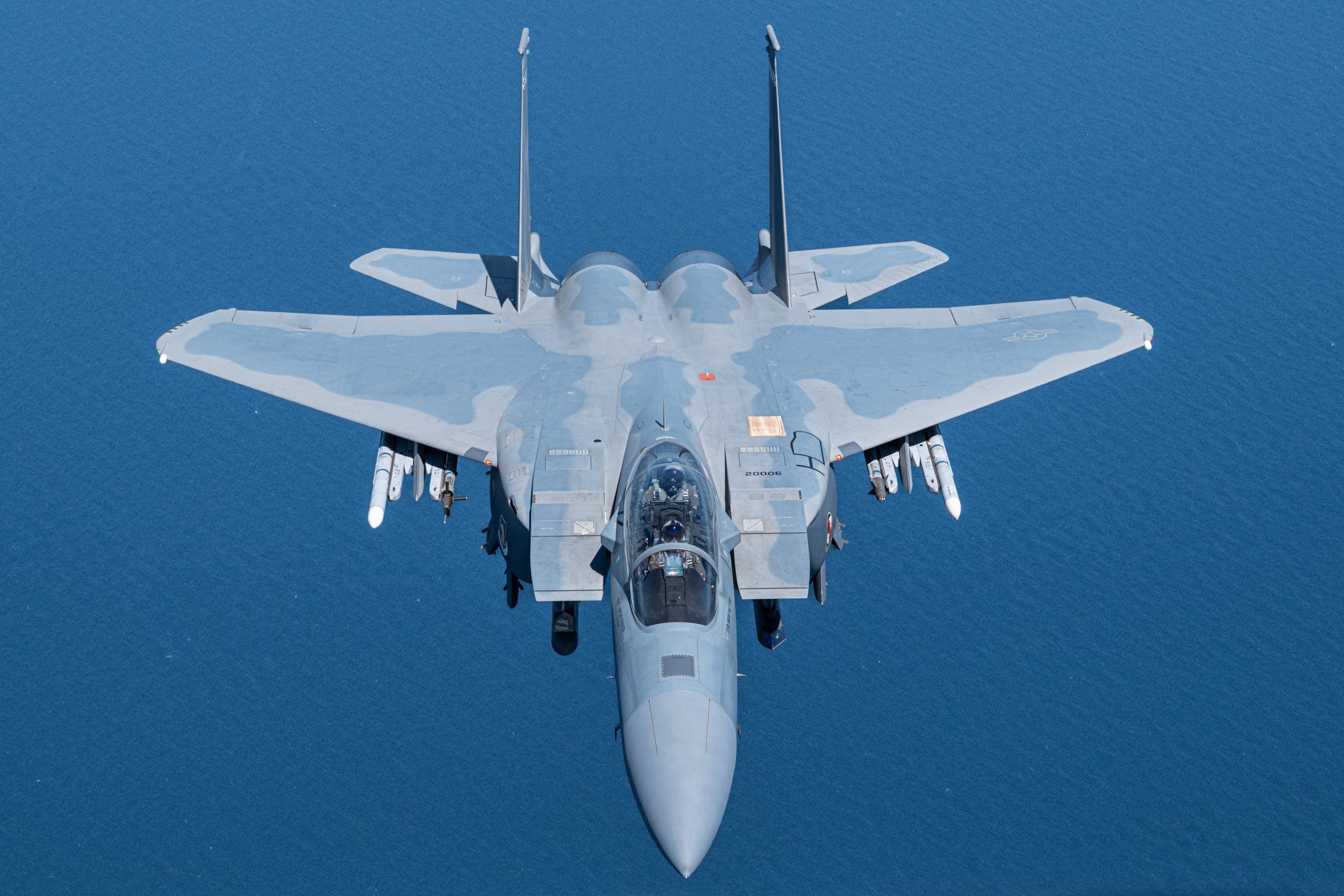
The F-15IA is Israel’s version of the F-15EX Eagle II fighter jet, which is intended to modernize the current fleet of F-15C/D aircraft used by the US Air Force and Air National Guard. This latest iteration of the F-15 is engineered to enhance interoperability among multiple generations of military aircraft, including the advanced F-22 and the latest F-35 models.
Israel’s interest in the F-15IA was first disclosed in 2023, coinciding with the government’s initiative to bolster its aerial capabilities in response to rising regional threats. Following this interest, Israel’s defense agency formalized a contract with Boeing for an initial batch of F-15IAs in 2024. This initial order includes provisions for up to 50 aircraft, with deliveries scheduled to commence in 2031 and an annual rollout of four to six platforms.
In terms of specifications, the F-15IA measures 64 feet in length and has a wingspan of 42 feet. Designed for versatility, it can be operated with additional personnel overseeing weapon systems. The aircraft is equipped with a 20-millimeter Gatling cannon and a variety of armaments, including air-to-air and air-to-surface missiles, as well as guided and unguided bombs.
Moreover, the F-15IA features cutting-edge technology, such as the Raytheon AN/APG-82(V)1 AESA all-weather radar and the Lockheed Martin AN/ASG-34(V)1 infrared search and track system. It also supports various targeting pods and electronic countermeasures to enhance combat effectiveness.
The jet is powered by two General Electric F110-GE-129 afterburning turbofans, enabling a top speed of Mach 2.5. With a range of 2,100 nautical miles and an operational ceiling of 60,000 feet, the F-15IA is poised to significantly upgrade Israel’s aerial combat capabilities.