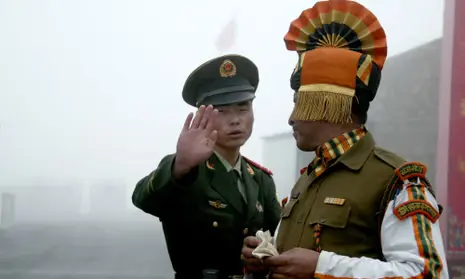
The United States Department of Defense’s latest annual report on China’s military capabilities has triggered significant alarm in India. The report reveals that Beijing regards Arunachal Pradesh with similar importance as Taiwan, listing it among its expanding array of so-called “core interests.”
Titled “Military and Security Developments Involving the People’s Republic of China,” the assessment draws parallels between China’s claims over Arunachal Pradesh and its stances on Taiwan, as well as disputed regions in the South China Sea and East China Sea. These assertions are integral to China’s overarching goal of realizing the “great rejuvenation of the Chinese nation.”
The report elaborates that Chinese leadership has expanded its definition of core interests to explicitly include territorial claims along the Line of Actual Control (LAC), with heightened focus on eastern regions such as Arunachal Pradesh and Sikkim. This territory has witnessed increased activities from the People’s Liberation Army (PLA), encompassing intensified patrols and enhanced military infrastructure.
Despite India and China having completed disengagement in previously contentious areas like Depsang and Demchok in October of the previous year, the report cautions against the assumption of meaningful de-escalation. Both nations remain heavily stationed along the extensive 3,488-km LAC, preparing for another winter deployment amid ongoing tensions.
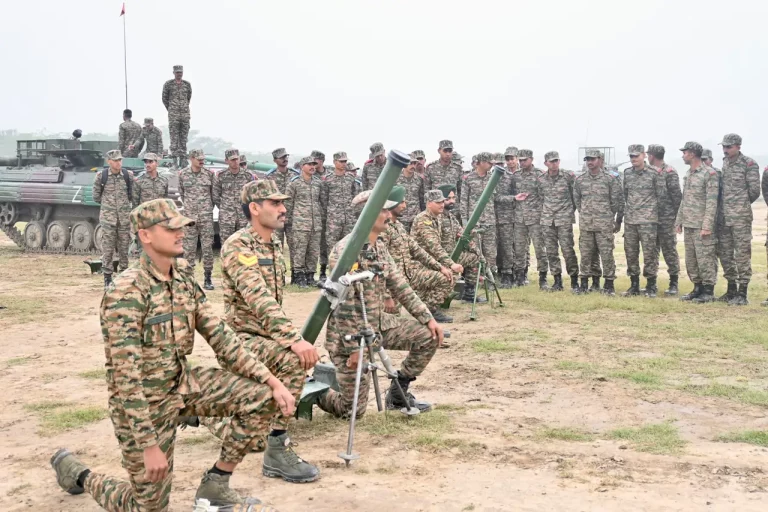
Indian officials mentioned in the report assert that Arunachal Pradesh, particularly the strategically vital Tawang sector—which China refers to as “South Tibet”—is well-defended. The Indian military maintains a strong presence, supported by artillery and integrated air and missile defense systems.
While the Pentagon acknowledges a slight thaw in diplomatic relations, illustrated by the meeting between Prime Minister Narendra Modi and President Xi Jinping during the BRICS Summit, it warns that deep-rooted mutual distrust and unresolved territorial disputes may hinder any meaningful improvement in bilateral relations. The report indicates that China could leverage this limited diplomatic progress to stabilize relations with India while simultaneously aiming to restrict the growth of U.S.-India defense collaborations, especially within frameworks such as the Quad.
The report’s implications extend beyond the LAC, revealing China’s accelerated military modernization, which projects a nuclear arsenal of over 1,000 warheads by 2030 and aspirations to field six aircraft carriers by 2035. Notably, China’s ongoing military support to Pakistan poses a strategic challenge for India, as it could potentially engage Indian forces on two fronts. The report highlights China’s provision of J-10C multirole fighters, advanced frigates, and sophisticated missiles to Pakistan, capabilities already observed in recent military operations.
Additionally, China’s expanding military presence in the Indian Ocean Region, including operational activity at the Ream Naval Base following Djibouti, raises further concerns regarding India’s maritime security.
In response to these challenges, India is focusing on fortifying its deterrence strategy through integrated air defense systems, the deployment of S-400 missile systems, BrahMos missile units, and the enhancement of border infrastructure in Arunachal Pradesh. This approach aligns with India’s emphasis on Atmanirbhar Bharat (self-reliant India) in defense, showcasing indigenous platforms and rapid-response formations as essential countermeasures.
Overall, the Pentagon’s findings underscore a pressing reality: China’s ambitions extend beyond Taiwan, incorporating Arunachal Pradesh into a broader revisionist agenda. For India, the task ahead is to navigate an increasingly complex regional security landscape, balancing diplomatic efforts with the vigilance necessary to ensure preparedness against evolving threats as it moves forward into 2026 and beyond.