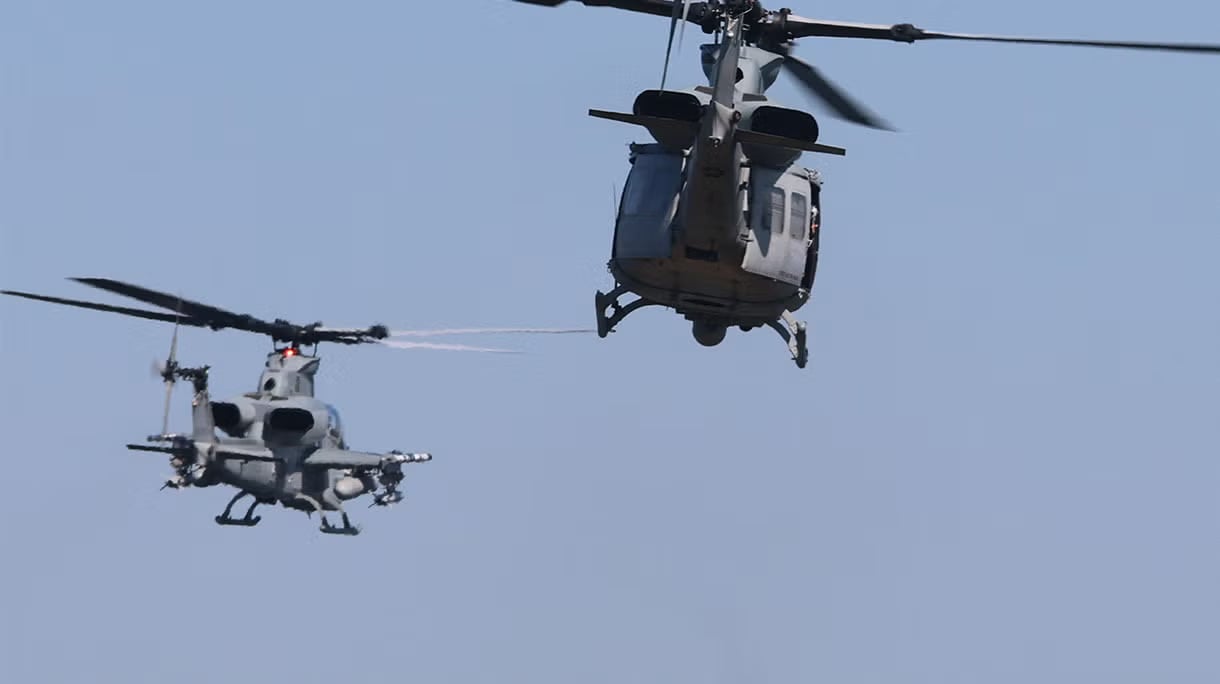
The US Marine Corps recently executed a series of low-altitude live-fire tests of the RedWolf launched-effect vehicle developed by L3Harris Technologies. These tests took place over the Atlantic Test Range and involved the deployment of RedWolf from an AH-1Z Viper helicopter, successfully striking a sea-based target. This operation forms part of the Marine Corps’ initiative to enhance its Long Range Attack Missile (LRAM) capabilities.
The LRAM program is aimed at delivering a long-range precision strike functionality that surpasses current rotary-wing munitions like the AGM-114R-4 Hellfire and the Joint Air-to-Ground Missile–Medium Range, which have maximum effective ranges of approximately 21 miles (34 kilometers) and 10 miles (16 kilometers), respectively.
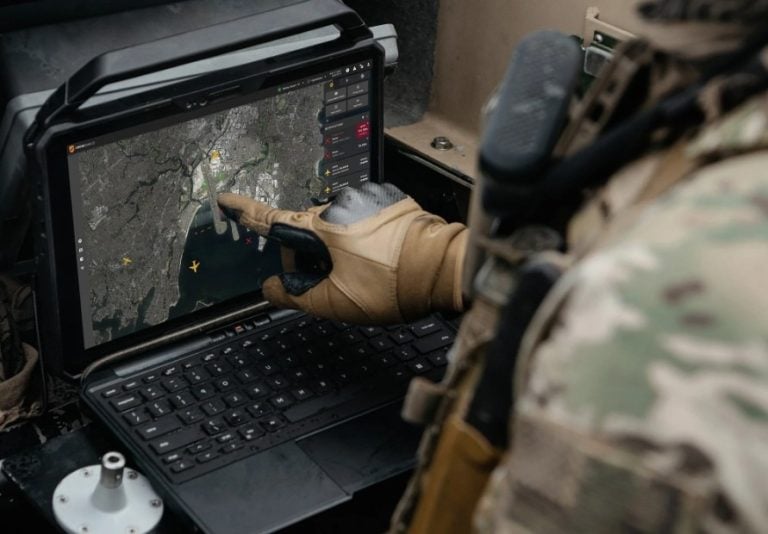
In addition to its striking capacity, the RedWolf showcased its role as a targeting and networking node during the exercise, indicating its versatility beyond mere kinetic applications. Notably, this test marked the inaugural occasion of a weapon system being controlled via a tablet-based device from a Marine Corps rotary-wing platform.
Ed Zoiss, President of L3Harris’ Space and Airborne Systems, remarked on the significance of the test, stating, “This test validated RedWolf’s advanced tracking and targeting capabilities, further demonstrating its ease of use and integration across platforms.” He further emphasized that the RedWolf systems could furnish warfighters with a distinct advantage in confronting increasingly sophisticated threats while avoiding direct engagement with enemy weapon systems.
The RedWolf family comprises launched effects designed for precision strikes and various non-kinetic roles, including communication relays, signal detection, electronic attacks, and decoy functions. This turbojet-powered, six-foot missile-class vehicle features fold-out fins for stability and can carry payloads up to 25 pounds (11.4 kilograms).
With a flight capability exceeding 200 nautical miles (approximately 230 miles or 370 kilometers) at low altitudes and an endurance of more than 60 minutes, RedWolf has the potential to operate beyond the reach of modern shipborne surface-to-air missile systems and coastal anti-access/area-denial networks. Its deployment in Pacific conflicts could temporarily disrupt warship radar systems, thereby enabling follow-up attacks from more substantial weaponry such as the Long-Range Anti-Ship Missile or the Joint Strike Missile.
Having undergone over 40 flight tests since 2020 across various platforms—ranging from uncrewed and crewed fixed-wing aircraft to ground-based launchers—RedWolf has demonstrated a significant level of technical readiness. With an estimated cost of about $300,000 per unit, L3Harris aims to produce up to 1,000 missiles annually.
This initiative aligns with the Pentagon’s broader strategy to enhance the stock of affordable long-range strike capabilities in the Indo-Pacific region, where existing systems like the Joint Air-to-Surface Standoff Missile–Extended Range and Tomahawk face limitations due to high costs and constrained production. The RedWolf system is expected to achieve initial operational capability by 2026, positioning it as an essential asset in future military endeavors.