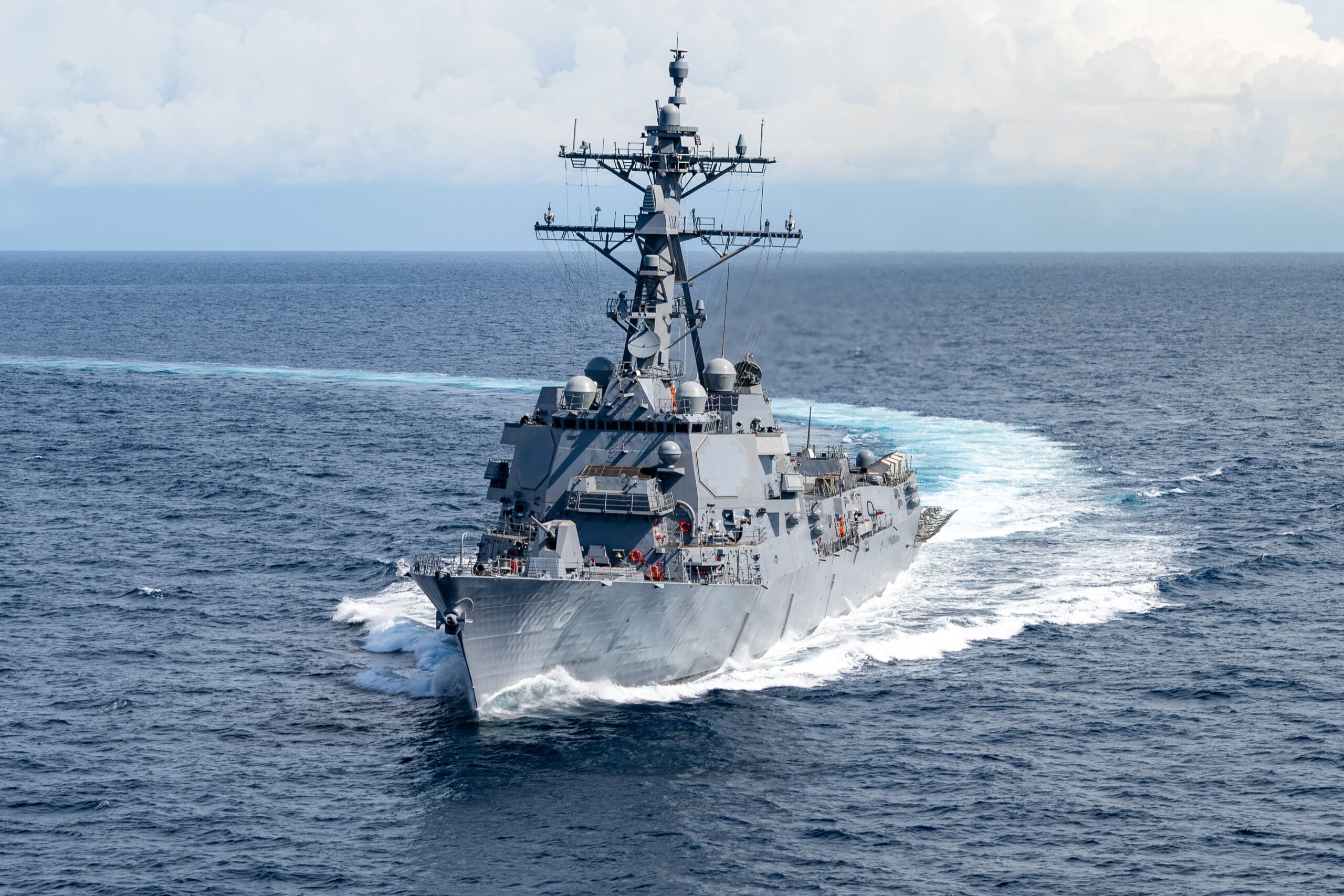
The US Navy has officially welcomed the USS Ted Stevens (DDG 128), marking the delivery of its 78th Arleigh Burke-class guided missile destroyer from HII Ingalls Shipbuilding. The vessel’s transfer signifies its preparedness for service, following extensive dock and sea trials that assessed its operational effectiveness and capabilities.
The USS Ted Stevens represents a key advancement in naval technology, being the third ship in the Arleigh Burke series to adopt the Flight III configuration. This modern design features the advanced AN/SPY-6 (V)1 radar system and the Aegis Baseline 10 combat system, both of which are crucial for countering contemporary threats faced by the Navy.
Named after a notable Alaskan politician known as the longest-serving Republican senator in American history, the USS Ted Stevens embodies a blend of political legacy and military prowess. Brian Blanchette, president of Ingalls Shipbuilding, highlighted the significance of the delivery, stating, “The delivery of Ted Stevens reflects the strong momentum of our destroyer program as we accelerate Flight III production and bring enhanced capabilities to the fleet.” He further emphasized the importance of the ship as a formidable asset in bolstering US maritime security for years to come.
Currently, HII has an active commitment to the construction of seven additional vessels in various stages under the Arleigh Burke program. With the delivery of the Ted Stevens, the total number of ships delivered by HII for this ongoing effort has reached 36.
The Arleigh Burke-class destroyers, designed by HII, feature a hull length ranging between 505 to 510 feet (154 to 155 meters), depending on the specific flight version. Each ship is powered by three Allison T56 generators, enabling a maximum operational speed of 30 knots (35 miles or 56 kilometers per hour) and a range of approximately 4,400 nautical miles (5,063 miles or 8,149 kilometers).
In terms of armament, the USS Ted Stevens is equipped with a comprehensive range of weaponry, including light and heavy machine guns, torpedoes, a variety of missiles, naval artillery, decoy countermeasures, and electronic warfare solutions. Additionally, it has the capacity to accommodate around 300 personnel, a naval helicopter, and several small rigid-hull inflatable boats, further enhancing its operational versatility.