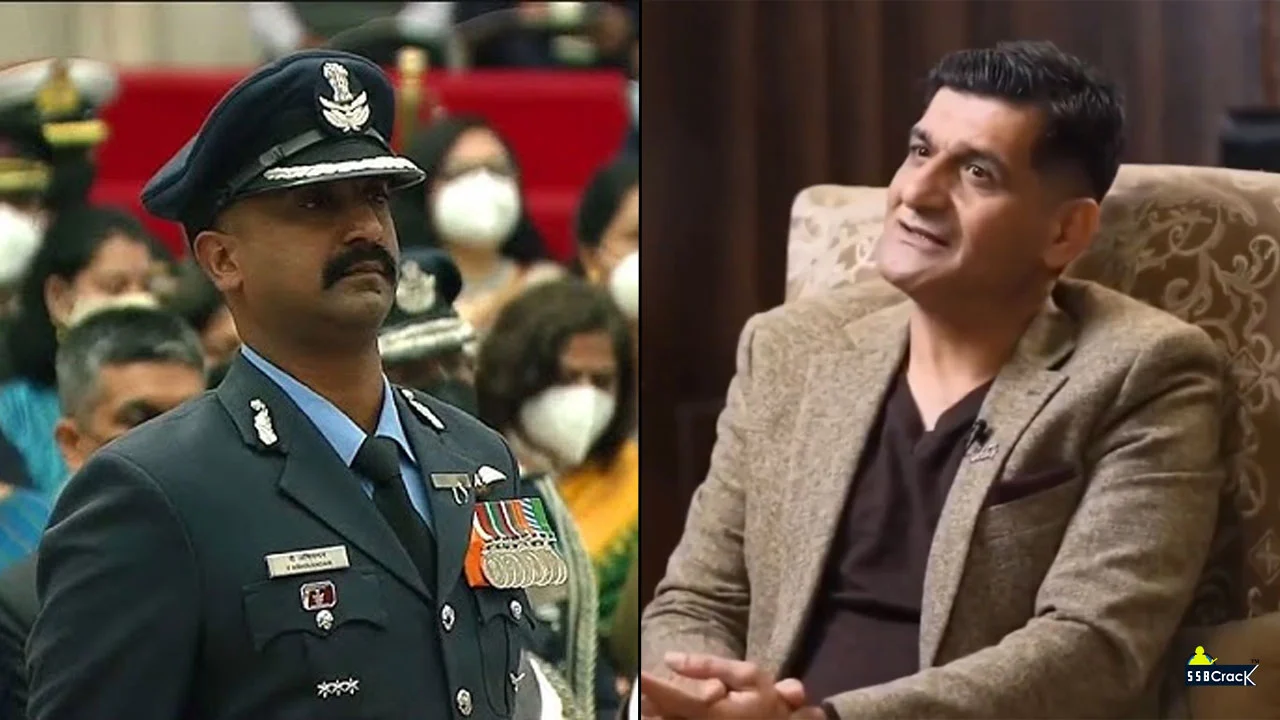
A video featuring Lieutenant Colonel (Retired) Umair Bangash, a former commander in the Pakistan Army’s Special Services Group, has revived discussions surrounding the aerial confrontation on February 27, 2019, between Indian and Pakistani forces. In the footage, Bangash recalls seeing three parachutes descending during the conflict, one of which he identifies as belonging to Indian Wing Commander Abhinandan Varthaman. This reference has been interpreted by some Indian media outlets and analysts as potential corroboration of claims that a Pakistani F-16 was downed in the skirmish.
The backdrop to this incident is rooted in escalating tensions that peaked following India’s airstrike on February 26, 2019, targeting what it claimed were terrorist camps in Balakot. This action was a direct response to the suicide attack in Pulwama earlier that month, which resulted in the deaths of 40 Indian paramilitary personnel. The subsequent aerial confrontation occurred when Pakistani aircraft breached Indian airspace, leading to a dogfight in which India maintained that its MiG-21 Bison, piloted by Varthaman, shot down a Pakistani F-16 before being hit himself, forcing him to eject and be captured.
Pakistan, however, has consistently denied losing any F-16s during the engagement, asserting that it downed two Indian jets, despite publicly acknowledging only the wreckage of Varthaman’s MiG-21. The Indian Air Force has provided various forms of evidence to support its F-16 downing claim, including radar data and missile fragments, specifically an AIM-120 AMRAAM compatible with F-16s. This evidence led the United States to initiate an investigation into potential violations of end-user agreements regarding the use of the aircraft. Despite this, the numbers surrounding Pakistan’s F-16 fleet have remained contested, with no independent verification conclusively settling the matter.
In the video, Bangash illustrates the immediate aftermath of the aerial conflict. He notes the visibility of three parachutes, confirming one belonged to Varthaman. His emotional recounting highlights the charged atmosphere during the engagement. Indian analysts have suggested that the other two parachutes might indicate ejections from Pakistani aircraft, including the controversial F-16, with reports that one pilot may have died from injuries sustained in the incident. This interpretation resonates with earlier claims suggesting a Pakistani pilot was either hospitalized or killed, further complicating the narrative.
As the video gained traction on social media, Indian commentators positioned it as an inadvertent acknowledgment that could undermine Pakistan’s stance. Various analysts, including retired officers from the Indian Air Force, have cited this incident alongside existing evidence, such as open-source intelligence, to support India’s narrative regarding the F-16.
From the Pakistani side, no official comments have emerged in response to the video clip thus far. Historically, Pakistani authorities have labeled similar allegations as propaganda, consistently asserting all F-16s remain accounted for and attributing any discrepancies to misinformation. While Bangash’s detailed account offers insights into the aerial skirmish, it does not explicitly address the loss of an F-16 or any aircraft, focusing instead on the broader context of the capture operation.