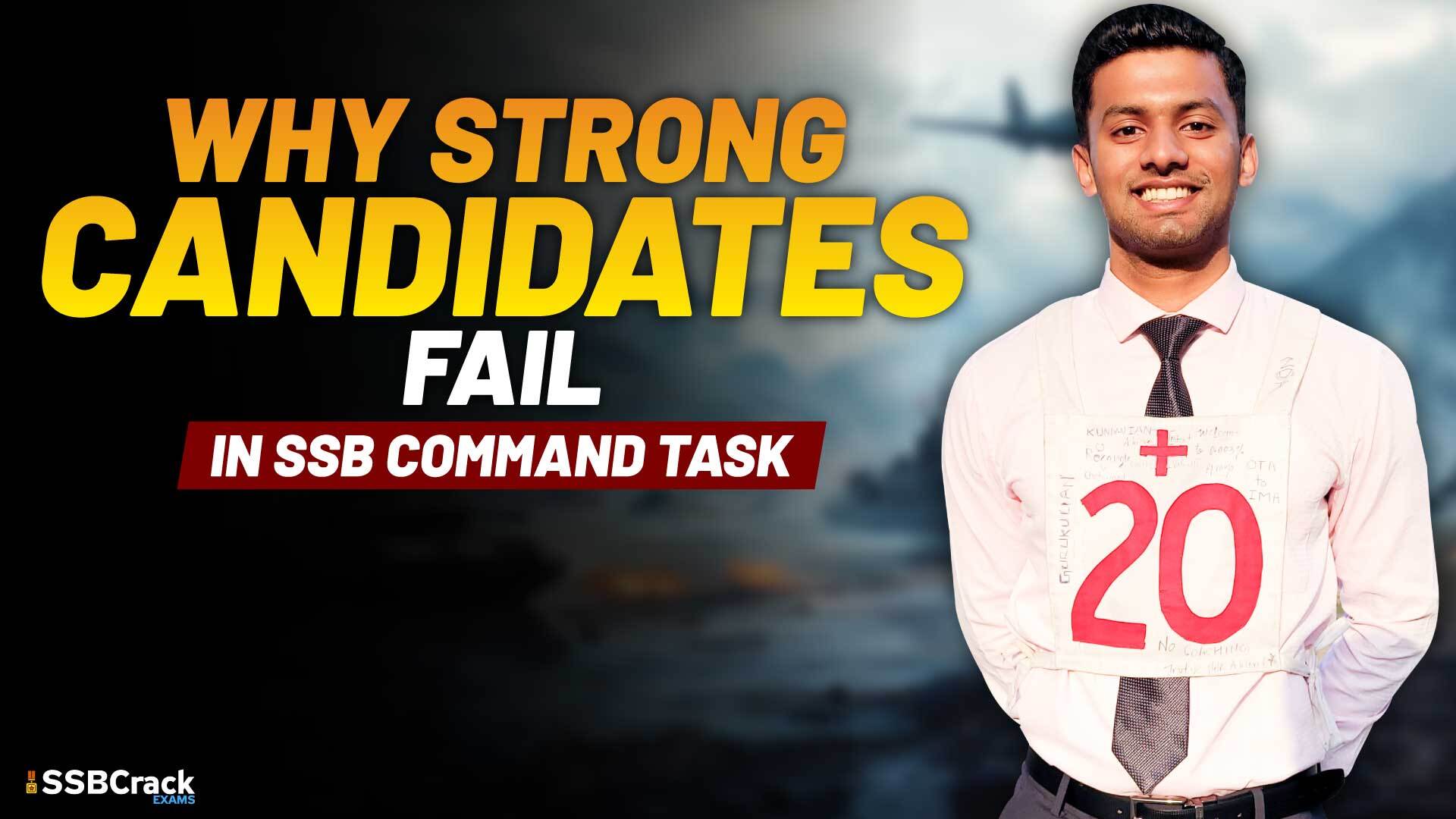
Command Task is different.
In group tasks, you can:
- Blend into momentum
- Ride collective energy
- Hide minor flaws
In Command Task:
It’s just you.
Your thinking.
Your leadership.
Your composure.
And this is where “strong” candidates often collapse.
Let’s understand why.
1️⃣ They Rely on Energy More Than Structure
Strong candidates are usually:
- Physically active
- Highly vocal
- Dominant in group tasks
In Command Task, physical strength is irrelevant.
The obstacle does not reward speed.
It rewards planning.
Strong candidates often:
- Start executing too early
- Touch materials impulsively
- Skip silent observation time
GTO notices immediately:
Action without structured thinking.
2️⃣ They Confuse Control With Leadership
In group tasks, dominance sometimes works.
In Command Task, dominance backfires.
Strong candidates:
- Over-command helpers
- Interrupt suggestions
- Avoid listening
Leadership in Command Task is measured through:
Calm authority.
Not loud instruction.
GTO observes:
Do subordinates look comfortable under you?
3️⃣ Ego Interferes When Plan Fails
This is the biggest trap.
When a structure fails:
Weak candidate feels nervous.
Strong candidate feels challenged.
Strong candidates often:
- Defend their plan
- Try same structure again
- Resist changing idea
This shows rigidity.
Real officers adapt quickly.
Command Task is designed to test flexibility under ego pressure.
4️⃣ They Overcomplicate the Structure
Because they want to “impress,”
Strong candidates sometimes create:
- Complex plank arrangements
- Unnecessary rope angles
- Multi-step risky structures
Simple, stable structures are stronger.
Overengineering shows:
Trying to display intelligence rather than applying it.
5️⃣ They Ignore Helper Psychology
Strong candidates focus on obstacle.
They forget helpers are being observed too.
GTO watches:
- Do you respect helpers?
- Do you use polite tone?
- Do you acknowledge effort?
- Do you maintain eye contact?
If helper feels commanded, not guided,
It signals authoritarian behaviour.
6️⃣ They Rush the Explanation
Confident candidates assume clarity.
So they explain quickly.
Helpers look confused.
GTO notes:
“Poor communication under responsibility.”
Command Task tests clarity more than speed.
7️⃣ They Carry Pressure to Perform
Strong candidates know they performed well in group tasks.
So they feel:
“I must maintain image.”
That internal pressure creates:
- Slight voice tension
- Faster speech
- Quick decisions
- Reduced listening
And that subtle stress shift is visible.
Command Task magnifies micro-behaviour.
8️⃣ They Avoid Risk Because of Overconfidence
Sometimes strong candidates:
Play too safe.
They avoid creative structure because:
“What if it fails?”
So they stick to basic structure,
Even if it’s inefficient.
This shows risk aversion.
Military leadership requires calculated risk-taking.
9️⃣ They Try to Impress the GTO Directly
Eye contact shifts from obstacle to GTO.
Body language becomes performance-based.
They look for approval signals.
That reduces natural behaviour.
Command Task rewards authenticity, not performance.
🔟 They Forget That Silence Is Powerful
Strong candidates feel silence is weakness.
So they keep talking.
But powerful leaders:
- Pause
- Observe
- Think before speaking
In Command Task, 5 seconds of silence before giving instruction looks mature.
Continuous talking looks insecure.
1️⃣1️⃣ They Don’t Step Back to Re-Evaluate
When structure partially works but feels unstable:
Strong candidates push forward.
Weak candidates panic.
Officer candidate steps back and says:
“Let’s reassess.”
That reassessment moment separates maturity from dominance.
The Real Reason Strong Candidates Fail
Because they mistake:
Performance for leadership.
Confidence for maturity.
Speed for intelligence.
Control for authority.
Command Task strips away group influence.
It exposes:
- Decision depth
- Ego balance
- Emotional control
- Clarity under responsibility
What Actually Impresses in Command Task
Not strength.
Not dominance.
Not perfection.
But:
- Calm tone
- Logical sequence
- Adaptive thinking
- Respectful command
- Ownership of mistakes
Even if structure partially fails,
Balanced behaviour leaves strong impression.
The Officer Insight
An officer in field command:
- Doesn’t shout unnecessarily
- Doesn’t defend failed plans
- Doesn’t overcomplicate solutions
- Doesn’t chase approval
He:
Observes.
Plans.
Explains clearly.
Executes calmly.
Adapts quickly.
That’s what Command Task measures.
Final Message
If you are a strong candidate, remember:
Your biggest threat is not weakness.
It is uncontrolled strength.
Balance your confidence.
Slow your execution.
Listen more.
Simplify structure.
Adapt quickly.
Then your Command Task will reflect true leadership —
Not just visible dominance.