




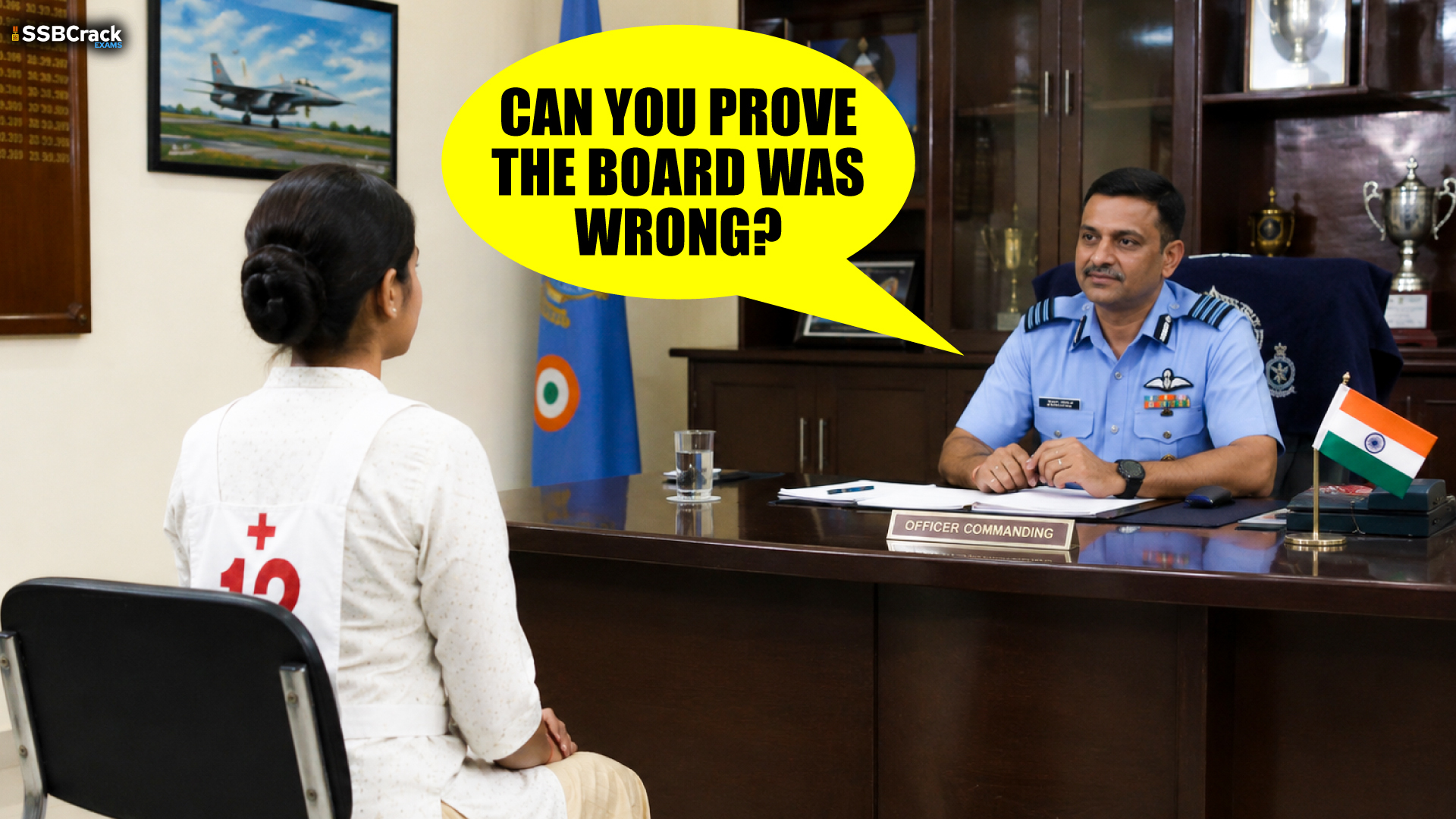
Many candidates clear Stage-I screening, perform all psychological tests, GTO tasks, and personal interviews successfully, yet find themselves conference out on the final day. This can be one of the most confusing experiences because candidates often come very close to recommendation but fall short in certain areas.
If you have been conference out in a previous SSB, assessors in your next attempt may ask questions to understand your learning attitude, self-awareness, consistency of personality, and the efforts you have made to improve yourself.
In this article, we will discuss 20 important interview questions frequently asked to conference-out candidates, understand why they are asked, how to answer them, and look at sample responses that can help you prepare confidently for your next SSB interview.
1. You were conference out in your previous SSB. What do you think was the reason?
Why it is asked
To assess self-awareness, maturity, and ability to objectively evaluate your performance.
How to answer
- Avoid blaming assessors.
- Mention possible shortcomings.
- Explain improvement efforts.
Sample Answer
“I believe I was close to recommendation but may not have demonstrated sufficient consistency in leadership and initiative during some group tasks. Since then, I have actively participated in organizing college events and team activities to improve these qualities.”
2. How did you feel when you were conference out?
Why it is asked
To assess emotional stability and resilience.
How to answer
- Be honest.
- Show emotional control.
- Focus on learning.
Sample Answer
“I was disappointed because I had reached the final stage. However, I viewed it as constructive feedback and focused on identifying areas where I could further improve myself.”
3. What lessons did you learn from your previous SSB?
Why it is asked
To evaluate learning ability.
How to answer
Mention practical lessons and personal growth.
Sample Answer
“I learned the importance of consistency across all tasks, natural behavior, effective communication, and taking initiative without dominating others.”
4. What specific improvements have you made since your conference out?
Why it is asked
To verify growth and self-development.
How to answer
Mention measurable actions.
Sample Answer
“I have improved my communication skills, increased my participation in group activities, enhanced my physical fitness, and developed better awareness of current affairs through regular reading.”
5. How many attempts have you appeared for and what was your best performance?
Why it is asked
To assess experience and self-evaluation.
How to answer
Be factual and realistic.
Sample Answer
“This is my third attempt. I believe my previous conference-out attempt was my best because I performed confidently throughout the testing process and gained valuable exposure.”
6. Which task do you think you performed best in during your last SSB?
Why it is asked
To evaluate confidence and self-assessment.
How to answer
Mention genuine strengths.
Sample Answer
“I believe I performed best in group planning exercise because I contributed practical solutions and worked effectively with the group to reach consensus.”
7. Which task do you think could have been better?
Why it is asked
To assess honesty and introspection.
How to answer
Accept shortcomings positively.
Sample Answer
“I could have shown greater initiative during some outdoor group tasks. Since then, I have consciously worked on taking responsibility in team activities.”
8. Why do you still want to join the Armed Forces after being conference out?
Why it is asked
To assess motivation and commitment.
How to answer
Focus on service, leadership, and values.
Sample Answer
“My desire to serve the nation and lead people remains unchanged. The conference-out experience strengthened my determination because it showed me how close I was and motivated me to improve further.”
9. Did you receive any indication during conference about your performance?
Why it is asked
To assess perception and maturity.
How to answer
State facts without assumptions.
Sample Answer
“No direct feedback was given. However, based on my overall performance, I felt that I needed greater consistency in demonstrating initiative and leadership.”
10. What was your conference experience like?
Why it is asked
To evaluate observation skills and confidence.
How to answer
Describe objectively.
Sample Answer
“The conference lasted around three minutes. The officers asked about my experience, comfort level during tasks, and future plans. I answered honestly and confidently.”
11. Why should we recommend you this time?
Why it is asked
To assess self-belief and officer potential.
How to answer
Connect improvements with OLQs.
Sample Answer
“I have become more confident, responsible, and effective in team situations. I have actively worked on my weaknesses while maintaining my strengths, making me a stronger candidate than before.”
12. What Officer Like Quality have you improved the most?
Why it is asked
To assess awareness of OLQs.
How to answer
Support with examples.
Sample Answer
“I have significantly improved my organizing ability. Recently, I coordinated a college seminar involving multiple teams, managed resources, and ensured timely execution.”
13. What is your biggest weakness even today?
Why it is asked
To evaluate honesty and improvement mindset.
How to answer
Mention a manageable weakness and improvement plan.
Sample Answer
“I sometimes hesitate before taking decisions in unfamiliar situations. To improve, I consciously place myself in situations requiring quicker decision-making and leadership.”
14. How have you improved your leadership qualities?
Why it is asked
To verify practical development.
How to answer
Give real examples.
Sample Answer
“I volunteered to lead project teams in college, coordinated event committees, delegated responsibilities effectively, and ensured team objectives were achieved.”
15. What would you do if you are conference out again?
Why it is asked
To assess perseverance and emotional stability.
How to answer
Remain positive and realistic.
Sample Answer
“I would analyze my performance honestly, continue improving myself, and prepare for future opportunities while pursuing my academic and professional goals.”
16. What changes have occurred in your life since your last SSB?
Why it is asked
To assess maturity and progress.
How to answer
Highlight meaningful achievements.
Sample Answer
“I completed an internship, participated in community service activities, improved my fitness level, and gained valuable experience in team coordination and responsibility.”
17. How do your friends describe you?
Why it is asked
To assess social adaptability and self-image.
How to answer
Mention qualities supported by examples.
Sample Answer
“My friends describe me as dependable, cooperative, and calm under pressure because I often help coordinate group activities and assist them during challenging situations.”
18. Tell me about a failure after your previous conference out and what you learned from it.
Why it is asked
To assess resilience and learning orientation.
How to answer
Focus on lessons learned.
Sample Answer
“I was unable to secure a leadership position in a college club election. I analyzed my campaign approach, improved my communication with peers, and became more effective in influencing and motivating others.”
19. Which OLQ do you consider your strongest?
Why it is asked
To assess confidence and self-awareness.
How to answer
Provide evidence.
Sample Answer
“My strongest OLQ is responsibility. Whether in academics, family commitments, or team projects, I consistently complete assigned tasks and ensure objectives are achieved.”
20. What does becoming an officer mean to you?
Why it is asked
To assess understanding of military leadership.
How to answer
Focus on service and responsibility.
Sample Answer
“Becoming an officer means accepting responsibility for people, making decisions under pressure, leading by example, and serving the nation with integrity, courage, and commitment.”
Additional Conference-Out Candidate Tips
DO
✔ Demonstrate growth since your previous attempt.
✔ Be honest about strengths and weaknesses.
✔ Use real-life examples.
✔ Show resilience and determination.
✔ Maintain a positive attitude toward previous results.
✔ Reflect genuine Officer Like Qualities through your experiences.
DON’T
✘ Say that assessors made a mistake.
✘ Claim that luck was responsible.
✘ Give rehearsed or artificial answers.
✘ Overemphasize coaching.
✘ Pretend to possess qualities you cannot support with examples.
✘ Speak negatively about previous SSB experiences.
Questions You May Ask Yourself Before the Next SSB
- What have I improved since my last attempt?
- Which OLQs have become stronger?
- How have I demonstrated leadership recently?
- Have I taken greater responsibility in real life?
- Can I provide examples for every quality I claim to possess?
- What lessons have I genuinely learned from my conference out?
Conclusion
Being conference out means that you were assessed in depth by the Psychologist, GTO, and Interviewing Officer and reached the final stage of consideration. It is not a rejection of your potential; it simply indicates that certain qualities needed further development before recommendation.
Candidates who are eventually recommended often share one common trait—they learn from every attempt, improve consistently, and return stronger. Focus on developing genuine Officer Like Qualities in your daily life rather than preparing scripted answers. The more authentic your personality becomes, the more naturally it will reflect during the SSB process.


