




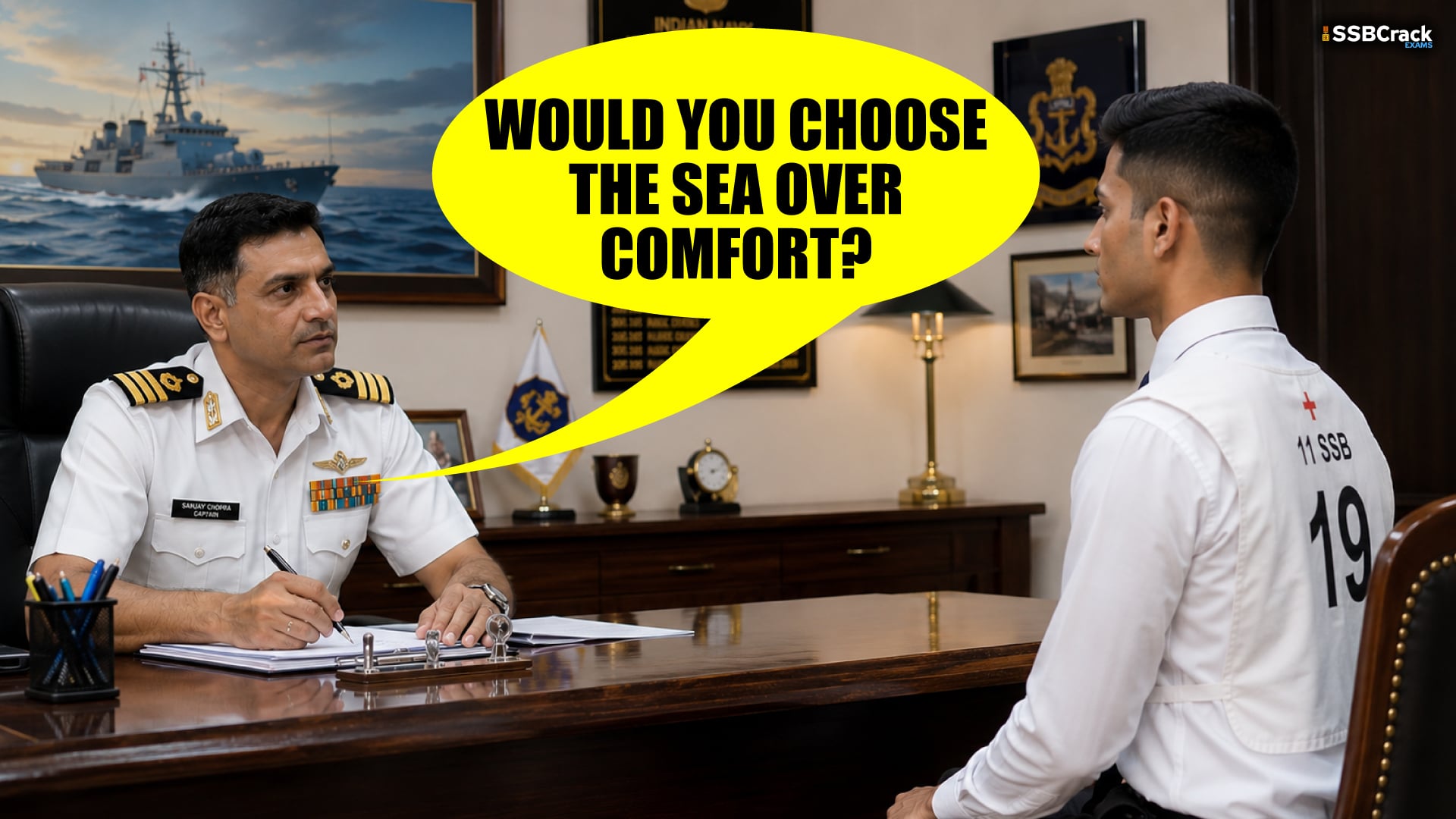
The Indian Navy seeks individuals who can lead with courage, think clearly under pressure, adapt to life at sea, and place duty above personal comfort. During the SSB Interview, assessors are not merely evaluating your knowledge of ships, submarines, or maritime affairs—they are trying to determine whether you possess the mindset, character, and leadership qualities required of a future naval officer.
Here are 20 important SSB Interview questions that every Indian Naval Academy aspirant should be prepared to answer.
1. What attracts you more—the sea, the uniform, or the responsibility?
Why It Is Asked:
To understand your genuine motivation for joining the Navy.
How to Answer:
Focus on responsibility, leadership, and service rather than glamour.
Sample Answer:
“Sir, while the uniform and life at sea are certainly attractive, what motivates me most is the responsibility of serving the nation and leading sailors. The opportunity to contribute to India’s maritime security gives a deeper sense of purpose.”
2. Have you ever spent several days away from your family? How did you handle it?
Why It Is Asked:
Naval officers often spend long periods away from home.
How to Answer:
Demonstrate independence, emotional maturity, and adaptability.
Sample Answer:
“During an NCC camp, I stayed away from my family for several days. I focused on learning, teamwork, and making the best use of the opportunity, which helped me become more self-reliant.”
3. Why Indian Navy and not Merchant Navy?
Why It Is Asked:
To assess whether you understand the difference between service and commercial professions.
How to Answer:
Emphasize service to the nation and leadership responsibilities.
Sample Answer:
“The Merchant Navy is primarily a commercial profession, whereas the Indian Navy focuses on national security, leadership, and service. I am motivated by the opportunity to serve the country and contribute to its defence.”
4. If you are deployed at sea during an important family event, what will you do?
Why It Is Asked:
To evaluate commitment to duty.
How to Answer:
Show emotional balance and professional dedication.
Sample Answer:
“I would naturally feel disappointed about missing the event, but as a naval officer, duty must come first. My family would understand the responsibilities associated with military service.”
5. What qualities make a good naval officer different from a good army officer?
Why It Is Asked:
To assess awareness of the naval environment.
How to Answer:
Discuss the unique challenges of maritime operations.
Sample Answer:
“Both require leadership and courage, but naval officers must also possess strong technical competence, patience, adaptability, and the ability to operate effectively in isolated maritime conditions.”
6. How would your friends describe your behavior during a crisis?
Why It Is Asked:
To assess your composure under pressure.
How to Answer:
Support your answer with a real-life example.
Sample Answer:
“My friends would describe me as calm and practical. During a college event when arrangements failed at the last moment, I helped reorganize tasks and ensured the event continued smoothly.”
7. What do you know about India’s maritime importance?
Why It Is Asked:
To test awareness of national security and maritime affairs.
How to Answer:
Mention trade routes, strategic location, and economic importance.
Sample Answer:
“India’s strategic position in the Indian Ocean makes maritime security extremely important because a significant portion of global trade and India’s energy imports pass through these sea routes.”
8. If you were commanding a ship and communication with headquarters was lost, what would you do?
Why It Is Asked:
To assess independent decision-making.
How to Answer:
Focus on mission objectives, safety, and established procedures.
Sample Answer:
“I would assess the situation, follow standing orders, prioritize crew safety, and make informed decisions based on the mission objectives until communication is restored.”
9. What is more important on a warship: Technology or Teamwork?
Why It Is Asked:
To understand your leadership philosophy.
How to Answer:
Acknowledge both but emphasize the human element.
Sample Answer:
“Technology is essential, but teamwork is more important because even the most advanced systems depend on competent and coordinated personnel to operate effectively.”
10. How comfortable are you living in confined spaces for long durations?
Why It Is Asked:
To assess adaptability to naval life.
How to Answer:
Show readiness to adjust and focus on objectives.
Sample Answer:
“I understand that life onboard ships requires adjustment. I believe my discipline, adaptability, and commitment to the mission will help me adapt successfully.”
11. Which naval leader or admiral inspires you the most?
Why It Is Asked:
To evaluate awareness of naval history and role models.
How to Answer:
Choose a leader you genuinely admire.
Sample Answer:
“Admiral Arun Prakash inspires me because of his distinguished service, leadership qualities, and significant contributions to Indian naval aviation.”
12. If your junior makes a mistake that could endanger the ship, how would you handle it?
Why It Is Asked:
To assess leadership and accountability.
How to Answer:
Focus on correction, learning, and safety.
Sample Answer:
“I would immediately address the situation to ensure safety, identify the cause of the mistake, and provide guidance and training to prevent recurrence.”
13. What would be the biggest challenge for you in naval life?
Why It Is Asked:
To assess self-awareness.
How to Answer:
Acknowledge a realistic challenge while showing determination.
Sample Answer:
“Being away from family for extended periods may be challenging initially, but I believe my sense of duty and adaptability will help me overcome it.”
14. How do you think naval officers contribute during peacetime?
Why It Is Asked:
To evaluate understanding of the Navy’s broader role.
How to Answer:
Mention humanitarian and security operations.
Sample Answer:
“Naval officers contribute through maritime surveillance, disaster relief, anti-piracy operations, humanitarian assistance, search-and-rescue missions, and international naval cooperation.”
15. Imagine a severe storm damages your ship’s systems. How would you maintain morale?
Why It Is Asked:
To assess leadership during adversity.
How to Answer:
Emphasize communication and confidence.
Sample Answer:
“I would communicate honestly, assign responsibilities clearly, maintain discipline, and lead by example to ensure confidence and teamwork among the crew.”
16. What is one thing about naval life that excites you and one thing that concerns you?
Why It Is Asked:
To assess realistic expectations.
How to Answer:
Be honest while demonstrating maturity.
Sample Answer:
“The opportunity to operate in challenging maritime environments excites me. Long periods away from family are a concern, but I am prepared to accept that responsibility.”
17. If a sailor openly disagrees with your order, what would you do?
Why It Is Asked:
To assess authority and communication skills.
How to Answer:
Balance discipline with understanding.
Sample Answer:
“If immediate action is required, I would ensure the order is followed. Later, I would discuss the issue with the sailor, understand his concerns, and improve communication if necessary.”
18. Which is more dangerous at sea: Fear or Overconfidence?
Why It Is Asked:
To evaluate judgment.
How to Answer:
Explain your reasoning logically.
Sample Answer:
“Overconfidence is more dangerous because it often leads to complacency and poor decision-making. A healthy level of caution promotes preparedness and safety.”
19. If given the opportunity to command a ship tomorrow, what would be your first priority?
Why It Is Asked:
To assess leadership priorities.
How to Answer:
Focus on people, readiness, and mission effectiveness.
Sample Answer:
“My first priority would be understanding the crew, ensuring operational readiness, maintaining discipline, and building a culture of professionalism and teamwork.”
20. Why should the Indian Navy invest years of training in you?
Why It Is Asked:
To assess confidence and self-belief.
How to Answer:
Highlight your strengths and commitment.
Sample Answer:
“Sir, I possess discipline, determination, adaptability, and a strong desire to serve the nation. I am eager to learn, willing to work hard, and committed to developing myself into an effective naval officer.”
Interesting and Out-of-the-Box Questions for INA Aspirants
If your ship could speak, what would it expect from its captain?
What It Reveals:
Leadership philosophy, accountability, and responsibility.
If you could rename the Indian Ocean, what would you name it and why?
What It Reveals:
Creativity, imagination, and strategic thinking.
Which is more important for a naval officer: Courage to act or Patience to wait?
What It Reveals:
Decision-making ability and maturity.
If you were stranded on a ship with only three people from your life, whom would you choose and why?
What It Reveals:
Trust, relationships, priorities, and judgment.
If the ocean represented your personality, what would it look like on most days?
What It Reveals:
Self-awareness and creativity.
Special Tips for INA Aspirants
- Know the structure, command hierarchy, and role of the Indian Navy.
- Stay updated on maritime security issues and major naval exercises.
- Understand the differences between the Indian Navy, Merchant Navy, and Coast Guard.
- Be prepared for questions regarding life at sea and extended deployments.
- Demonstrate adaptability, teamwork, responsibility, and emotional resilience.
- Show genuine enthusiasm for naval service and leadership rather than attraction toward the uniform alone.
- Use real-life examples from your academics, sports, NCC, extracurricular activities, or leadership experiences whenever possible.
- Maintain confidence, clarity, and honesty throughout the interview.
Closing Statement
A naval officer is expected to lead when conditions are uncertain, remain calm when challenges arise, and inspire confidence when others look for direction. The SSB Interview is your opportunity to demonstrate these qualities. Prepare thoroughly, know yourself well, stay informed about the Navy, and answer every question with honesty and conviction. The sea rewards those who are disciplined, resilient, and committed to a purpose greater than themselves. Fair winds, following seas, and best wishes for your journey toward the Indian Naval Academy. Jai Hind!


