




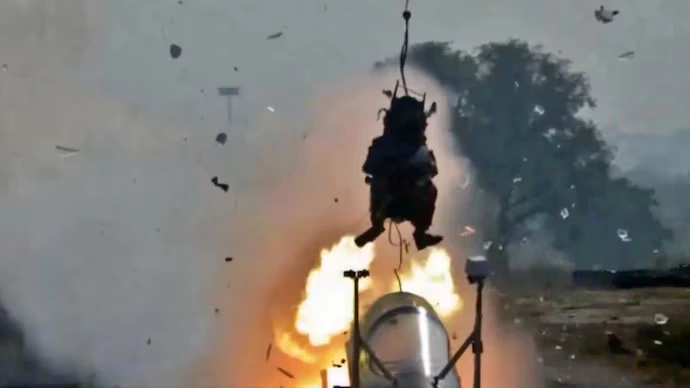
The Defence Research and Development Organization (DRDO) has achieved a significant milestone in aviation safety by successfully conducting a high-speed rocket sled test of a fighter aircraft escape system. This test took place at the Rail Track Rocket Sled (RTRS) facility of the Terminal Ballistics Research Laboratory (TBRL) in Chandigarh, where the system was validated at a precise velocity of 800 km/h.
This dynamic test was carried out in collaboration with the Aeronautical Development Agency (ADA) and Hindustan Aeronautics Limited (HAL). Unlike traditional static tests, which may involve net or zero-zero ejection trials, the rocket sled test provides a more accurate representation of real operational conditions. It assesses the effectiveness of the ejection seat and canopy severance, crucial components for aircrew safety.
Utilizing a dual-sled system, the test involved the forebody of a Light Combat Aircraft (LCA) and was propelled to the desired speed through the phased firing of multiple solid-propellant rocket motors. This innovative approach allowed for a thorough evaluation of ejection sequencing and the complete aircrew recovery process.
Defence Minister Rajnath Singh praised this accomplishment, highlighting the collaborative efforts of DRDO, the Indian Air Force, ADA, HAL, and other industry partners. He emphasized that the successful execution of this test marks a critical step towards achieving self-reliance in defense technology, placing India among a select group of nations equipped with advanced in-house capabilities for escape system testing. This advancement not only enhances the safety of Indian pilots but also reinforces the nation’s strides in developing indigenous military technology.


