




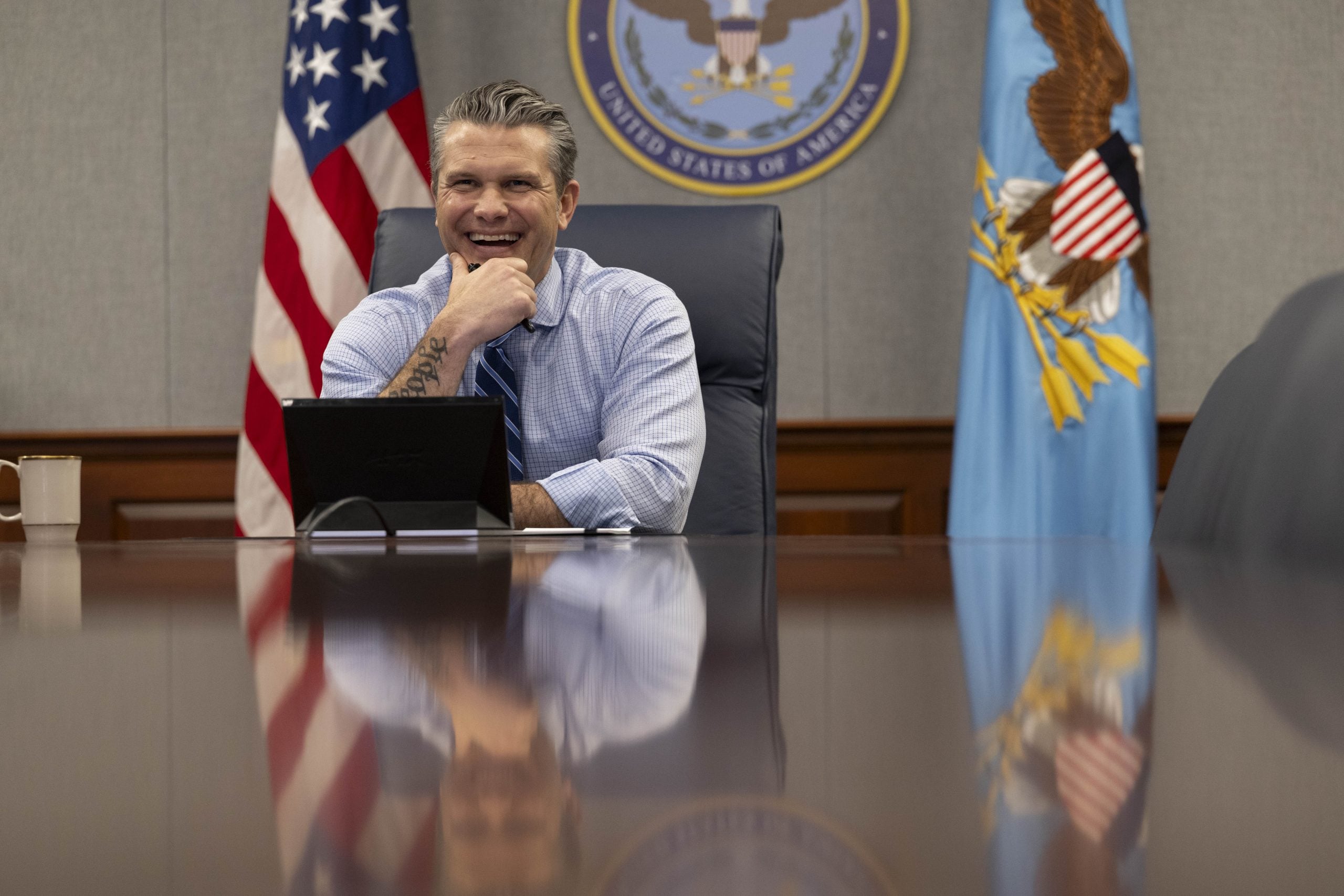
The U.S. government’s intensified campaign against alleged drug-trafficking vessels has sparked significant controversy, particularly following a recent strike that has drawn accusations of extrajudicial killings. During a cabinet meeting on Tuesday, Defense Secretary Pete Hegseth asserted that the United States is only beginning its military operations targeting narco-terrorists, despite the growing backlash from lawmakers and human rights advocates.
The scrutiny intensified after U.S. forces conducted a follow-up strike on the wreckage of a vessel that had already been targeted, reportedly resulting in the deaths of two survivors. This incident has raised legal and ethical questions, with some lawmakers suggesting that it could constitute a war crime. In response to the uproar, both the White House and the Pentagon have distanced Hegseth from the decision, attributing the operation to Admiral Frank Bradley, who supervised the strikes.
Hegseth justified the strikes by stating that they are crucial in addressing the toxic effects of narcotics on American society. “We’ve only just begun striking narco boats and putting narco-terrorists at the bottom of the ocean, because they’ve been poisoning the American people,” he remarked. He acknowledged a temporary pause in operations due to difficulties in locating targets but emphasized the importance of deterrence.
During the meeting, Hegseth claimed to have seen the initial strike but did not witness any survivors. He defended the subsequent attack, contending that it was necessary to eliminate the threat posed by the vessel. Pentagon Press Secretary Kingsley Wilson reinforced this stance, asserting that the strikes fall within both U.S. and international legal frameworks. She indicated that Admiral Bradley acted under established authorities, ensuring that the vessel was neutralized.
Wilson also addressed the media just as critics of the Pentagon’s policies were excluded from the event due to disagreements over new restrictive media guidelines. The current administration, under Donald Trump, has positioned itself as waging an effective counter-narcotics campaign, initiating strikes in early September that they claim have neutralized over 80 individuals linked to drug trafficking.
However, the legality of the follow-up strike on September 2 has come under scrutiny, potentially conflicting with the Pentagon’s own Law of War Manual, which prohibits the targeting of shipwrecked individuals. Democratic senators have voiced strong criticism, with some suggesting that the actions taken might amount to war crimes.
The military operations are part of a broader strategy that has seen a substantial deployment of aircraft and military resources to the Caribbean. President Trump has characterized these efforts as essential for tackling drug trafficking, but regional tensions have escalated, especially with Venezuelan President Nicolas Maduro, who accuses Washington of exploiting drug issues as a guise for regime change. Maduro has rejected suggestions of drug cultivation within Venezuela and contends that the country is being utilized as a transit point for Colombian cocaine against its will.


