




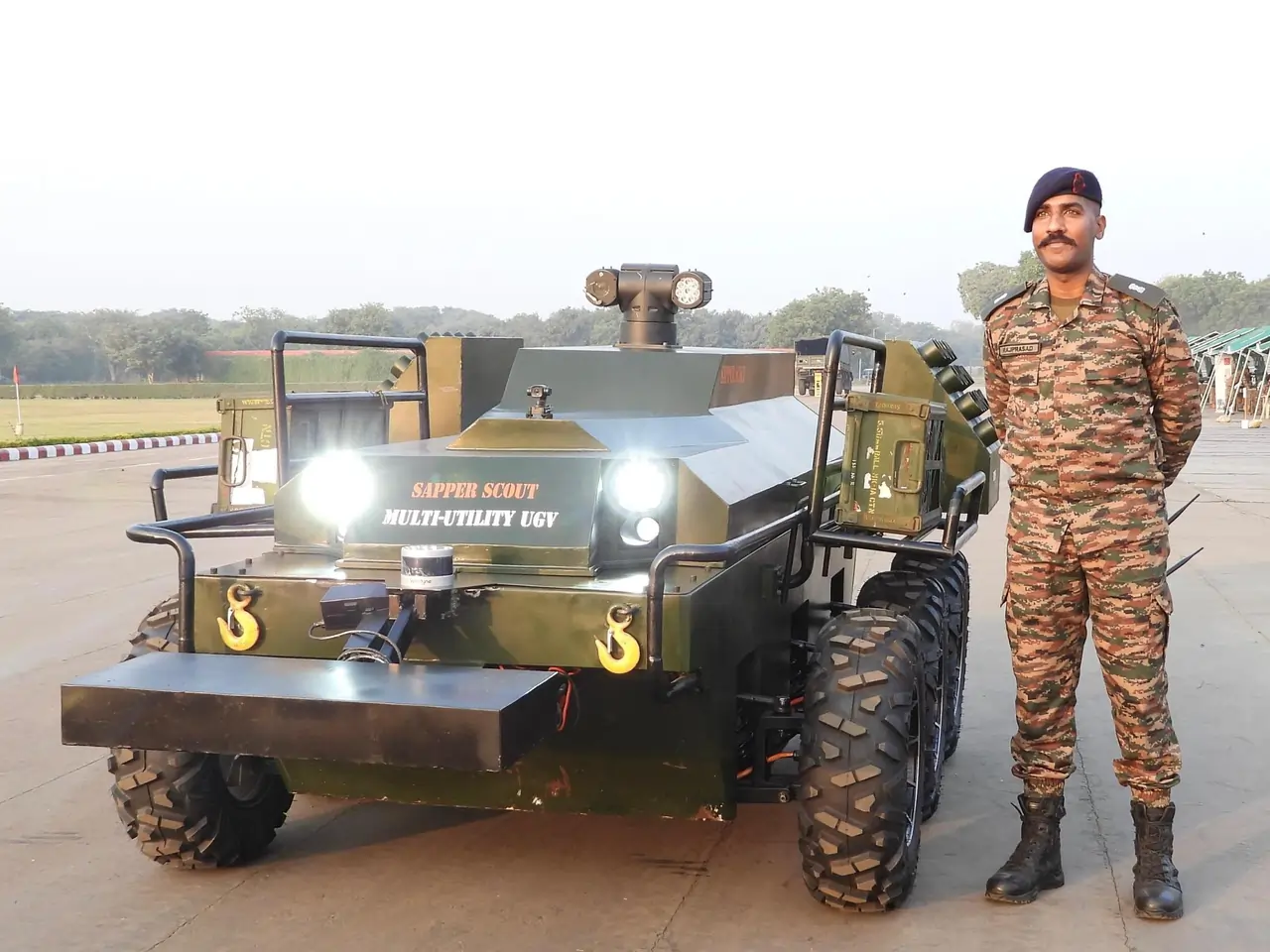
In a landmark achievement for India’s defense sector, Major Rajprasad RS from the Corps of Engineers has unveiled the sophisticated Multi Utility Unmanned Ground Vehicle (UGV), dubbed “Sapperscout Ver 2.0.” This innovation, representing Major Rajprasad’s 12th contribution to military technology, comes with commendable distinction as it becomes the first fully indigenous UGV tailored for various operational roles within the Indian Army.
Defence officials have highlighted the versatile capabilities of Sapperscout Ver 2.0, including essential functions for mine detection, payload transportation, reconnaissance and surveillance, mine scattering from vehicles, and the critical task of casualty evacuation. The vehicle’s modular architecture is particularly noteworthy, allowing for the easy integration of additional payloads that can encompass weapon systems or Counter-Unmanned Aircraft System (C-UAS) technologies.
The design of the UGV showcases a six-wheeled independent drive system paired with an articulated suspension. This structure facilitates exceptional maneuverability over a variety of challenging terrains, enhancing its operational effectiveness. Additionally, the vehicle incorporates advanced environmental sensing and obstacle detection systems, significantly boosting its autonomous mobility during complex missions.
This new UGV underscores a growing trend within the Indian Army to leverage soldier-led innovations, reflecting a commitment to enhance indigenous capabilities in military technology. The project not only aligns with India’s broader strategic vision of self-reliance in defense but also emphasizes the valuable contributions of its personnel in creating solutions tailored for future battlefield challenges.
As Major Rajprasad’s initiatives continue to take shape, the potential for further advancements in military automation and operational efficiency appears promising, paving the way for an evolved approach to warfare and defense preparedness in India.


