




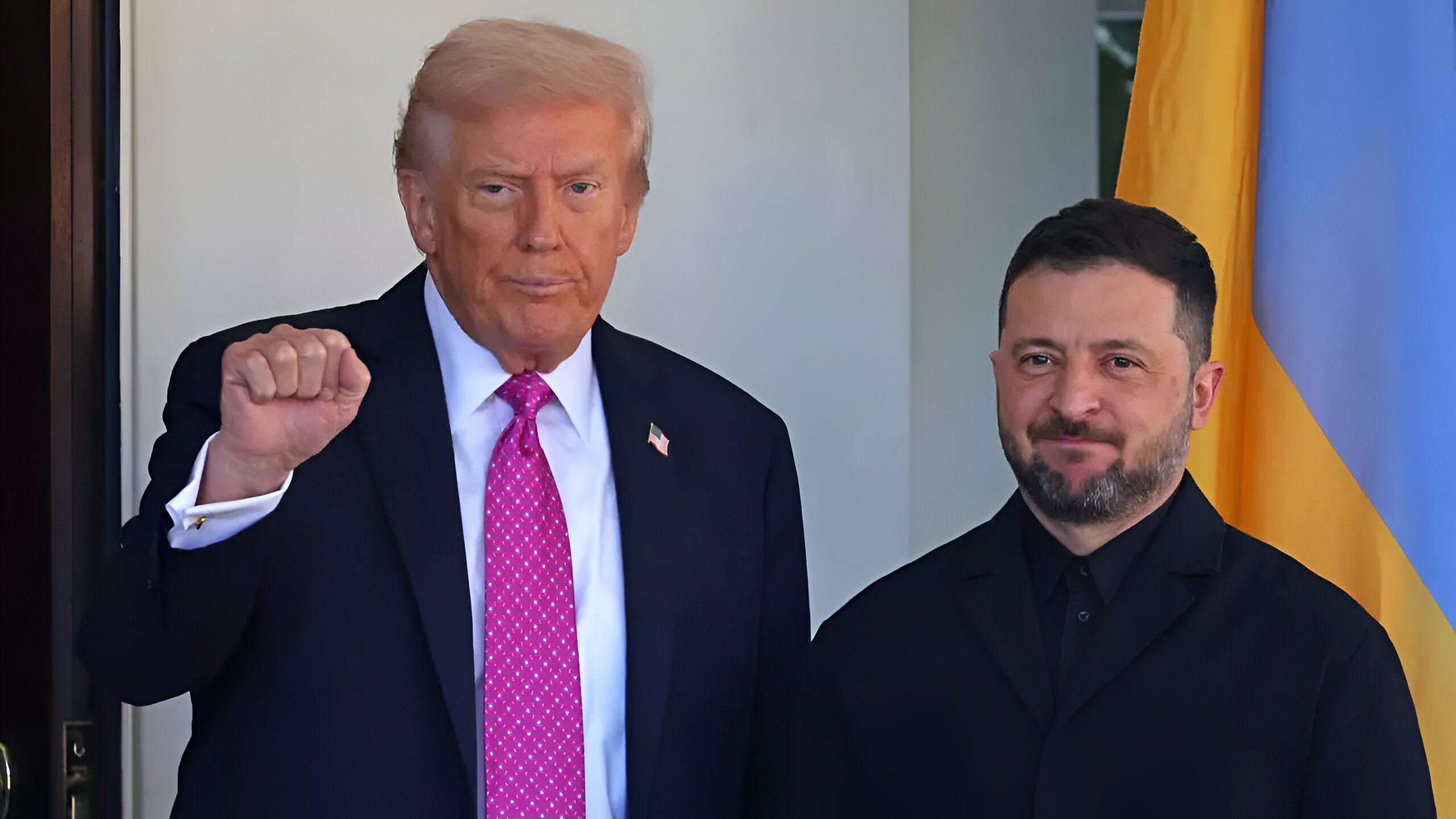
Ukrainian President Volodymyr Zelensky engaged in high-stakes discussions in Berlin with U.S. President Donald Trump’s envoys on Sunday, marking the start of a two-day diplomatic initiative aimed at navigating the complex pathway toward ending the ongoing war with Russia. This meeting follows nearly four years of conflict that has significantly affected the region.
Trump has advocated for a resolution to the war, but key sticking points remain regarding potential territorial concessions, security assurances for Ukraine, and Russia’s willingness to accept any agreement reached by the Western allies. German Chancellor Friedrich Merz welcomed Zelensky, alongside special envoy Steve Witkoff and Jared Kushner, in a gesture of solidarity as captured in a brief video released by the chancellery.
“We began our meeting,” Zelensky posted on Facebook, sharing photos of the Ukrainian delegation alongside Merz, U.S. representatives, and General Alexus Grynkewich, NATO’s top commander in Europe. Merz emphasized his commitment to Ukrainian interests, asserting, “Difficult questions lie ahead of us, but we are determined to move forward. Ukrainian interests are also European interests.”
On Monday, Merz planned to host Zelensky at a German-Ukrainian business conference, which will be followed by dinner with European heads of state and government, along with NATO and EU leaders.
Ahead of the discussions, Zelensky expressed readiness for dialogue and underscored the significance of the Berlin summit in addressing the war, which commenced with Russia’s full-scale invasion in February 2022. He proposed a strategy focused on freezing the front lines rather than ceding the entirety of the Donbas region, a point of contention with Russia. “The fairest possible option is to ‘stay where we are’,” Zelensky stated, characterizing this approach as a potential ceasefire.
While Trump has intensified pressure on Ukraine to reach an agreement, his recent proposal, which drew criticism for reflecting Russian interests, set off a wave of diplomatic activity. Kyiv officials have reportedly submitted a revised version of the proposal to Washington, though Zelensky noted he had not yet received feedback, expressing his openness to engage in discussions.
In Moscow, Kremlin aide Yuri Ushakov expressed skepticism about the effectiveness of the ongoing negotiations, stating, “I think the contribution of both Ukrainians and Europeans…is unlikely to be constructive.” He warned that any significant amendments introduced by Ukraine would be met with “strong objections” from Russia.
During previous interactions, Zelensky indicated that the U.S. was still urging Ukraine to make territorial concessions, proposing that only Ukraine, not Russia, withdraw troops from certain areas. This has raised concerns among European allies, who are seeking security guarantees for Ukraine before any negotiations regarding territory begin.
A senior official indicated that under a new U.S. plan, Ukraine could potentially join the EU by January 2027, although this proposal remains contingent on multiple negotiations. Zelensky asserted the urgency for a just agreement, stating, “The most important thing is that the plan should be as fair as possible, first and foremost for Ukraine, because Russia started the war.”
The backdrop of the diplomatic efforts was marked by renewed violence, with Kyiv reporting significant aerial strikes from Russia, including the launch of 138 drones and a ballistic missile overnight. One drone strike reportedly impacted a hospital in Kherson, injuring two, while strikes in the Zaporizhzhia region left at least 11 individuals wounded, according to the local governor.


