




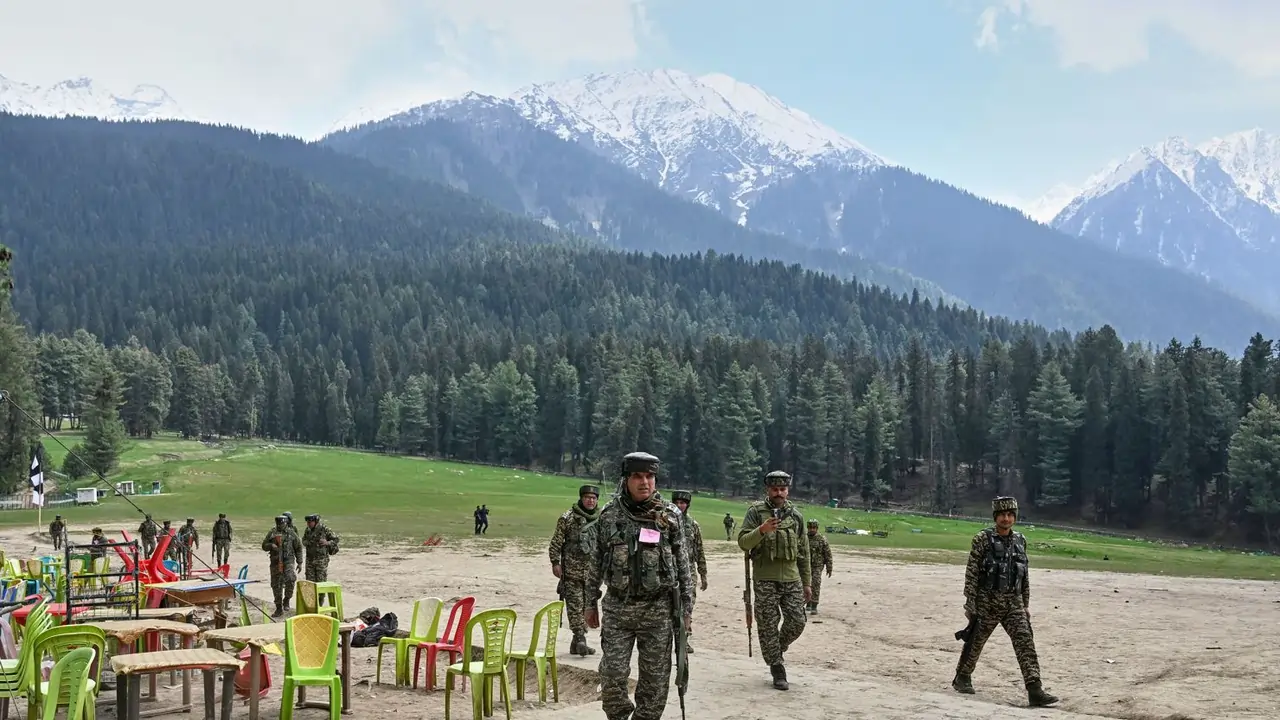
The National Investigation Agency (NIA) has filed a comprehensive chargesheet against six individuals in connection with a terror attack earlier this year in Pahalgam, Jammu and Kashmir, which tragically resulted in the deaths of 26 civilians. The chargesheet was presented to the NIA Special Court in Jammu within the legally mandated 180-day period following the initial arrest on June 22.
Spanning 1,597 pages, the chargesheet outlines Pakistan’s significant involvement in the conspiracy behind the attack. It implicates banned terror organizations Lashkar-e-Taiba (LeT) and its affiliate, The Resistance Front (TRF), for orchestrating, facilitating, and executing what has been characterized as “religion-based targeted killings.”
Among the four terrorists identified is Sajid Jatt, who is reported to operate from Pakistan. The remaining three—Faisal Jatt, also known as Suleman Shah, Habeeb Tahir, or Jibran, and Hamza Afghani—were reported killed by security forces during Operation Mahadev in July in the Dachigam area of Srinagar.
In pursuing the case, the NIA invoked stringent sections of the Bharatiya Nyaya Sanhita (BNS), 2023, along with provisions from the Arms Act, 1959, and the Unlawful Activities (Prevention) Act (UAPA), 1967, including charges that pertain to waging war against India.
Additionally, two local residents, Bashir Ahmad Jothar and Parvez Ahmad Jothar, who were arrested on June 22, have been chargesheeted for harboring terrorists. The NIA alleges that these individuals provided shelter for the attackers and subsequently aided investigators by confirming their identities as Pakistani nationals affiliated with LeT.
The investigative process involved rigorous inquiry, with over 1,000 individuals questioned and a wealth of technical and forensic evidence collected. Recovered mobile phones from the deceased terrorists contained crucial information including Aadhaar cards, photographs, social media profiles, and encrypted communications with handlers based in Pakistan. This evidence has been pivotal in linking the conspiracy to transnational terror networks.
The Pahalgam attack had profound strategic implications, bringing India and Pakistan to a state of heightened tension. In retaliation, India launched Operation Sindoor on May 7, executing precision strikes on terror camps situated in Pakistan and Pakistan-occupied Kashmir. This military escalation lasted four days, concluding on May 10 when both countries reached a mutual understanding to cease hostilities.
The filing of this chargesheet marks a crucial advancement in the legal and investigative efforts aimed at ensuring accountability for this devastating attack, targeting both local accomplices and international operatives involved in one of the most lethal assaults on civilians in the region in recent years.


