




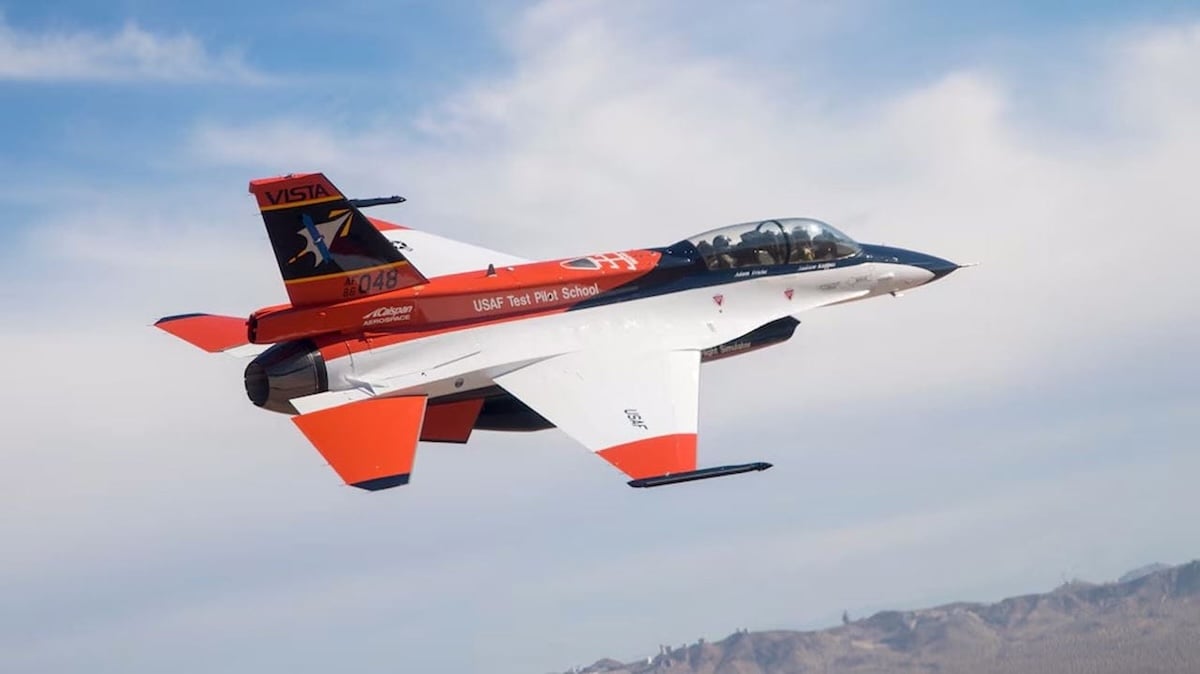
The US Air Force has made a strategic decision to incorporate Raytheon’s PhantomStrike radar into its cutting-edge X-62A Variable In-flight Simulation Test Aircraft (VISTA). This upgrade is part of the service’s ongoing commitment to enhance operational capabilities through advanced technologies.
PhantomStrike represents a significant advancement in radar technology, being a compact, air-cooled fire-control radar that leverages gallium nitride technology. This innovative design allows for reduced size, weight, and power consumption compared to traditional Active Electronically Scanned Array (AESA) systems. Weighing less than 150 pounds (68 kilograms), PhantomStrike is suited for a variety of platforms, including uncrewed aerial vehicles, light-attack aircraft, and rotorcraft.
One of the key features of PhantomStrike is its ability to utilize digital beamforming and steering techniques, enabling it to operate in multiple modes simultaneously. This capability allows the radar to effectively interweave ground and air targeting, offering a cost-efficient alternative to other systems on the market, as emphasized by Raython’s representatives.
The radar successfully completed its maiden flight test in May, marking a pivotal moment in its development. As the Air Force looks to bolster its air superiority through autonomous aircraft, Dan Theisen, president of Advanced Products & Solutions at Raytheon, noted that PhantomStrike is particularly well-suited to support these efforts.
In addition to its deployment on VISTA, the PhantomStrike radar has also been integrated into South Korea’s FA-50 light combat aircraft, further showcasing its versatility and global appeal.
The X-62A VISTA itself is a product of collaboration between Lockheed Martin Skunk Works and Calspan Corporation, developed for the USAF Test Pilot School at Edwards Air Force Base in California. It is a modified version of the F-16D Block 30 and includes Block 40 avionics, along with an open systems architecture designed for flexibility and adaptability.
As a hybrid test aircraft, VISTA serves a critical role in exploring machine-learning applications and specialized software. It complements another innovative USAF initiative known as the Viper Experimentation and Next-Gen Operations Model – Autonomy Flying Testbed (VENOM-AFT), which is also based on the F-16.
VISTA made headlines earlier this year when it completed its first-ever trial piloted by an artificial intelligence agent, successfully demonstrating within-visual-range maneuvering capabilities against AI red-team agents. Looking ahead, significant upgrades are planned for 2025, aimed at pushing the aircraft into more complex operational scenarios. These upcoming enhancements will focus on evaluating AI systems integration, promoting collaboration, and enabling real-time decision-making capabilities.
Overall, the selection of PhantomStrike radar for the X-62A VISTA underscores the USAF’s commitment to maintaining and advancing its technological edge in air combat.


