




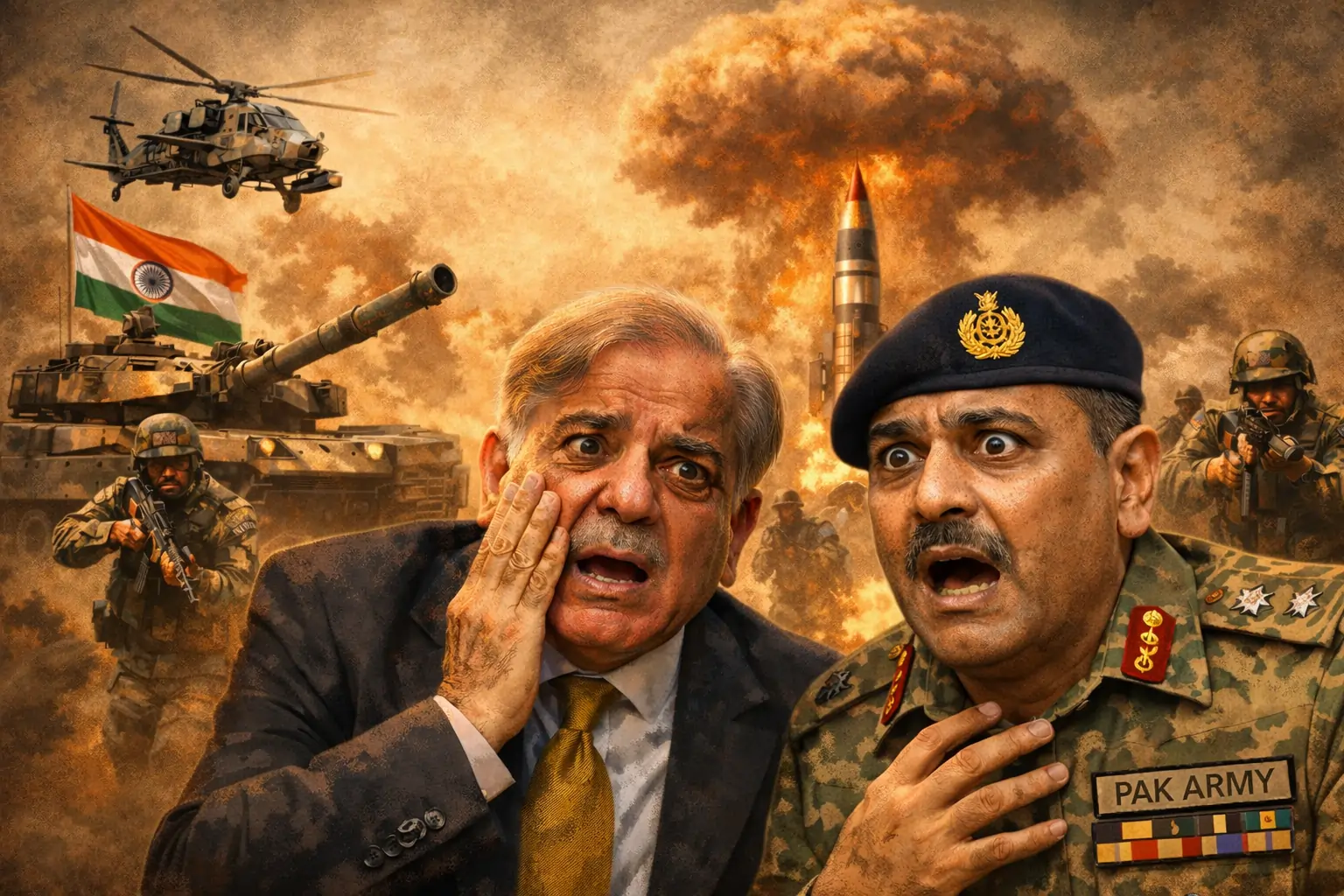
India’s Operation Sindoor has significantly altered the strategic landscape between India and Pakistan, challenging long-held beliefs about Islamabad’s nuclear doctrine. For over 20 years, Pakistan’s nuclear arsenal has primarily served as psychological leverage rather than actual battlefield assets, with Islamabad relying on a strategy of full-spectrum deterrence. This approach maintained a veil of ambiguity over its nuclear red lines, effectively deterring not only major assaults but even limited punitive actions from India. This uncertainty permitted Pakistan to engage in sub-conventional tactics, including proxy terrorism, all while threatening nuclear escalation.
Operation Sindoor signaled a departure from this paradigm, as India executed sustained, precise conventional military strikes deep inside Pakistani territory without provoking any nuclear signaling or escalation. This development marked a crucial turning point, demonstrating that conventional air and ground operations could occur below the nuclear threshold, thereby significantly undermining the coercive power of Pakistan’s nuclear ambiguity.
Historically, Pakistan has developed tactical nuclear weapons to suggest that even limited conventional conflicts could warrant a nuclear response, effectively constraining India’s military options. However, Operation Sindoor dismantled this nuclear inhibition. The evidence from the operation indicated that well-calibrated conventional responses would not necessarily elicit nuclear retaliation.
During the operation, Pakistan exhibited a surprising restraint, adhering to a rational cost–benefit analysis even amid tension. This behavior highlighted a clearer demarcation between conventional punishment and nuclear escalation, allowing for greater maneuverability in non-nuclear warfare.
Air power, previously regarded as a psychological barrier in nuclear dynamics, became a normalized tool of warfare when employed judiciously. India’s deep strikes were complemented by direct political messaging, framing the actions as calculated responses rather than preparations for all-out war.
Following Operation Sindoor, India’s military leadership reinforced this strategic shift. General Anil Chauhan, Chief of Defence Staff, emphasized the rational approach demonstrated by both nations, asserting that significant opportunities exist for conducting conventional operations below the nuclear threshold. He expressed confidence that such operations would constitute a new norm, countering the narrative that nuclear weapons render conventional conflicts unmanageable.
This strategic clarity was aimed at both domestic and international audiences, affirming India’s position that credible conventional force, coupled with restraint, could effectively manage escalation in a nuclear context.
By successfully conducting conventional operations without nuclear consequences, India has diminished the credibility of Pakistan’s ambiguous nuclear threats. Although nuclear weapons remain crucial for existential deterrence, they no longer serve as an all-encompassing shield against conventional military responses. Consequently, Pakistan’s sub-conventional aggression is now subject to greater accountability.
Essentially, Operation Sindoor has redefined the practical application of Pakistan’s nuclear doctrine. The operation exemplified the inadequacy of ambiguity when faced with precise, constrained conventional force, leading to a significant shift in the strategic dynamics of South Asia—from a reliance on brinkmanship to a more rational approach to conflict.
While Pakistan’s nuclear capabilities remain formidable, their perceived power has waned. India has successfully created a larger space for conventional responses, reshaping deterrence stability in the region. Future crises are likely to manifest within this broader envelope of conventional warfare, pushing nuclear options further up the escalation ladder.
Beyond the South Asian context, Operation Sindoor serves as a case study in managing escalation amid nuclear challenges, illustrating that technological precision, disciplined military tactics, and clear strategic messaging can mitigate the constraints imposed by nuclear weapons on conventional actions.
In summary, India has effectively redefined the rules of engagement, compelling Pakistan to adapt to a reality where judiciously wielded conventional superiority is once again a credible strategic asset.


