




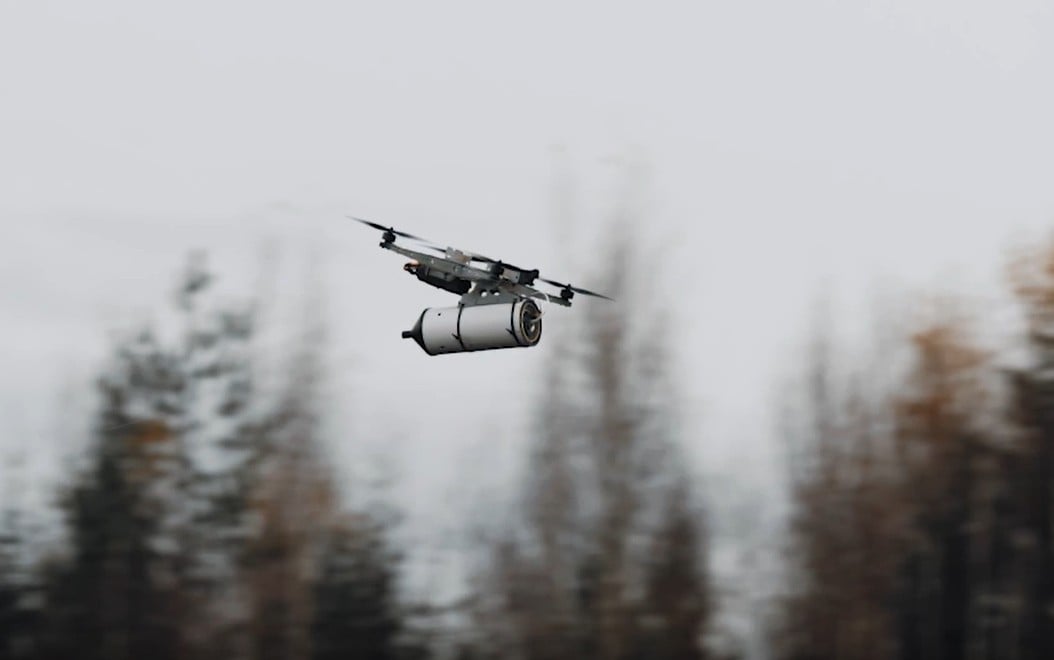
A significant development in defense technology has emerged as the Finnish company Summa Defence recently delivered its inaugural batch of Zeus first-person view (FPV) drones to Ukraine. This delivery represents a notable step in enhancing Ukraine’s defense capabilities, particularly in the context of current geopolitical challenges.
Achieving industrial production readiness for the Zeus models was a collaborative effort that culminated in 2025. This initiative involved close cooperation with a Ukrainian partner, focusing on designing a field-tested system that meets the rigorous demands of the European defense and security sector. The drones are produced and rigorously tested in Finland, with offerings available in three distinct sizes. These systems are primarily categorized as dual-use, signifying their versatility in both military and civilian applications.
Jussi Holopainen, Director of Summa Defence, shared insights into the project, noting, “The feedback from the Ukrainian Army has been positive. The performance and functionality have been verified in combat conditions, and the project, which has started well, will be continued with increasing volumes in 2026.” This affirmation highlights the operational effectiveness of the drones and the commitment to expanding their deployment in the coming years.
The Zeus FPV drone systems are designed for tactical-level operations, offering variations in size, range, and payload capacity to cater to diverse mission requirements. The lineup includes an 11-inch (27.9-centimeter) drone equipped with a fiber-optic control system, which defines its operational range based on the fiber coil’s length. In this configuration, the Zeus can manage a payload of approximately 3 kilograms (6.6 pounds) while cruising at speeds of around 54 kilometers (34 miles) per hour. In its radio-controlled setup, the same drone can support a payload of up to 5 kilograms (11 pounds) and operates at distances exceeding 20 kilometers (12.4 miles), achieving maximum speeds near 101 kilometers (63 miles) per hour. This capability is particularly advantageous for extended-range missions that necessitate robust connectivity and flight efficiency.
The 13-inch (33-centimeter) version of the Zeus drone takes a similar design approach but is tailored for heavier payloads. This model accommodates both radio and fiber-optic control, boasting a takeoff weight limit of approximately 7 kilograms (15.4 pounds) and a typical operational velocity of 72 kilometers (45 miles) per hour. In its fiber-optic configuration, the drone can carry around 3 kilograms (6.6 pounds), while the radio-controlled version allows for an increased payload of approximately 4 kilograms (8.8 pounds).
On the smaller scale, the Zeus series also features a compact 2.5-inch (6.4-centimeter) FPV microdrone, primarily intended for short-range reconnaissance missions. Weighing in at about 225 grams (0.5 pounds), this microdrone can carry a payload of up to 300 grams (0.6 pounds). Its flight endurance ranges from 8 to 10 minutes at moderate speeds, with an operational range of roughly 2 kilometers (1.2 miles).
As the situation evolves, the introduction of the Zeus FPV drone systems into the Ukrainian battlefield marks a crucial development in enhancing operational intelligence and tactical advantages for the armed forces. The feedback from the front lines suggests a promising future for this collaboration between Finnish technology and Ukrainian defense needs.


