




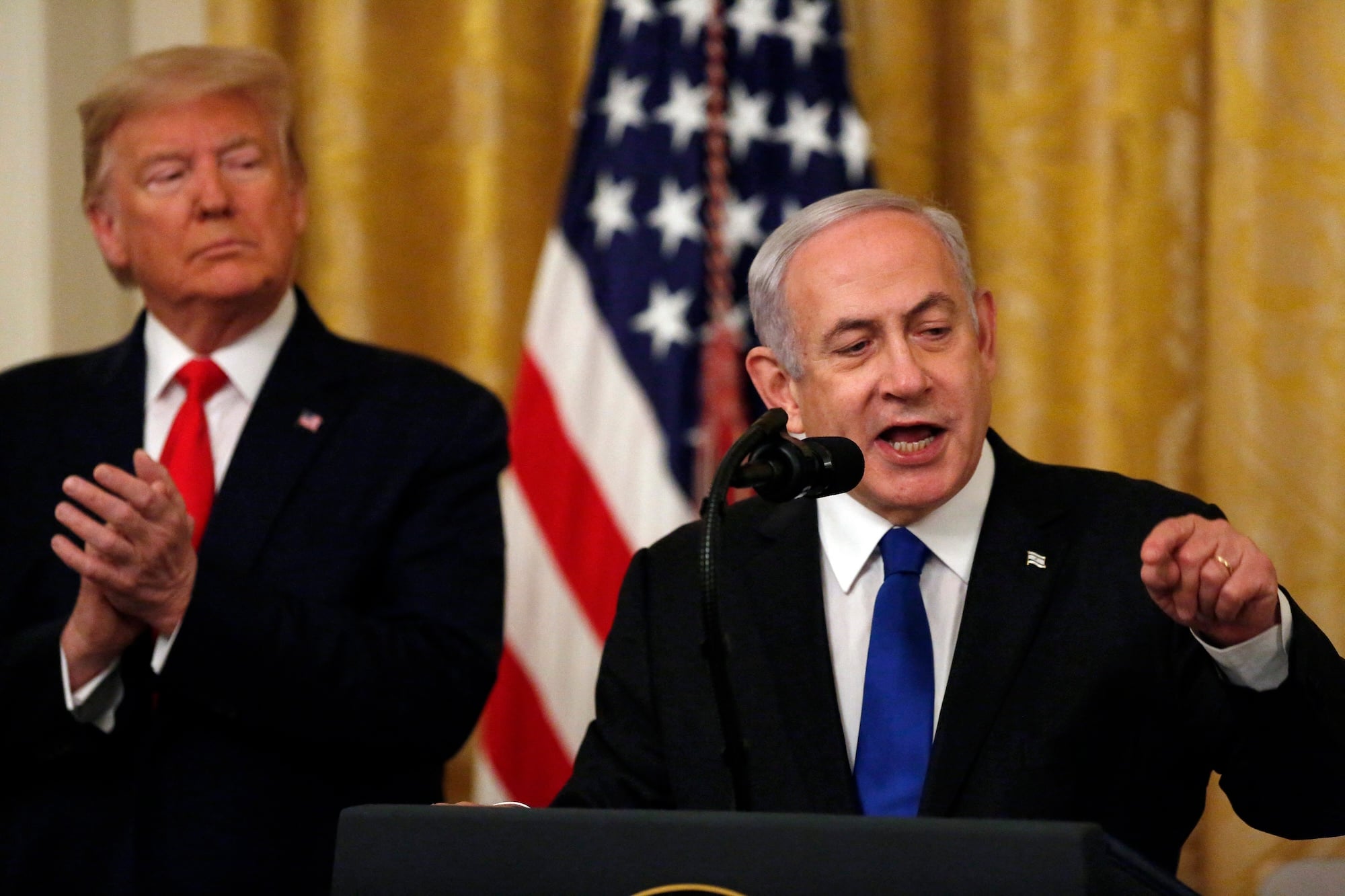
US President Donald Trump issued a stark warning to Iran, promising fresh strikes if the country continues to pursue nuclear ambitions. Speaking alongside Israeli Prime Minister Benjamin Netanyahu at his Mar-a-Lago resort in Florida, Trump emphasized the importance of disarmament for Hamas, declaring they would face severe consequences if they failed to comply following a fragile ceasefire in Gaza.
Trump underscored the stakes involved, stating the US would “eradicate” any Iranian efforts to rebuild its nuclear program or ballistic missile arsenal, a concern heightened after recent strikes. He expressed confidence in Israel’s commitment to the ceasefire and reiterated that the responsibility fell on Hamas, asserting, “If they don’t disarm as they agreed to do, then there will be hell to pay for them.”
Despite Trump’s emphasis on Hamas’s obligation to disarm, the militant group has firmly rejected the notion of surrendering their arms. Their armed wing reiterated their commitment to retaining their weapons, stating, “Our people are defending themselves and will not give up their weapons as long as the occupation remains.”
On the Iranian front, Ali Shamkhani, a senior political adviser to Iran’s supreme leader, responded to Trump’s remarks by threatening a swift and severe counteraction to any aggression against Iran. He highlighted the nation’s missile capabilities and emphasized that any hostile actions would provoke a response beyond the expectations of their adversaries.
Netanyahu described his meeting with Trump as “very productive,” announcing a historic moment in which Israel would honor Trump with the nation’s highest civilian award. This gesture marked a unique occasion, as it is the first time this honor has been extended to a non-Israeli citizen.
During their ongoing discussions, Trump expressed a desire to transition to the next phase of the Gaza ceasefire, which involves establishing a Palestinian technocratic government and deploying an international stabilization force. However, concerns linger within the White House about the pace at which Netanyahu is proceeding with these plans. Trump dismissed worries regarding any discord between their administrations, claiming he had “very little difference” with Netanyahu.
The talks also encompassed broader regional issues, touching upon concerns regarding Syria and Hezbollah in Lebanon. Trump expressed hope that Netanyahu could reconcile relations with Syria’s new president, who rose to power after a civil conflict, despite a backdrop of ongoing Israeli strikes along the border.
In light of the recent ceasefire negotiations, Trump aims to maintain momentum, with plans to potentially announce a provisional Palestinian government and an international force as early as January. While he conveyed optimism about the reconstruction efforts in Gaza, Trump is keenly aware that achieving disarmament remains a critical hurdle. The fate of Hamas’s armament continues to present a complex challenge amidst the ongoing geopolitical landscape in the region.


