




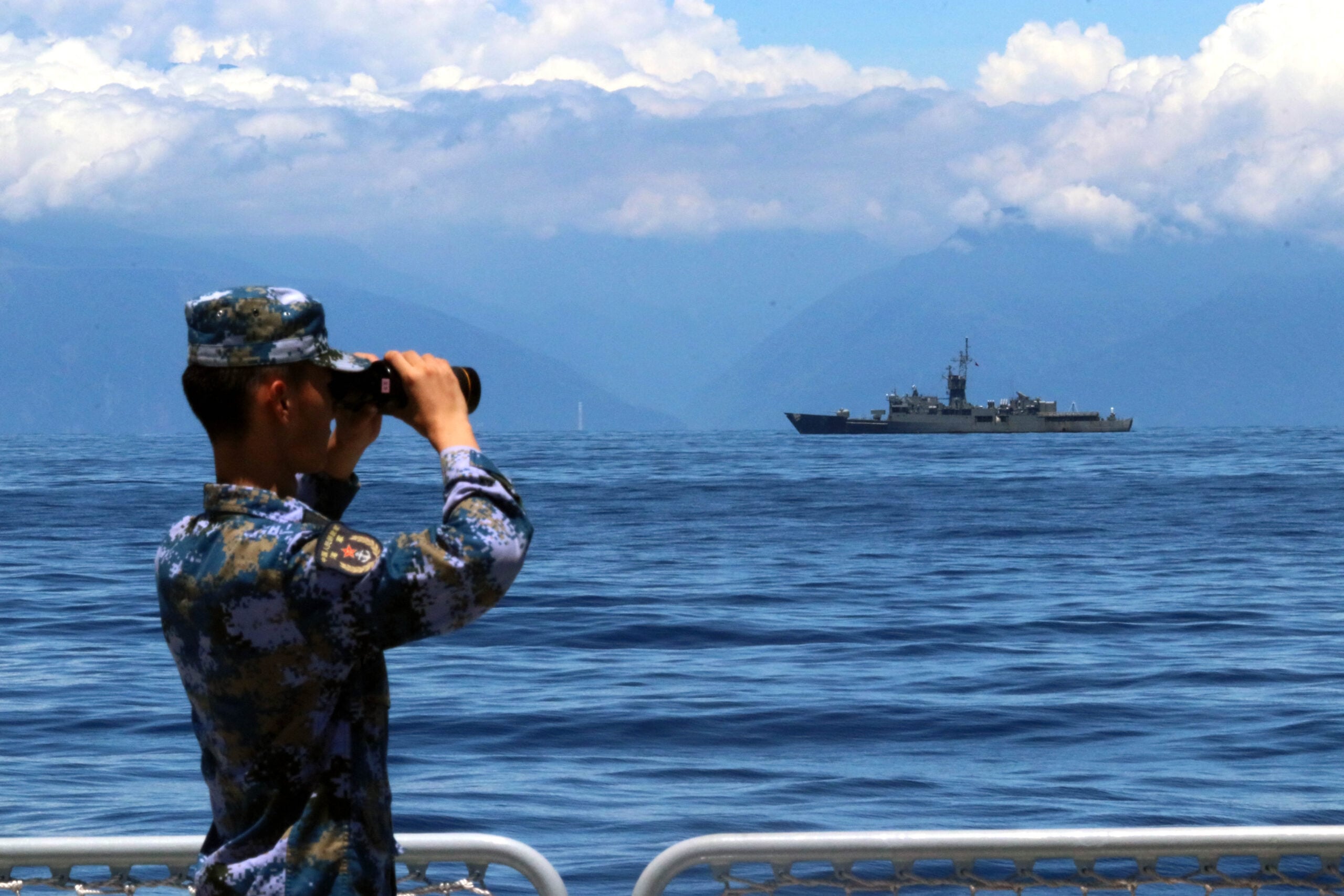
Taiwan’s military has unveiled an ambitious plan to manufacture up to 1,600 unmanned attack surface vessels (USVs) as part of a special defense budget proposal valued at 1.25 trillion New Taiwan dollars, approximately $39.8 billion. This initiative is designed to enhance Taiwan’s deterrent capabilities amid escalating regional tensions.
Officials revealed that while the construction of the hulls is a relatively straightforward process, the integration of sophisticated weapon systems presents a significant technical challenge. The successful implementation of this project hinges on the combination of high-explosive payloads with advanced guidance systems, sensors, and command-and-control frameworks.
To expedite the production timeline, Taiwan’s Navy Command intends to appoint the National Chung-Shan Institute of Science and Technology (NCSIST) as the primary contractor. NCSIST is well-positioned for this role with its previous experience in the Kuai Chi unmanned surface vessel program. Furthermore, the institute has established a cooperation agreement with MARTAC, a US-based manufacturer specializing in unmanned surface vehicles.
The initiative aims to deliver a fully integrated weapon system, moving beyond mere standalone vessels. This comprehensive system will incorporate command-and-control architecture, sensor technologies, guidance modules, and explosive payloads into an all-encompassing platform. Initial deployments may occur as early as 2027, setting a rapid pace for development.
In terms of operational requirements, both the navy and the army have provided specific technical specifications for the proposed attack USVs. The baseline model must achieve a speed of at least 64 kilometers (40 miles) per hour and maintain a minimum operational range of 460 kilometers (286 miles). These vessels are also required to support autonomous navigation and effective target identification.
Additionally, the design must incorporate collision-avoidance systems and be capable of functioning in sea state level 4 on the Beaufort scale, which includes moderate seas with wave heights up to 2.5 meters (8 feet). The operational framework also envisions the vessels participating in coordinated swarm missions.
To ensure operational effectiveness, the vessels must be equipped with electro-optical and infrared sensor modules that can transmit imagery over distances of up to 44 kilometers (27 miles). Resilience against interference with global navigation satellite systems and radio communications is also a critical requirement, reinforcing the mission capabilities of these advanced unmanned platforms.


