




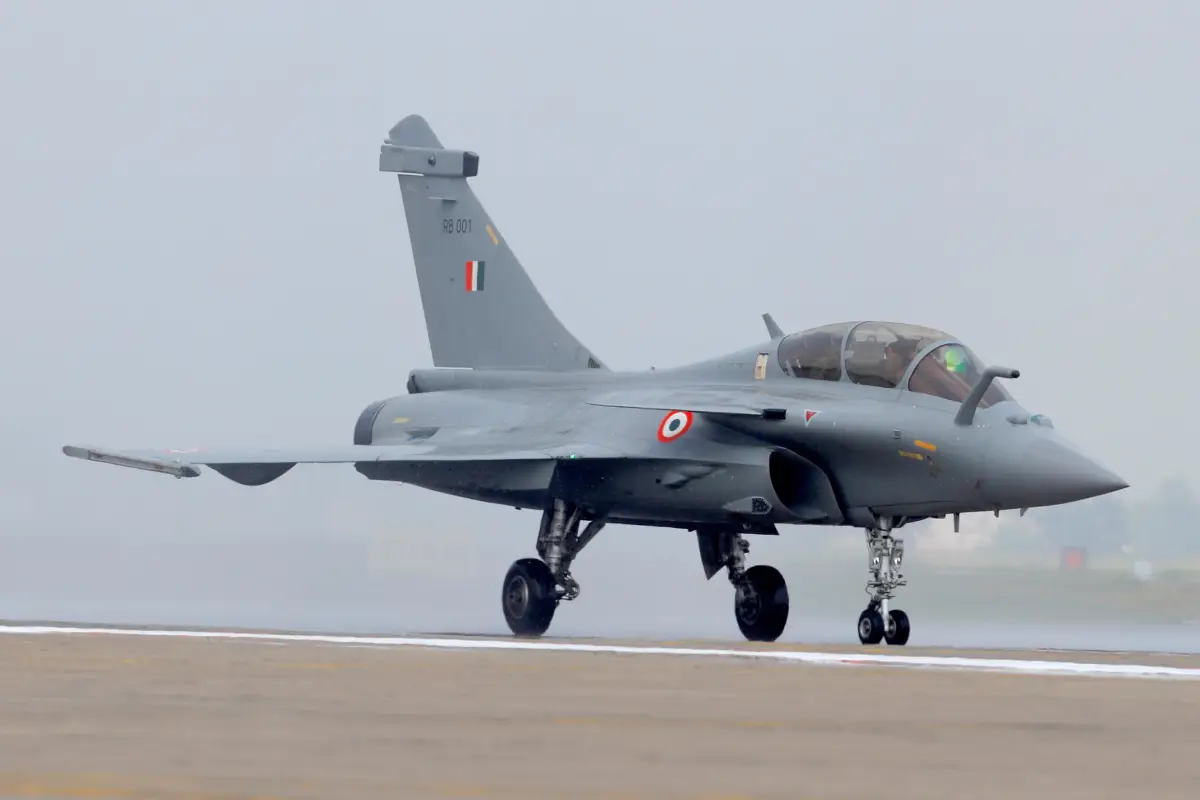
India and France are on the verge of finalizing a significant government-to-government agreement for the acquisition of additional Rafale fighter jets, aimed at addressing pressing gaps in the Indian Air Force’s combat capabilities. Officials closely involved in the negotiations indicate that discussions have intensified in anticipation of French President Emmanuel Macron’s upcoming visit to India next month, potentially paving the way for a formal agreement.
The Indian Air Force has identified an urgent necessity for advanced multirole fighters as its squadron strength continues to decline, particularly due to the phasing out of older aircraft. The IAF has estimated a shortfall of approximately 114 new combat aircraft to stabilize force levels and ensure deterrence against potential threats on two fronts. Currently, the Indian Air Force operates 36 Rafale jets, acquired under a prior deal in 2016, and further inducting these aircraft would offer immediate operational assistance as domestic production programs are developed.
Rafale jets are highly regarded for their multifunctional capabilities, including precision strikes, electronic warfare, and beyond-visual-range combat operations. Their integration with Indian munitions, such as the Astra missile, enhances their operational effectiveness.
A significant aspect of the potential deal is a focus on deep localization. In June 2025, Tata Advanced Systems Limited formed a partnership with Dassault Aviation to produce critical components of the Rafale’s fuselage in India. A specialized manufacturing facility is currently being constructed in Hyderabad to cater to both local demands and Dassault’s international supply chain, with the first units expected to be delivered by the fiscal year 2028, equipped to produce 24 fuselages annually.
Complementary initiatives are also underway, including plans for an engine manufacturing facility in Hyderabad and a Maintenance, Repair and Overhaul (MRO) hub in Jewar, Uttar Pradesh. Collectively, these projects could achieve up to 60% localization of the Rafale’s production value, aligning with India’s vision for self-reliance under the Atmanirbhar Bharat initiative.
On the financial side, pricing discussions are likely to reference a benchmark established in 2025, during which India secured 24 Rafale Marine variants for the Navy for around €7.4 billion. Any new procurement will need authorization from the Defence Acquisition Council, as well as thorough cost negotiations and final approval by the Cabinet Committee on Security. The upcoming fiscal budget will play a critical role in securing the necessary funds.
Beyond addressing immediate capability needs, this deal would strengthen defense relations between India and France, expand India’s fighter aircraft supply sources, and lessen reliance on older platforms. France’s consistent record for timely deliveries has fostered confidence in this partnership.
Should the agreement be finalized, it would not only augment the Indian Air Force’s fleet but also complement domestic initiatives, such as the Tejas Mk-2 and the Advanced Medium Combat Aircraft (AMCA), helping the IAF work towards its goal of expanding to 42 squadrons. For India’s aerospace industry, the deal has the potential to create a more comprehensive ecosystem, establishing the country as a global manufacturing and support center for Rafale operations.


