




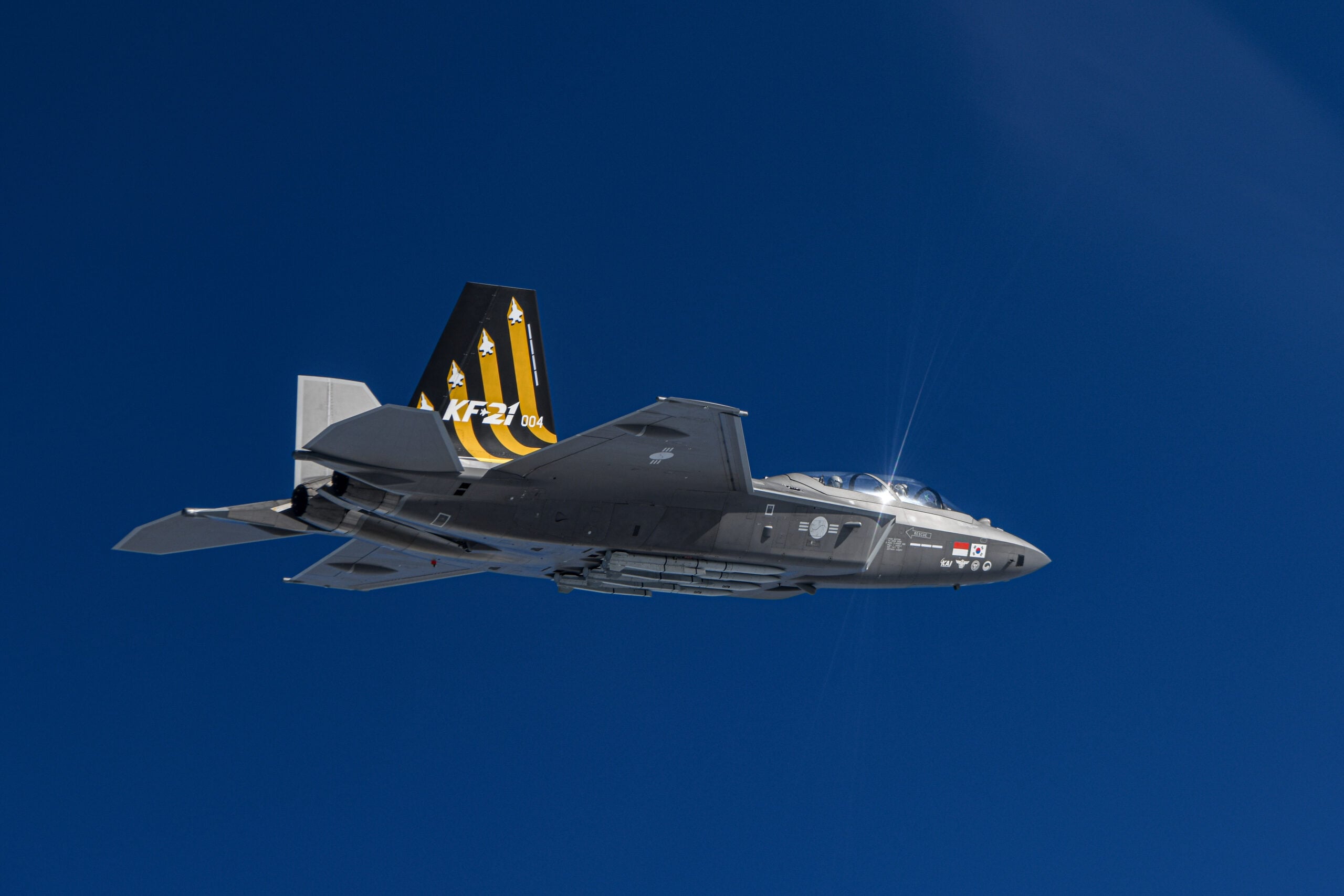
South Korea has successfully concluded all flight tests of its advanced KF-21 Boramae combat aircraft, a significant milestone that clears the way for its delivery to the Republic of Korea Air Force. The final test flight occurred in mid-January over the Namhae Sea, utilizing the fourth prototype of this domestically produced jet.
The Defense Acquisition Program Administration (DAPA) announced that the entire development process spanned approximately 42 months and included around 1,600 sorties, achieving this without any incidents. This extensive testing validated more than 13,000 performance benchmarks, confirming both the flight capabilities and operational functionalities necessary for the aircraft to serve as South Korea’s next-generation fighter.
Officials noted that the program benefited from an expansion in test locations and the incorporation of air-to-air refueling capabilities, which enabled the completion of flight testing roughly two months ahead of the planned schedule.
Korea Aerospace Industries (KAI) spearheads the KF-21 project, working in tandem with the Agency for Defense Development and engaging approximately 225 domestic companies along with more than ten government-funded research institutes.
The KF-21 initiative was launched in 2015 in response to the need to modernize South Korea’s aging fleet of US-made F-4 and F-5 aircraft. The first prototype was unveiled in April 2021, followed by its maiden flight in July 2022. The establishment of the first production aircraft commenced its final assembly last year.
Looking ahead, DAPA plans to finalize system development by the first half of 2026, with mass production deliveries aimed for the latter part of that year. Noh Ji-man, head of the KF-21 program at DAPA, expressed confidence in the aircraft’s potential, stating, “The KF-21 is the culmination of our aviation technology, and we expect it to stand shoulder to shoulder with cutting-edge fighters in the global market and play a leading role in the global defense industry.” He assured that DAPA would make every effort to ensure that the subsequent stages of weapons testing, mass production, and operational integration proceed smoothly.


