




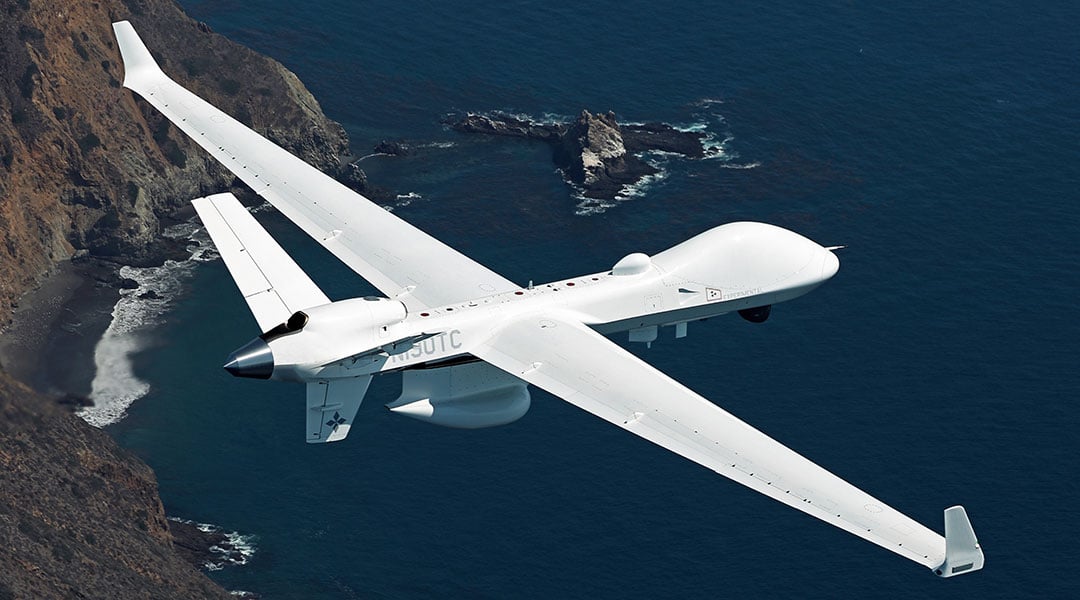
The German Armed Forces have made a significant move to enhance their maritime capabilities by ordering eight MQ-9B SeaGuardian unmanned aerial systems from General Atomics. This strategic acquisition is set to bolster the German Navy’s long-range maritime reconnaissance and anti-submarine warfare (ASW) capabilities, marking a noteworthy development in Germany’s naval operations.
With an estimated budget of approximately 1.52 billion euros (around $1.78 billion) earmarked for this procurement, financing will come from special funds as well as the defense budget. The first deliveries of these advanced drone systems are slated to begin in 2028. Included in the contract are essential components such as spare parts and flight crew training for an initial period of two years. Moreover, the MQ-9B systems are expected to undergo upgrades to achieve a full ASW configuration in the years 2031 and 2032.
These unmanned aerial systems will be operated by the Naval Air Wing 3 “Graf Zeppelin” based at Nordholz. They are designed to complement the existing fleet of manned Boeing P-8A Poseidon aircraft, of which Germany has ordered eight, receiving its first unit in October of the previous year. While the P-8A is known for its high speed—capable of reaching up to 900 kilometers (559 miles) per hour—and superior sensor and weaponry capabilities, the MQ-9B offers a remarkable advantage in terms of endurance, as it can remain operational for up to 30 hours, compared to approximately 10 hours of the P-8A.
The MQ-9B boasts a wingspan of 20 meters (66 feet) and a length of 10 meters (33 feet), and it is capable of carrying payloads of up to 2,000 kilograms (4,409 pounds). Its robust design allows it to host a variety of sensors, including advanced cameras and maritime surveillance radars, as well as canisters for deploying sonobuoys for submarine detection.
Data collected by the MQ-9B is promptly relayed to ground control stations, which can also share this information with other naval aircraft, ships, and, if necessary, allied forces. This ensures a coordinated operational approach when tracking potential maritime threats.
Prior to the first flight operations in 2028, the German Armed Forces acknowledge that several preparatory steps remain essential, including crew training and the construction of the necessary infrastructure to support these advanced unmanned systems. This integration will benefit from the experiences of allied forces currently operating the MQ-9B, such as the British and Belgian militaries, allowing Germany to ensure a seamless start to its operational capabilities with the new assets.


