




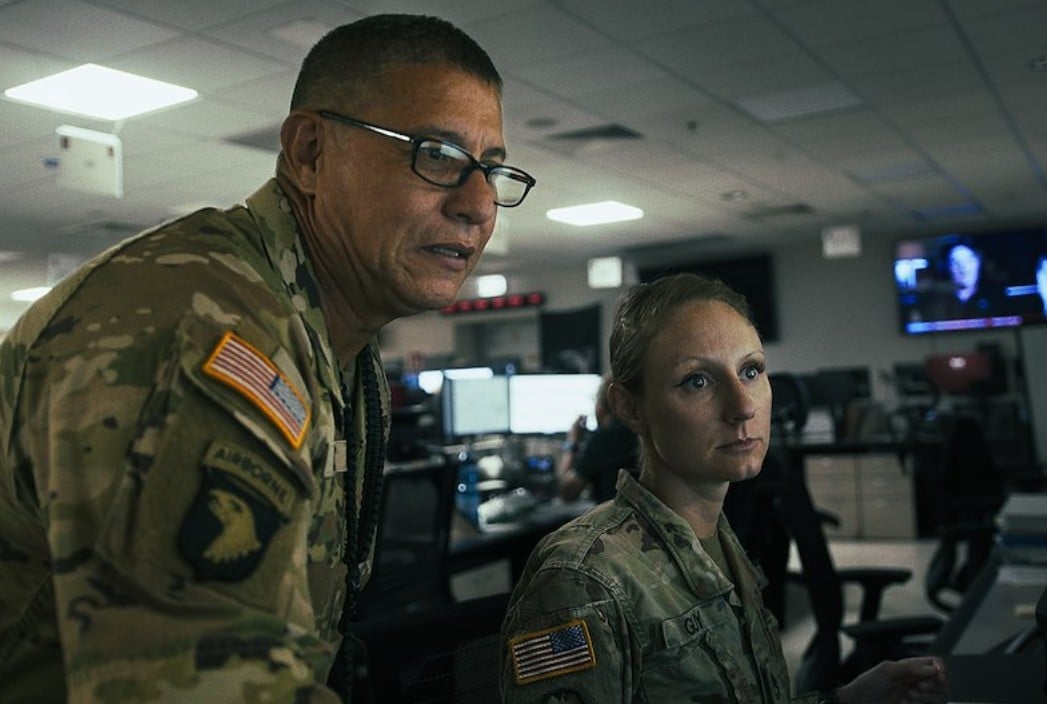
The US Army Southern European Task Force, Africa (SETAF-AF) has introduced a new Advanced Capabilities Directorate (ACD) aimed at enhancing decision-making and accelerating innovation across its operations. This initiative marks a significant step in integrating cutting-edge technology with operational readiness.
The ACD merges two critical components: the innovation division and the operational data team. Its primary function is to evaluate and test emerging technologies under realistic conditions, sharing the outcomes with US Army leadership, industry partners, and doctrine developers. This collaborative approach seeks to streamline the integration of advanced capabilities into military operations.
Drawing from a diverse pool of officers and specialists from various branches, the ACD focuses on operational integration, aligning internal processes, engaging with external stakeholders, and supporting accelerated procurement efforts. Lieutenant Colonel Armand L. Balboni, SETAF-AF’s science and technology advisor and innovation branch deputy, emphasized that innovation transcends mere technology acquisition. It encompasses the crucial human-technology interface, command and control, and ensuring that systems function effectively in complex operational environments.
In a significant application of its mission, the ACD is gearing up to support the upcoming 2026 African Lion exercise (AL26), which is set to be the largest annual joint exercise led by US Africa Command. Scheduled for April and May, this event is expected to involve over 5,600 personnel from more than 30 nations.
During this large-scale drill, the ACD is set to evaluate more than 45 different systems, which include unmanned aerial vehicles, counter-drone technologies, and loitering munitions. Additionally, the team will assess autonomous ground systems for tasks such as breaching and obstacle emplacement, as well as advanced command-and-control architectures designed to provide a unified operational picture across multiple sensors.
The testing scenario will encompass three operational types: defending positions, conducting deep strikes, and executing counterattacks. Throughout these operations, the ACD will gather operational data, evaluate system performance, and refine its recommendations based on real-world findings.
Lieutenant Colonel Nicholas R. Dubaz, the innovation branch chief, noted that the exercise would serve as a critical opportunity for many industry partners, marking the first exposure of their technologies to genuine operational conditions. “Heat, dust, electronic warfare, heavy loads, and battlefield chaos each reveal strengths and weaknesses that no lab can replicate,” Dubaz explained.
The insights gained from this comprehensive evaluation will play a pivotal role in guiding procurement and investment strategies. By addressing the disparities between technological capabilities and battlefield realities, the ACD aims to ensure that new innovations are not only effective but also rapidly deployable in actual combat situations. This proactive approach is poised to enhance the operational readiness and responsiveness of US forces in diverse environments.


