




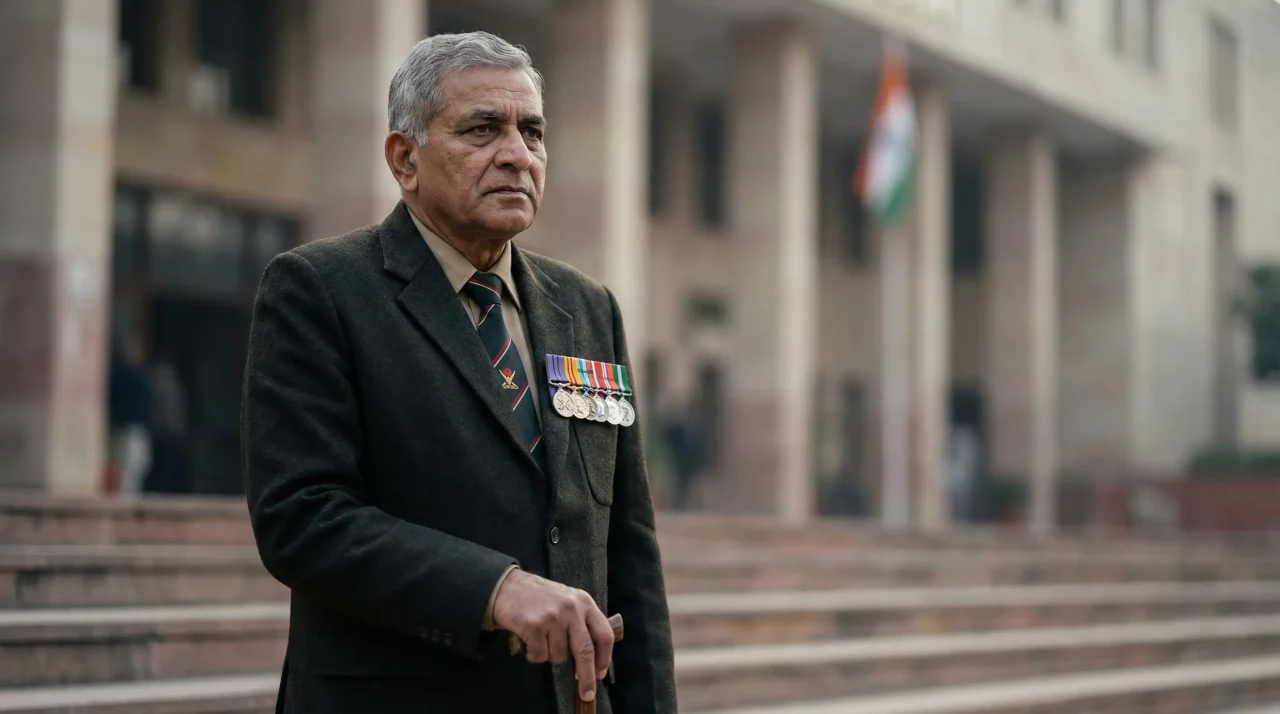
In a significant ruling, the Delhi High Court has dismissed a petition by retired Brigadier SKS Rana, who sought disability benefits for a gunshot injury incurred in 1973. The court, in a judgment delivered on February 9, 2026, upheld a previous decision made by the Armed Forces Tribunal, stating that the injury was not attributable to military service. This decision was announced by a division bench consisting of Justice V Kameswar Rao and Justice Manmeet Pritam Singh Arora.
The incident, which led to the injury, occurred on July 9, 1973, while Brigadier Rana was deployed in an operational area related to Operation Cactus Lily. During this time, he was engaged in a unit field firing exercise at the Harike Field Firing Range in Punjab. As part of his duties, he was responsible for coordinating safety arrangements at the range. However, while on site, he noticed ducks in nearby marshes. In an attempt to hunt the birds, he loaded his personal firearm and left his vehicle, but the ducks flew away. Upon returning to the jeep without unloading the weapon, he mishandled the firearm, resulting in an accidental discharge that severely injured his left hand, causing the traumatic amputation of his left index finger and partial impairment of his left thumb.
A Court of Inquiry carried out in 1973 documented the incident, confirming that the officer had held the gun incorrectly. The inquiry concluded that the incident was a recreational activity unrelated to his military duties, which was pivotal in the court’s ruling.
Brigadier Rana argued that the injury was indeed service-related. He pointed to a 1973 medical board’s assessment, which classified his injury as a permanent disability at approximately 20%, with no potential for improvement and a risk of deterioration. Furthermore, he claimed that his classification as SHAPE-1—a medical category indicating full fitness—by the Release Medical Board at his retirement in July 2005 unfairly denied him long-term disability pension benefits. Despite facing an amputation, he maintained the top-tier fitness category throughout his service, which the court interpreted as evidence that the injury did not hinder his professional capabilities.
The Ministry of Defence contended that the hunting activity was distinctly private and separate from military service circumstances. The petition lodged in 2016, over a decade after his retirement, was also deemed untimely by the Ministry. The Armed Forces Tribunal previously rejected his claims for similar reasons, which led to the appeal at the High Court.
In its ruling, the court pointed out that Brigadier Rana did not contest his SHAPE-1 medical classification during his active service. He only pursued the disability claim after retirement. The bench reiterated that injuries sustained during personal activities, even in a military context, do not qualify for disability benefits under existing pension regulations. The ruling reaffirms the necessity for a direct link between an injury and official military duties to establish eligibility for associated benefits.
This case reveals broader implications for service personnel regarding the importance of timely documentation and the clear attribution of injuries. It distinguishes operational hazards from personal activities, potentially shaping how future disability claims are evaluated within India’s military framework.


