




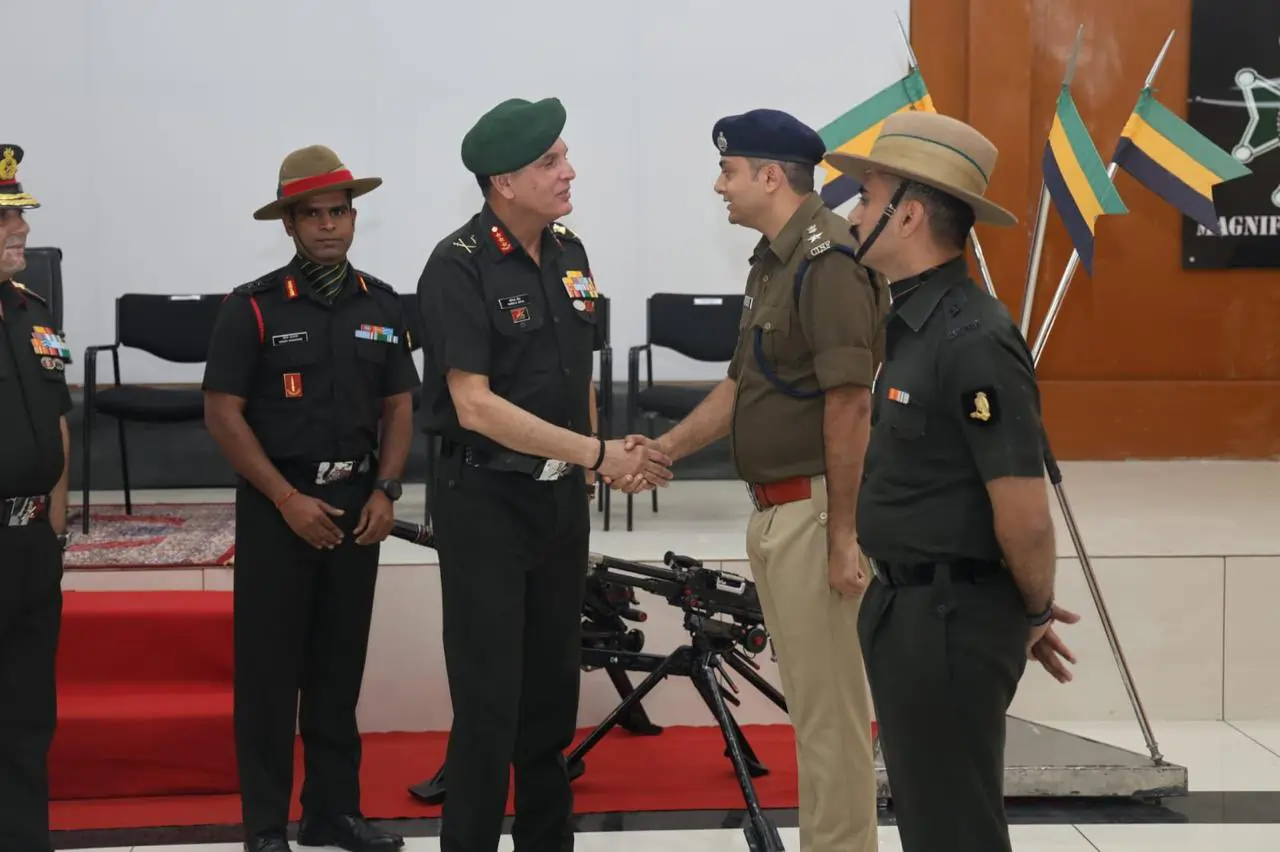
Lieutenant General Dhiraj Seth, the General Officer Commanding-in-Chief of the Southern Command, recently visited the Military–Civil Fusion Node in Bhopal to assess a two-week specialized training course designed for personnel of the Central Industrial Security Force (CISF). This initiative is primarily aimed at enhancing airport security measures and improving contingency response capabilities.
The training program is a key component of collaborative efforts to strengthen Military–Civil synergy in the protection of critical infrastructure. Participants are being taught advanced operational tactics by expert instructors from the Para (Special Forces) units of the Indian Army and the National Security Guard (NSG). These instructors are focusing on Close Quarter Battle (CQB) drills and crisis response procedures that are pertinent to today’s evolving threat landscape.
This structured training includes real-time simulations and tactical coordination modules, designed to prepare attendees for a wide range of operational scenarios. The training will culminate in a high-stakes validation exercise set to take place at Bhopal Airport. This exercise aims to assess inter-agency cooperation, response speed, and operational effectiveness in a high-pressure airport environment. The outcome of such drills is expected to enhance the nation’s security architecture, which is increasingly relying on coordinated, technology-driven solutions.
During his visit, Lt Gen Seth observed a live demonstration showcasing refined Tactics, Techniques and Procedures (TTPs) carried out collaboratively by instructors and CISF personnel. He expressed commendation for both the instructors and trainees, highlighting their professionalism, operational clarity, and commitment to joint training efforts.
The Army Commander stressed the importance of enhancing collaboration between military forces and central armed police forces to tackle the multifaceted and evolving security challenges facing the nation. This initiative signifies a collective determination to protect vital infrastructure and improve readiness against emerging threats through integrated and advanced technological frameworks.


