




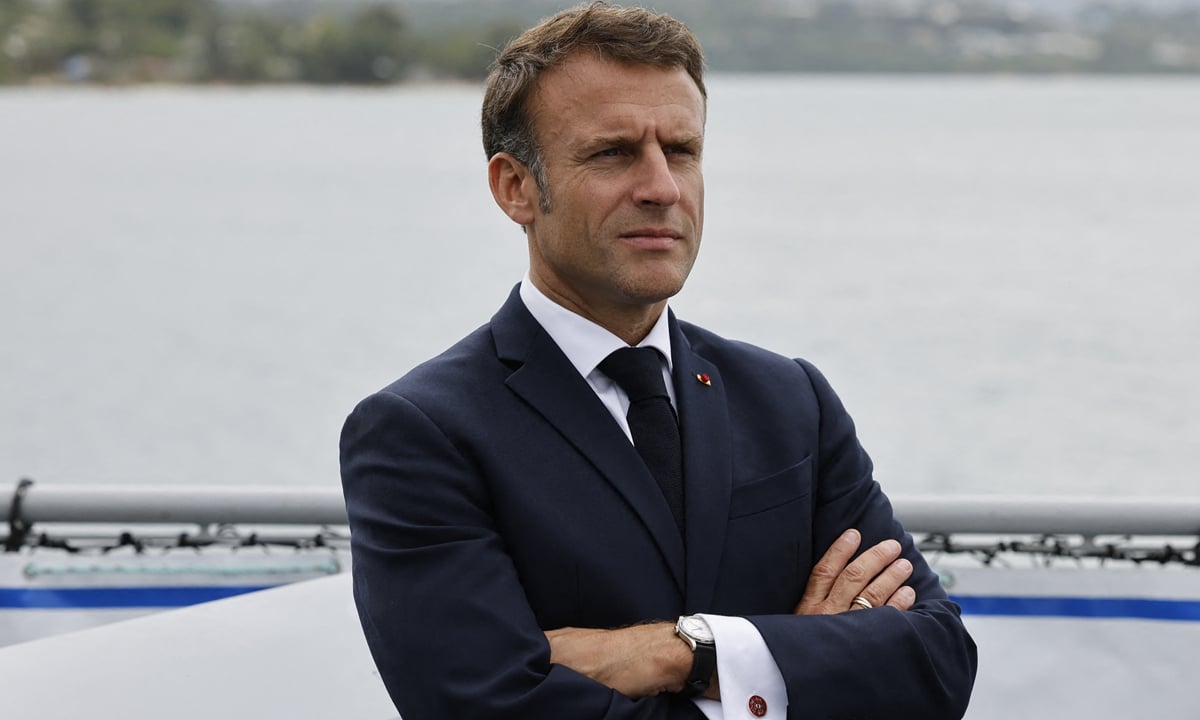
In a pivotal announcement, President Emmanuel Macron disclosed plans to enhance France’s nuclear capabilities as part of an effort to strengthen security throughout Europe. Speaking from the Ile Longue nuclear submarine base, Macron highlighted his intent to expand the country’s atomic arsenal and explore the possibility of deploying nuclear-armed aircraft in allied nations for the first time. This initiative underscores a significant shift in France’s nuclear strategy amidst growing geopolitical tensions.
Macron declared that eight European countries—including Germany, Poland, Sweden, and Britain—are set to join a new “forward” nuclear deterrence scheme. “Today more than ever, independence cannot mean isolation,” he articulated during his extensive 50-minute address, emphasizing the gravity of the current geopolitical upheaval. His remarks came on the heels of heightened conflict in the Middle East, particularly following U.S. and Israeli military actions against Iran.
The collaboration among the eight nations aims to leverage France’s nuclear stockpile to bolster European security. Notably, Germany has been identified as a pivotal partner in this initiative. Following Macron’s address, France and Germany announced the establishment of a “nuclear steering group,” indicating that this arrangement would complement, rather than replace, NATO’s existing nuclear deterrence strategies.
The collective effort will enable these nations—adding the Netherlands, Belgium, Greece, and Denmark—to temporarily host French “strategic air forces” that can be deployed across Europe. Macron stated that this approach would “complicate the calculations of our adversaries,” showcasing a united front against potential threats.
Furthermore, Macron reiterated that while allied forces would participate in nuclear activities, France would retain stringent control over its nuclear decision-making processes. He confirmed that initial concrete steps toward this collaboration would commence this year, including German conventional participation in French nuclear exercises.
In light of the ongoing war in Ukraine, Macron’s updated nuclear doctrine comes as NATO allies express concerns over the stability of U.S. commitments to European defense, particularly amid fears surrounding shifting political dynamics in Washington. While U.S. officials have offered reassurances about the continuity of the American deterrent for Europe, skepticism persists among European nations.
In a demonstration of solidarity, Polish Prime Minister Donald Tusk remarked on the discussions with France and fellow allies, emphasizing the necessity of collective defense, stating, “We are arming up together with our friends so that our enemies will never dare to attack us.” Similarly, Swedish Prime Minister Ulf Kristersson expressed a positive outlook on Macron’s initiative.
France currently maintains the world’s fourth-largest nuclear arsenal, consisting of approximately 290 warheads, with only the United Kingdom as another European nuclear power. In contrast, the U.S. and Russia each possess thousands of nuclear warheads, highlighting the disparity in global nuclear capabilities.
However, concerns have been raised regarding transparency in France’s nuclear policy. Jean-Marie Collin from the International Campaign to Abolish Nuclear Weapons forecasted a potential increase of 50 to 100 warheads over the next decade, warning that Macron’s decision to withhold details on France’s stockpile contradicts the principles of the Non-Proliferation Treaty. Additionally, Rafael Loss from the European Council on Foreign Relations cautioned that electoral changes in France, particularly a possible victory for far-right parties in upcoming elections, could undermine or reverse progress in nuclear deterrence strategies.
At the same time, leaders from the National Rally party criticized Macron’s “forward deterrence” concept, arguing it effectively disperses France’s nuclear assets across Europe. They vowed to vigorously protect the country’s nuclear sovereignty and effectiveness leading up to the next presidential election.


