




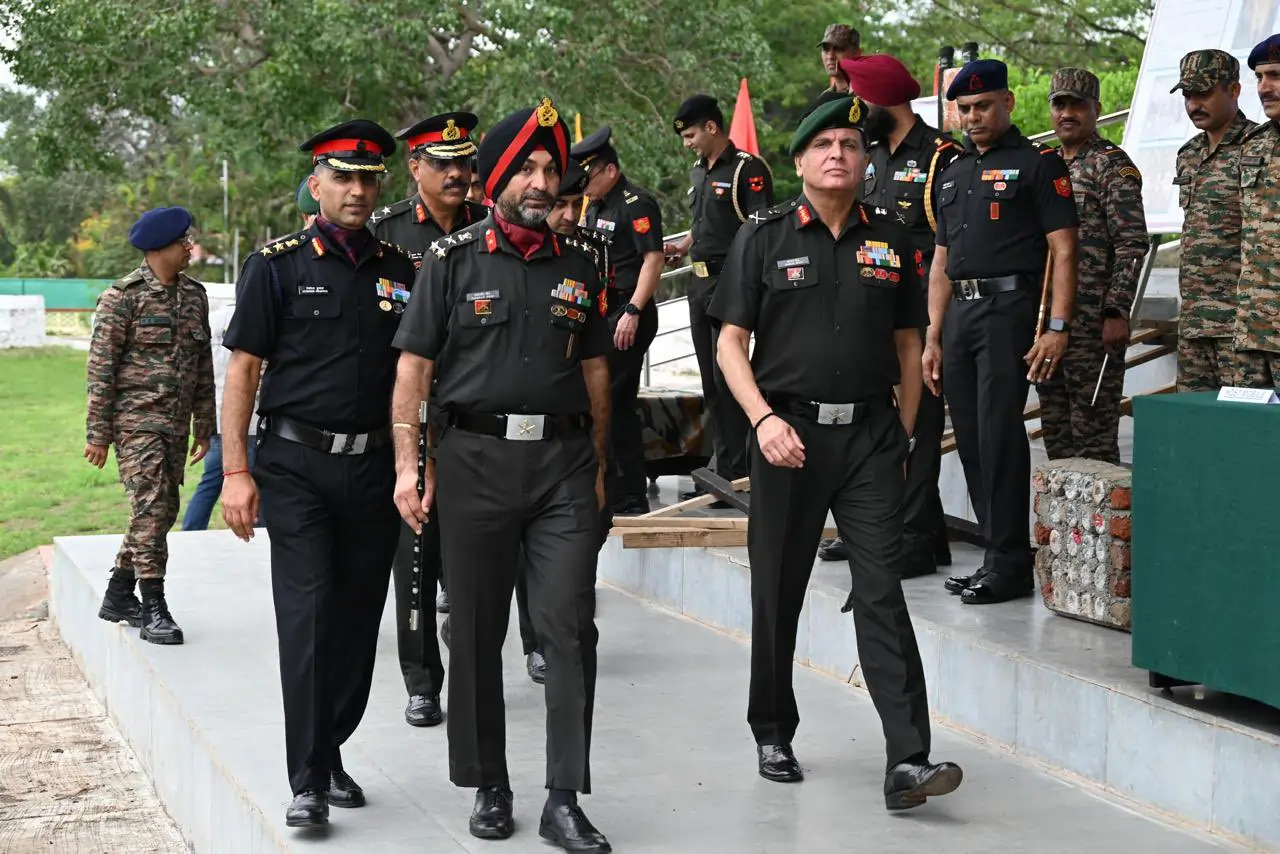
As the Indian Army gears up for a future leadership transition, three prominent Lieutenant Generals have emerged as key contenders to succeed General Upendra Dwivedi as Chief of Army Staff (COAS). General Dwivedi, who has been at the helm since June 2024, is set to retire in July 2026 when he reaches the age limit of 62. The anticipation surrounding his successor has ignited significant discussion among defense analysts and military strategists.
The current front-runner for the position is Lt Gen Pushpendra Singh, who serves as the Vice Chief of Army Staff. He is viewed as a strong candidate due to his seniority and extensive operational experience, particularly in counter-insurgency and logistics, making him a fitting choice against the backdrop of institutional continuity. His recent elevation to the Vice Chief position, alongside his notable background in the Special Forces, further cements his qualifications.
Other strong candidates are Lt Gen Dhiraj Seth and Lt Gen Pratik Sharma. Lt Gen Seth, who commands the Southern Command, has distinguished himself in armoured warfare operations. His experience in commanding rapid mobilization and managing the strike corps suggests he could be an asset if the government decides to prioritize conventional military strategies amid regional tensions.
Meanwhile, Lt Gen Pratik Sharma, currently in charge of the Northern Command, possesses extensive experience in high-altitude warfare and border management, particularly crucial given the ongoing security challenges with China and Pakistan. His operational history includes significant roles in counter-terrorism efforts and key military operations, positioning him well for the leadership role at a time of escalating geopolitical concerns.
The selection process for the next COAS will be handled by the Appointments Committee of the Cabinet (ACC), led by the Prime Minister. This committee will weigh a range of factors, including the candidates’ service records, operational expertise, and alignment with national security priorities. While seniority traditionally plays a crucial role in determining the next chief, past exceptions highlight that the decision may also hinge on the perceived operational readiness and strategic vision needed for the current security landscape.
Discussions surrounding the succession have accelerated as the Indian Army navigates complex challenges that include a transition toward multi-domain warfare capabilities and adapting to a rapidly changing global security environment. The impending selection will reflect the government’s broader strategic objectives, which emphasize enhancing the Army’s operational readiness, technological integration, and effectiveness against diverse threats.
Anticipated announcements regarding the new COAS may come closer to General Dwivedi’s retirement date, potentially influenced by geopolitical developments leading up to that time. As the deliberations unfold, the military community continues to observe how India’s defense leadership will evolve in response to both internal and external pressures.


