




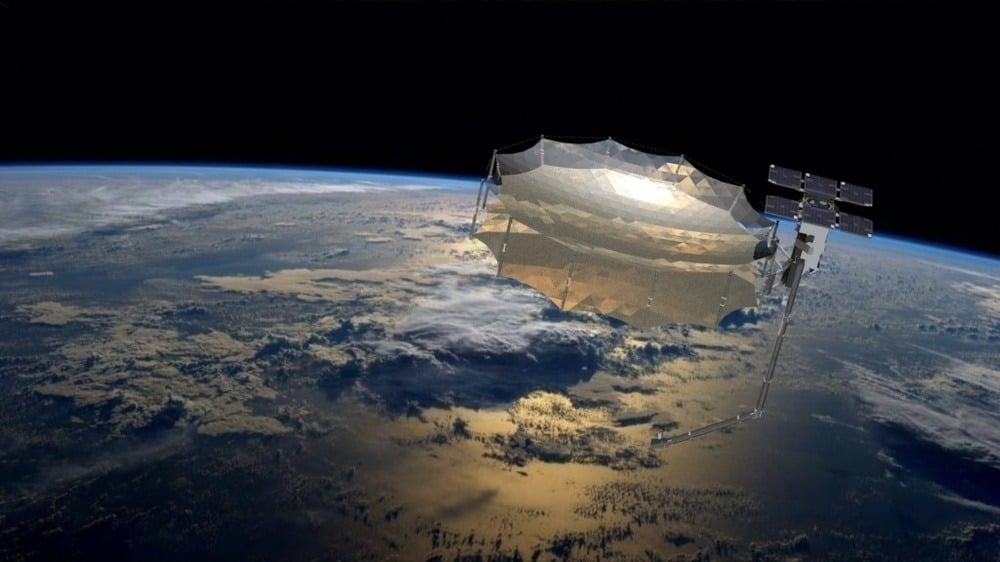
A plane glides silently over a landscape cloaked in darkness or obscured by clouds. Onboard, a radar system sweeps the terrain, constructing an image so detailed it can reveal roads, vehicles, or even moving targets — all without relying on visible light. This technology, known as synthetic aperture radar (SAR), transforms radio waves into high-resolution imagery, providing unparalleled observation capabilities in conditions where conventional sensors falter.
Synthetic aperture radar operates as a form of active remote sensing that harnesses radio waves to create detailed images of terrain, infrastructure, and ground movement. Its ability to penetrate clouds, smoke, and darkness gives it a decisive advantage for military applications, enabling real-time situational awareness when optical systems are rendered ineffective.
Mounted on various platforms, including aircraft, satellites, drones, and ships, SAR systems provide essential intelligence, surveillance, and reconnaissance (ISR) capabilities. The technology supports an extensive range of applications such as reconnaissance, topographic mapping, disaster monitoring, and environmental studies.
The development of SAR dates back to the 1950s and 1960s when early engineers sought to extend radar’s limits. Traditional systems were constrained by antenna size, meaning larger antennas produced clearer images. Researchers innovated by moving small radars along a flight path and mathematically synthesizing a larger antenna aperture, significantly enhancing image resolution.
Key contributors to SAR’s evolution include MIT Lincoln Laboratory, which developed early operational systems, and aerospace giants like Raytheon, Northrop Grumman, and Thales. These organizations advanced SAR payloads for both military and civilian uses, adapting the technology to meet specific mission needs.
SAR systems can be categorized by their platforms—airborne, spaceborne, and ground-based—each tailored for different applications. Airborne SAR is used for tactical ISR and battlefield surveillance, while spaceborne SAR facilitates global monitoring and strategic intelligence. Ground-based systems focus on monitoring infrastructure, terrain stability, and border zones.
Different imaging modes—Stripmap, Spotlight, ScanSAR, and Interferometric SAR (InSAR)—offer flexibility for various mission requirements. Stripmap mode provides continuous imaging swaths, while Spotlight mode focuses on smaller areas for higher resolution. ScanSAR allows for broad regional coverage at a lower detail level, and InSAR is adept at detecting subtle ground movements.
Key features of SAR include its high-resolution imaging resulting from the motion of the radar platform, all-weather and day/night capabilities, and its ability to detect moving targets through Doppler processing. However, SAR also faces limitations. The complexity of processing raw radar images requires significant computational resources, and inherent speckle noise can complicate image clarity. Additionally, while SAR is effective, it struggles to penetrate dense forests or thick concrete without specialized wavelengths.
Globally, SAR is now integral to military, civil, and commercial operations. Countries such as the US, China, France, and Sweden leverage SAR technology for various purposes, including maritime patrol and battlefield intelligence. Space agencies like the European Space Agency utilize SAR-equipped satellites for environmental monitoring, and NASA is advancing Earth observation through initiatives such as NISAR.
Coastal states deploy aerial SAR to monitor shipping lanes and detect illegal activities, while disaster response teams use the technology for mapping flood zones, assessing landslide impacts, and evaluating damage in obscured areas.
Looking to the future, SAR technology is advancing rapidly, with significant strides in miniaturizing payloads for deployment on drones and small satellites. Developments in dual- and multi-frequency systems are enhancing ground penetration and image quality, while AI-assisted techniques are speeding up target detection and analysis.
The integration of SAR into multi-sensor networks is also gaining momentum, combining radar data with optical and infrared sources to furnish a more comprehensive operational picture. As SAR continues to evolve, it remains poised to play a crucial role in modern ISR and environmental monitoring efforts well into the future.


