





In Defence Current Affairs for 08 April 2026, we will see the latest national and international current affairs news. These important current affairs will be beneficial for your upcoming NDA, CDS, CDS OTA, AFCAT, TA, Agniveer Army, Agniveer Navy, Agniveer Air Force, Women Military Police, INET, MNS, ACC exams, SCO, PCSL, CAPF, and SSB interviews, and direct entries for Army, Navy, and Air Force like SSC Tech, TGC, JAG, NCC, TES, 10+2 Cadet. Download a PDF file about current events at the end of this article. Let us now see the Current Affairs.
Defence Current Affairs 08 April 2026
What Is In Iran’s 10-Point Ceasefire Plan And Will The US Agree To It?
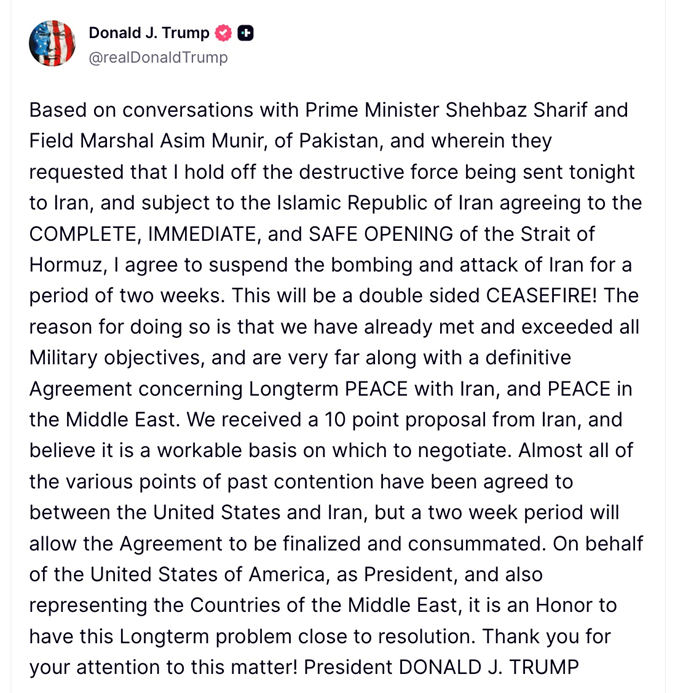
- The US and Iran agreed to a two-week ceasefire on Tuesday barely an hour before Donald Trump’s deadline to obliterate Iran was set to expire, with Tehran agreeing to temporarily reopen the strait of Hormuz.
- Israel also agreed to the ceasefire, the White House said. As Trump announced he was suspending his plans to escalate attacks across Iran, the US president said he had received a 10-point proposal from Iran which was a “workable basis on which to negotiate”.
- What demands are in Iran’s 10-point plan?
- According to state media, Iran will only accept the war’s conclusion once details are finalised in line with a 10-point peace plan reportedly submitted to the White House via Pakistani intermediaries.
- The list of 10 points, published by Iranian state media, include a number of conditions the US has rejected in the past. The plan requires:
- The lifting of all primary and secondary sanctions on Iran.
- Continued Iranian control over the strait of Hormuz.
- US military withdrawal from the Middle East.
- An end to attacks on Iran and its allies.
- The release of frozen Iranian assets.
- A UN security council resolution making any deal binding.
- In the version released in Farsi, Iran also included the phrase “acceptance of enrichment” for its nuclear program. But for reasons that remain unclear, that phrase was missing in English versions shared by Iranian diplomats to journalists.
- What does the ceasefire plan mean for the strait of Hormuz?
- The Iranian foreign minister, Abbas Araghchi, said safe passage through the strait would be allowed under Iranian military management. It wasn’t immediately clear whether that meant Iran would completely loosen its hold on the waterway.
- The plan allows Iran and Oman to charge a fee of up to $2m a ship on vessels transiting through the strait, according to reports. Iran would then use the money it raises for reconstruction.
- If peace talks fail, Tehran may again seek to close the strait.
- What will happen next?
- Pakistan’s prime minister, Shehbaz Sharif, who helped mediate the ceasefire, said in a post on X that he had invited Iranian and US delegations to meet in Islamabad on Friday.
- Tehran has said it will participate in the talks. The White House said it is considering in-person talks with Iran but they have not been finalised.
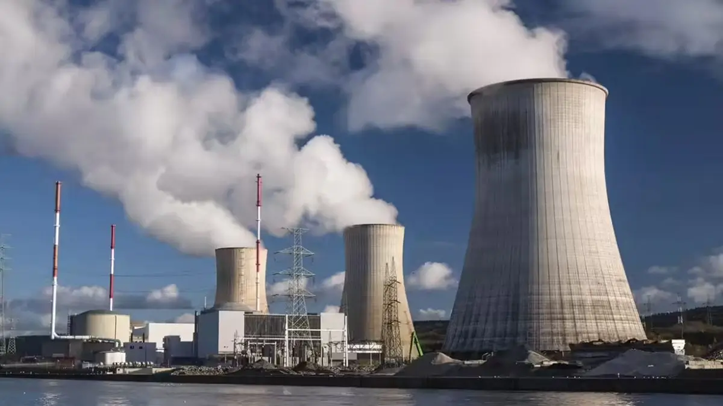
India’s Most Advanced Atomic Reactor Attains Criticality
- India has achieved the major milestone in its nuclear energy journey as indigenously developed Prototype Fast Breeder Reactor (PFBR) at Kalpakkam has successfully attained the criticality. This marks the vital step to advancing the country’s long term nuclear program.
- This 500 MW Prototype Fast Breeder Reactor (PFBR) is the key project operated by Bharatiya Nabhikiya Vidyut Nigam Limited.
- Unlike the conventional reactors the fast breeder reactor has a unique advantage.
- Key Features
- As they produce more nuclear fuel than it consumes.
- Uses plutonium based fuel.
- Also enhances fuel efficiency and sustainability.
- India’s nuclear strategy is designed and planned in three stages.
- Stage 1 : In the beginning the use of natural uranium in Pressurized Heavy Water Reactors (PHWRs).
- Stage 2: The deployment of this Fast Breeder Reactors (like PFBR) to generate more fuel.
- Stage 3: Proper utilization of thorium based reactors for long-term energy security.
- This project showcasing the India’s commitment to the,
- The clean energy generation with low carbon emissions
- Also reducing dependence on fossil fuels
- And strengthen the Aatmanirbhar Bharat
- A Fast Breeder Reactor (FBR) is one of type of nuclear reactors which generates more fissile material than it consumes.
- Advantages of the FBRs are efficient use of nuclear fuel, it reduces the nuclear waste and also supports long-term energy sustainability.
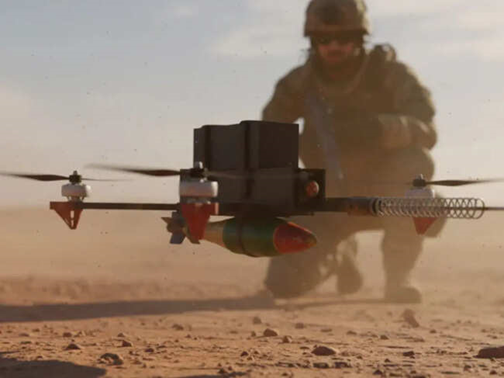
Indian Army Plans 30 Drone Types
- The Indian Army has released a landmark document titled “Indian Army’s Technology Roadmap for Unmanned Aerial Systems and Loitering Munitions”, outlining its long-term capability requirements in the domain of unmanned platforms and precision strike systems.
- The roadmap was released by Lieutenant General Rahul R Singh, Deputy Chief of Army Staff (CD&S). It is aimed at providing clarity on future requirements to industry, academia and the research and development ecosystem, while driving indigenous innovation in line with the Aatmanirbhar Bharat initiative
- The document lays out requirements across 30 types of unmanned aerial systems and loitering munitions, spanning surveillance, strike, air defence support, special roles and logistics applications. The framework is expected to generate nearly 80 variants depending on terrain and operational needs.
- Categories of drones
- Surveillance systems
- High Altitude Long Endurance (HALE)
- • Medium Altitude Long Endurance (MALE)
- High Altitude Pseudo Satellite (HAPS)
- • Medium Altitude Persistent Surveillance System (MAPSS)
- • Unmanned aerial systems for long-range surveillance
- • Unmanned aerial systems for medium-range surveillance
- • Unmanned aerial systems for short-range surveillance
- • Tethered drones for surveillance
- Loitering munitions
- • Long-range loitering munition
- • Medium-range loitering munition
- • Short-range loitering munition
- • Swarm drones (surveillance and strike roles)
- • FPV drones with strike capability
- • Low-cost loitering munition
- Air defence role systems
- • Drone-on-drone systems
- • Drones for anti-swarm roles
- • Aircraft/helicopter emulator systems (UALS)
- Special role systems
- • Mother–child configuration UAS
- • Hunter–killer configuration UAS
- • MUM-T systems for helicopters and armoured fighting vehicles
- • Weapon-mounted UAS
- • UAS for survey roles
- • Mine-dispensing UAS
- • Swarm drones as smart mines
- • UAS-based jammers
- • UAS for data relay
- • Nano drones
- • Munition delivery systems (guided and unguided bombs, ULPGMs)
- Logistics systems
- • Logistic UAS / UALS
- • Long-range logistic haulers
Indian Army Gets Hundreds Of Suicide Flying Machines
- A Gujarat-based deep-tech drone company has supplied “hundreds of kamikaze (suicide or self-destruct) drones” to the Indian Army under a ₹10 crore contract awarded by the defence ministry.
- The contract with Surat-based Inside FPV was signed in December last year, and the consignment was delivered within two months through the emergency procurement route. The exact number of drones supplied to the Army’s Northern Command has not been disclosed due to security considerations.
- Autonomous precision with real-time targeting
- Top speed of 120 km/hAI-powered guidance for accurate strikes
- Compact design for frontline deployment
- Maximum altitude of 2.5 km (AGL)Operational range of 10 km
- Payload capacity of 2.5 kgMission useSurgical strike operations with high-precision payload delivery
- Rapid response to insurgent hideouts and emerging threats
- High-risk combat scenarios where conventional forces have limited access
- Neutralisation of fortified or mobile targets deep in enemy territory
India To Conduct Advanced Navigation Jamming Exercises
- The Indian government has officially announced its intention to perform a series of Global Navigation Satellite System (GNSS) jammer trials within the Bay of Bengal.
- These critical tests are scheduled to take place over a two-day period, specifically on the 11th and 12th of April 2026.According to various official notifications and maritime reports, the trials will be concentrated in the strategically vital Bay of Bengal region. Specific mentions have been made regarding the waters situated near the Andaman and Nicobar Islands, an area often utilised for sensitive military evaluations.
- The primary purpose of this exercise is to test and validate India’s evolving electronic warfare (EW) capabilities. The focus will be on assessing the effectiveness of ground-based systems that are designed to intentionally disrupt or “jam” signals from major satellite-based navigation constellations, including GPS, GLONASS, Galileo, and BeiDou.
- The central objective of these trials is to build a robust domestic capacity to deny precision navigation to hostile assets. By mastering these disruption techniques, India aims to effectively counter the threat posed by unmanned aerial vehicles (UAVs), incoming missiles, and adversary aircraft that rely on satellite data for targeting.

Review Questions
- The 500 MW Prototype Fast Breeder Reactor (PFBR) at Kalpakkam is operated
by which organization?
A. Nuclear Power Corporation of India Limited (NPCIL)
B. Defence Research and Development Organisation (DRDO)
C. Bharatiya Nabhikiya Vidyut Nigam Limited (BHAVINI)
D. Bhabha Atomic Research Centre (BARC)
ANSWER: C - What is the key advantage of a Fast Breeder Reactor (FBR)?
A. Uses only uranium fuel
B. Produces less energy than conventional reactors
C. Produces more fissile material than it consumes
D. Generates high carbon emissions
ANSWER: C - In India’s three-stage nuclear program, Fast Breeder Reactors belong to which
stage?
A. Stage 1
B. Stage 2
C. Stage 3
D. Stage 4
ANSWER: B - The Indian Army’s roadmap for unmanned systems includes approximately
how many types of drones?
A. 10 types
B. 20 types
C. 30 types
D. 50 types
ANSWER: C - The primary objective of India’s GNSS jamming trials in the Bay of Bengal is to:
A. Improve civilian GPS services
B. Enhance satellite communication speed
C. Disrupt enemy navigation systems
D. Launch new satellites
ANSWER: C - What is the motto of the Headquarters, Integrated Defence Staff (IDS)?
A. “Unity is Strength“
B. “Service with Honor“
C. “Victory Through Jointness“
D. “Courage Under Fire”
ANSWER: C - Army Medical Corps Centre and College Is In
A. Pune
B. Lucknow
C. Mumbai
D. Noida
ANSWER: B - INS Taragiri Is Manufactured By
A. CSL
B. MDL
C. GRSE
D. None
ANSWER: B - INS Taragiri Is Made Under__ Project.
A. P75 I
B. P17A
C. P15B
D. None
ANSWER: B - Ex SURYA KIRAN Conducted b/w India &
A. Bhutan
B. Sri Lanka
C. UAE
D. Nepal
ANSWER: D - European ASRAAM Stands For
A. Advanced Short Range Air Missile
B. Advanced Short Ring Air-to-Air Missile
C. Advanced Short Range Air-to-Air Missile
D. None
ANSWER: C - Marine Engineering Training Establishment of the Indian Navy located at
A. Noida
B. Kochi
C. Pune
D. Wayanad
ANSWER: C - Where Is The Hq Of The South Western Command of The Indian Army?
A. Jaipur
B. Jabalpur
C. Pune
D. Mumbai
ANSWER: A - Sea Dragon Exercise Hosted By
A. USA
B. Sweden
C. France
D. None of the above
ANSWER: A - India Purchased C 130 J from
A. USA
B. Sweden
C. France
D. None of the above
ANSWER: A - College of Military Engineering (CME) Is Located At
A. Pune
B. Kamptee
C. Mumbai
D. Noida
ANSWER: A - India Purchased IAI Searcher UAV from
A. USA
B. Sweden
C. France
D. Israel
ANSWER: D - HELINA Missile Has A Maximum Range Of
A. 7 kilometres
B. 8 kilometres
C. 9 kilometres
D. 10 kilometres
ANSWER: A - “We Protect“ Is The Motto Of
A. ICG
B. IAF
C. Indian Army
D. BSF
ANSWER: A - Joint Exercises B/w The India And France Is Called:
A. Yama
B. SLINEX
C. Indra
D. GARUDA
ANSWER: D
ALSO READ:
- Latest Daily Current Affairs and Defence Updates
- Latest Daily Current Affairs March 2026[DOWNLOAD PDF]
- Latest Daily Current Affairs February 2026[DOWNLOAD PDF]
- Latest Daily Current Affairs January 2026[DOWNLOAD PDF]
- Latest Daily Current Affairs November 2025[DOWNLOAD PDF]
- Latest Daily Current Affairs October 2025[DOWNLOAD PDF]
- Latest Daily Current Affairs August 2025[DOWNLOAD PDF]
- Latest Daily Current Affairs July 2025[DOWNLOAD PDF]
- Monthly Defence Current Affairs June 2025 [DOWNLOAD PDF]
- Monthly Defence Current Affairs May 2025 [DOWNLOAD PDF]
- Monthly Defence Current Affairs April 2025 [DOWNLOAD PDF]
- Monthly Defence Current Affairs March 2025 [DOWNLOAD PDF]
- Monthly Defence Current Affairs February 2025 [DOWNLOAD PDF]
- Monthly Defence Current Affairs January 2025 [DOWNLOAD PDF]
- Defence Current Affairs Year End Review 2024
- Monthly Defence Current Affairs November 2024 [DOWNLOAD PDF]
- Monthly Defence Current Affairs October 2024 [DOWNLOAD PDF]
- Monthly Defence Current Affairs September 2024 [DOWNLOAD PDF]
- Monthly Defence Current Affairs August 2024 [DOWNLOAD PDF]
- Monthly Defence Current Affairs July 2024 [DOWNLOAD PDF]
- Monthly Defence Current Affairs June 2024 [DOWNLOAD PDF]


