




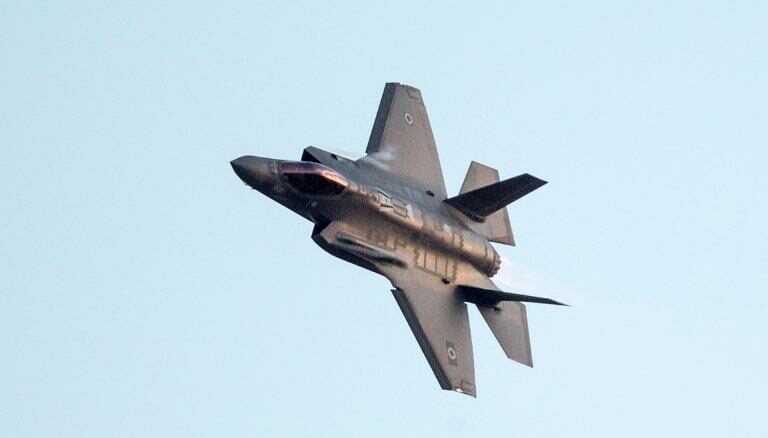
Israel has taken a significant step to enhance its military capabilities by approving a multi-billion-dollar deal to acquire two combat squadrons of fighter jets from the United States. This decision, announced by Prime Minister Benjamin Netanyahu, is seen as a move to bolster the nation’s air superiority.
The procurement includes a squadron of F-35 multi-role stealth fighters manufactured by Lockheed Martin, alongside a squadron of F-15IA warplanes from Boeing. The Israeli Ministry of Defense stated that this plan is aimed at securing Israel’s air dominance for the foreseeable future.
Defense Minister Israel Katz emphasized the importance of these acquisitions in the context of the “Shield of Israel” initiative, which is designed to provide the Israel Defense Forces (IDF) with a sustainable qualitative edge over adversaries. Katz reiterated that both the F-35 and F-15IA are crucial components of this strategy.
The F-35, recognized as one of the most advanced military aircraft globally, has already seen deployment in Israel, with the country operating several dozen jets. Netanyahu noted that these new acquisitions would reinforce Israel’s “overwhelming air superiority.” He also revealed plans to develop indigenous weapons and aircraft, stating, “Over the next decade we will add 350 billion shekels ($118 billion) to the defense budget in order to manufacture such weaponry in Israel and not be dependent on foreign suppliers.” He further announced intentions to create “blue-and-white” groundbreaking aircraft that would revolutionize the military landscape.
The Israeli Air Force has recently showcased its capabilities through extensive operations in Gaza, conducting one of the most intense aerial bombardments in memory. Thousands of air strikes targeted what Israel identified as Hamas positions, including critical infrastructure such as tunnels and command centers. However, these operations have raised concerns over the extensive damage inflicted on civilian areas, including homes, hospitals, and schools.
In addition to its engagements in Gaza, Israel has also been involved in military operations against Iran, asserting its air power through long-range strikes deep within Iranian territory. Israeli officials have characterized these missions as precise actions aimed at crippling Iran’s strategic capabilities, while Iranian sources have reported multiple retaliatory air strikes on significant cities and industrial regions.
As part of a broader defense strategy, Israel has recently approved its 2026 budget, which includes a substantial increase in defense expenditure. This uptick in military spending follows the conflict in Gaza initiated by Hamas’s attack on October 7, 2023. The nation continues to confront threats not only from Iran but also from the Iran-backed Islamist movement Hezbollah in southern Lebanon, further underscoring the strategic importance of enhanced military capabilities.


