




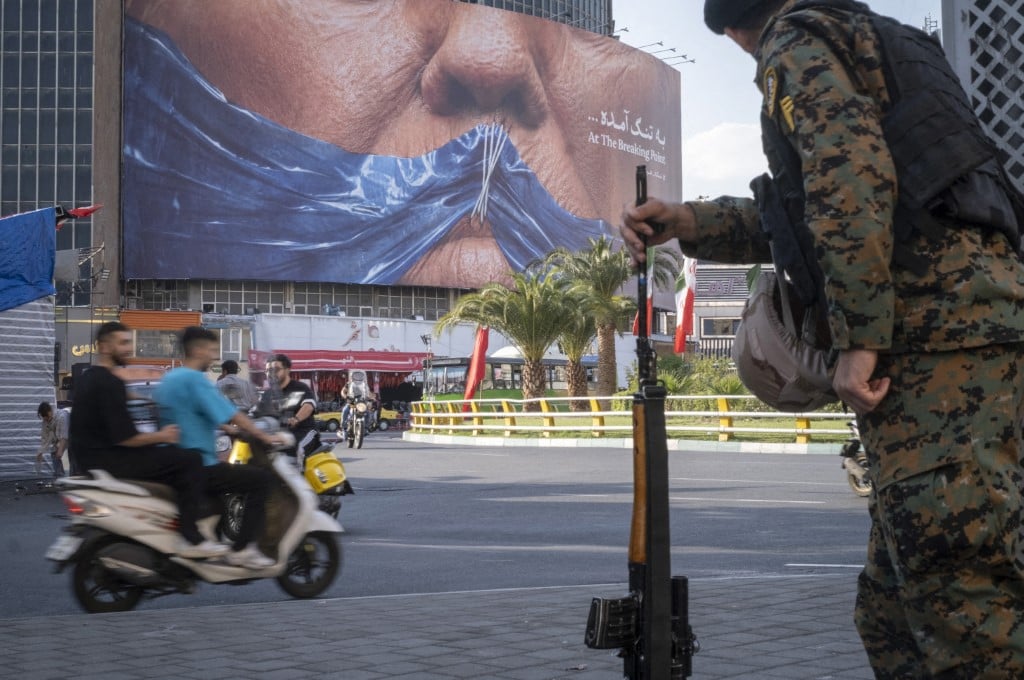
Tehran has issued a stern warning to Washington following recent U.S. military strikes, accusing the American forces of violating a ceasefire agreement and signaling that it is prepared to retaliate. The tension escalated overnight as U.S. Central Command (CENTCOM) announced a series of bombings targeting Iranian missile sites and mine-laying boats. The strikes resulted in a noticeable increase in oil prices, with the Brent benchmark climbing over three percent amidst concerns about the stability of the region.
In response to the bombings, Iranian state media reported explosions in Bandar Abbas, a strategic port city bordering the Strait of Hormuz. The Iranian Revolutionary Guards claimed to have intercepted a U.S. drone and targeted an F-35 fighter jet during these events. “The U.S. terrorist army,” Iran’s foreign ministry stated, has grossly violated the ceasefire in the Hormozgan region and it will not leave its actions unanswered. Tehran emphasized its commitment to defending its nation but did not elaborate on how it plans to act.
CENTCOM’s spokesman, Captain Tim Hawkins, explained that the U.S. strikes were carried out as “self-defense” in southern Iran to protect American troops from perceived threats. However, details about the specific targets remained vague, focusing mostly on missile launch sites and boats suspected of laying mines in the area.
In a related message, Iranian Supreme Leader Ayatollah Mojtaba Khamenei noted that the U.S. is losing influence in the Middle East and urged regional countries to cease hosting American military bases. Khamenei characterized U.S. military presence as diminishing and warned of its growing isolation.
Despite the ongoing hostilities, U.S. Secretary of State Marco Rubio maintained that a peace deal between the U.S. and Iran was within reach, declaring that the Strait of Hormuz would reopen “one way or the other.” However, the recent military actions have significantly threatened the fragile ceasefire established on April 8, prompting a call from China for both parties to adhere to their commitments and seek peaceful resolutions.
In Lebanon, Israeli airstrikes led to a troubling increase in casualties, with the Beirut health ministry reporting that 31 individuals, including at least four children, had died. The assaults come amid calls from Iran for any peace agreement to extend to Lebanon, where an April 17 truce has been ineffective following Hezbollah’s attacks against Israel.
Israeli Prime Minister Benjamin Netanyahu committed to eliminating the threat posed by Hezbollah, with military officials indicating a deepening of operations within Lebanese territory. Meanwhile, diplomatic efforts continue between Washington and Tehran, with reports of Iranian delegations returning from discussions in Qatar. Iran is reportedly working on a 14-point framework aimed at negotiating an end to the conflict.
In parallel, there have been developments regarding Iran’s internet restrictions. Following a lengthy blackout that lasted nearly three months—the longest such shutdown in recent history—partial restoration of internet services has begun. Tasnim news agency reported that Iranian negotiators are pushing for the release of $24 billion in frozen assets, contingent on the signing of an initial memorandum of understanding. The vice president confirmed that steps have been taken to restore internet access, acknowledging the people’s demands for connectivity.
As the situation evolves, both regional stability and the prospect of a diplomatic resolution remain uncertain amidst escalating tensions and ongoing violence.


