




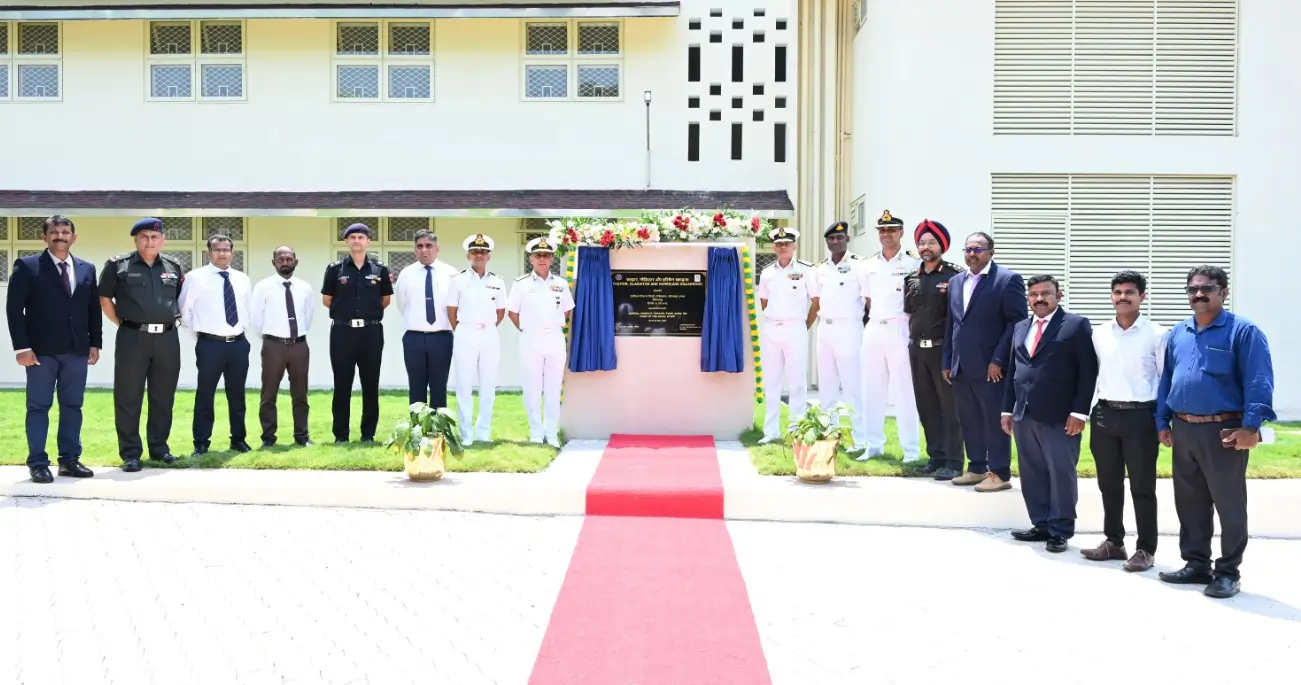
The Indian Naval Academy (INA) in Ezhimala has marked a significant milestone in its expansion and modernization efforts with the inauguration of three new cadets’ squadron buildings. The virtual ceremony took place on May 21, 2026, presided over by Admiral Dinesh Kumar Tripathi, Chief of the Naval Staff. This development is part of the second phase of the Naval Academy Project, strategically aimed at enhancing the Academy’s capability to train an increasing number of officer trainees for the Indian Navy.
The inauguration of these new facilities is particularly significant as the Indian Navy embarks on a comprehensive modernization initiative that includes expanding its operational reach and inducting more officer trainees to address future maritime challenges. As India’s foremost institution for naval officer training, the INA is essential in developing cadets into skilled, disciplined officers equipped to navigate the complexities of maritime service.
The ceremony was attended by notable military figures such as Vice Admiral Sameer Saxena, Flag Officer Commanding-in-Chief of the Southern Naval Command, and Vice Admiral Manish Chadha, Commandant of the Indian Naval Academy. The event also welcomed senior officers, faculty members, and personnel from the Military Engineer Services, highlighting the collaborative effort behind this significant development.
The completion of these squadron buildings represents a major leap in the Academy’s modernization journey. INA has progressively transformed itself into a world-class training center, where academic instruction is complemented by military discipline, physical training, leadership development, and a strong naval orientation. These elements are critical for preparing cadets to meet the evolving requirements of maritime service.
Equipped with contemporary infrastructure, the newly inaugurated buildings provide modern amenities and enhanced living conditions, designed to support the rigorous training regime of officer trainees. The squadron environment is a vital aspect of a cadet’s experience, fostering teamwork, responsibility, leadership, and mutual support, which help cultivate a strong sense of belonging among trainees.
The addition of these squadron buildings is expected to improve living standards significantly for cadets, creating a more conducive atmosphere for their demanding training routines. This enhanced infrastructure aims to support the holistic development of trainees, aiding their physical, mental, academic, and professional growth throughout their time at the Academy.
As a cradle of naval leadership in India, the Indian Naval Academy adheres to a training philosophy that emphasizes the cultivation of not only professional competence but also moral courage, discipline, resilience, and a profound commitment to national service. The new facilities will contribute to strengthening this mission by enabling the Academy to accommodate and effectively train a larger number of cadets.
Moreover, this inauguration is a reflection of the Indian Navy’s ongoing commitment to investing in human capital—as vital as investments in platforms and operational capabilities. The Navy’s readiness to tackle challenges in the dynamic maritime landscape of the Indian Ocean Region and beyond hinges on the effective training of future officers.
With the commissioning of these new squadron buildings, the Indian Naval Academy solidifies its prestigious stature as a leading institution dedicated to producing capable officers who possess the skills, values, and vision essential for safeguarding India’s maritime interests.


