





In Current Affairs for 28 May 2026, we will see the latest national and international current affairs news. These important current affairs will be beneficial for your upcoming NDA, CDS, CDS OTA, AFCAT, TA, Agniveer Army, Agniveer Navy, Agniveer Air Force, Women Military Police, INET, MNS, ACC exams, SCO, PCSL, CAPF, and SSB interviews, and direct entries for Army, Navy, and Air Force like SSC Tech, TGC, JAG, NCC, TES, 10+2 Cadet. Download a PDF file about current events at the end of this article. Let us now see the Current Affairs.
Current Affairs 28 May 2026
Sansad Ratna Awards 2026
The Sansad Ratna Awards 2026 have been announced to honour the exceptional performance of Members of Parliament and Parliamentary Standing Committees. The awards recognise lawmakers who have shown dedication, active participation, and effective contribution in parliamentary proceedings. This year, the jury selected 10 Lok Sabha MPs, 2 Rajya Sabha MPs, and 4 Parliamentary Standing Committees for the prestigious recognition.
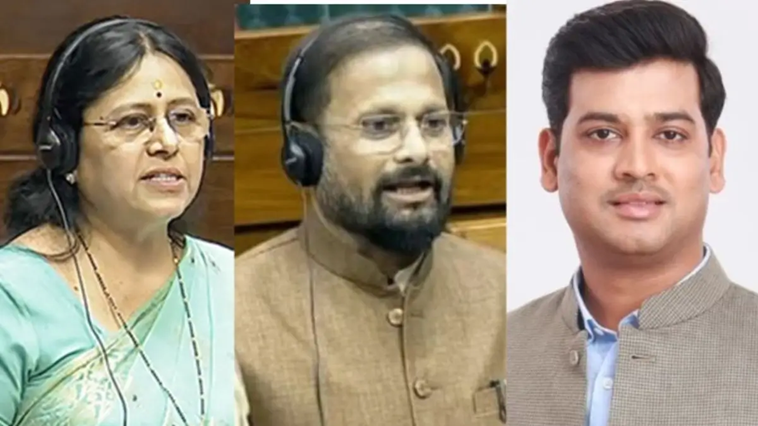
Among the awardees, Rajya Sabha MP Dr. Medha Vishram Kulkarni from Pune and Lok Sabha MP Smita Uday Wagh from Jalgaon received special attention. Smita Uday Wagh’s recognition is considered remarkable because she continued to perform her parliamentary duties despite battling cancer. Her dedication has been widely appreciated.
The Lok Sabha MPs selected for the award include Jagdambika Pal from Uttar Pradesh, P.P. Chaudhary from Rajasthan, Nishikant Dubey from Jharkhand, Dr. Shrikant Eknath Shinde from Maharashtra, Praveen Patel from Uttar Pradesh, Bidyut Baran Mahato from Jharkhand, Lumbaram Chaudhary from Rajasthan, Dr. Hemant Vishnu Savara from Maharashtra, Smita Uday Wagh from Maharashtra, and Naresh Ganpat Mhaske from Maharashtra.
The Rajya Sabha MPs selected are Dr. Medha Vishram Kulkarni from Maharashtra and Narhari Amin from Gujarat.
Four Parliamentary Standing Committees were also honoured for their effective functioning and valuable contributions. These include the Committee on Agriculture chaired by Dr. Charanjit Singh Channi, the Finance Committee chaired by Bhartruhari Mahtab, the Rural Development and Panchayati Raj Committee chaired by Saptagiri Sankar Ulaka, and the Coal and Mines Committee chaired by Anurag Thakur.
The Sansad Ratna Award was instituted in 2010 by the Chennai-based NGO Prime Point Foundation. The concept was inspired by former President Dr. A.P.J. Abdul Kalam, who also launched the first award ceremony. The award aims to encourage transparency, accountability, and excellence in parliamentary democracy.
India’s Total Fertility Rate Falls Below Replacement Level
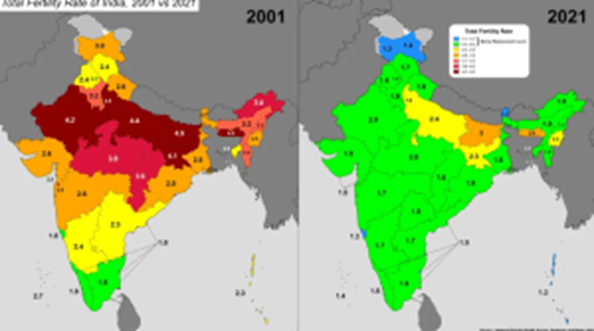
India’s Total Fertility Rate (TFR) declined to 1.9 in 2024 according to the Sample Registration System (SRS). This marks an important demographic milestone because the replacement fertility level is considered to be 2.1 children per woman. The replacement level indicates the average number of children needed for a population to replace itself from one generation to the next.
The Total Fertility Rate refers to the average number of children a woman is expected to have during her reproductive years, generally between the ages of 15 and 49. A fertility rate below the replacement level may eventually lead to slower population growth and ageing of the population.
Among Indian states, Bihar recorded the highest TFR at 2.9 in 2024. Uttar Pradesh, Madhya Pradesh, Rajasthan, Chhattisgarh, and Jharkhand also remained above the replacement level. In contrast, Delhi recorded the lowest fertility rate at 1.2. Tamil Nadu, Kerala, and West Bengal each reported a TFR of 1.3.
The data also revealed a clear difference between rural and urban India. Rural areas recorded a TFR of 2.1, while urban regions had a much lower rate of 1.5. This reflects changing lifestyles, increasing education levels, urbanisation, and growing awareness regarding family planning.
India’s working-age population, defined as the 15–59 age group, accounted for 66.4% of the total population in 2024. At the same time, the elderly population above 60 years increased from 8.6% to 9.7% over the last decade. Kerala recorded the highest elderly population share at 15%.
Earlier, the National Family Health Survey-5 conducted during 2019–21 had estimated India’s TFR at 2.0. The latest SRS figures indicate a continuing decline in fertility levels across the country. The Sample Registration System remains one of India’s most important sources of demographic and population-related statistics.
Women-Led Solar Power Plant Inaugurated in Telangana
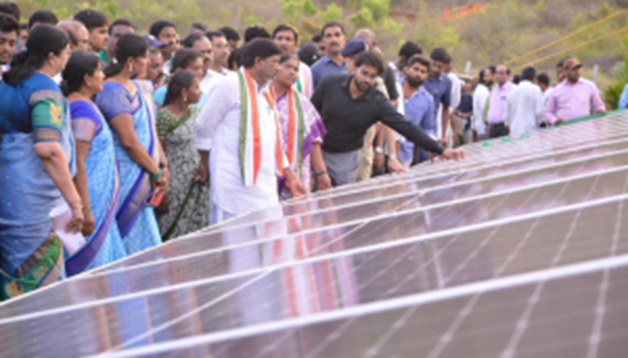
India achieved a significant milestone in renewable energy and women empowerment with the launch of the country’s first solar power projects operated by women’s self-help groups in Telangana on 27 May 2026. A 1 MW solar power plant was inaugurated at Venkatapuram village in Errupalem mandal of Khammam district under the Indira Mahila Shakti scheme.
Solar power is generated by converting sunlight into electricity through photovoltaic cells or solar thermal technology. The Khammam plant has an installed capacity of 1 MW and was developed at a cost of nearly ₹3 crore.
The project is being managed entirely by women’s self-help groups, which are community-based organisations formed for savings, credit, livelihood generation, and rural development activities. The initiative combines clean energy production with economic empowerment for rural women.
According to estimates, the solar plant is expected to generate a daily income of around ₹14,000 to ₹15,000 and monthly earnings of nearly ₹4.5 lakh to ₹5 lakh for the participating groups. This will provide a stable source of income and encourage more women to participate in renewable energy projects.
The Telangana government has also increased the limit of interest-free loans available to women’s self-help groups from ₹5 lakh to ₹10 lakh. This step aims to strengthen women-led enterprises and improve financial independence.
Telangana has set an ambitious target of generating 20,000 MW of solar power by 2030. The state government plans to establish similar projects in every district, linking sustainable energy development with women’s participation in the economy.
Two Indian Peacekeepers To Receive UN Honours
Two Indian peacekeepers, Lance Havildar Harbhajan Singh and Naib Subedar Sujit Kumar Pradhan, will be honoured posthumously with the Dag Hammarskjöld Medal by the United Nations. The award ceremony will take place at the United Nations Headquarters in New York on 5 June 2026.
On the same occasion, Major Abhilasha Barak will receive the 2025 Military Gender Advocate of the Year Award for her contributions to gender inclusion and peacekeeping efforts.
Lance Havildar Harbhajan Singh served with the United Nations Organisation Stabilisation Mission in the Democratic Republic of the Congo, commonly known as MONUSCO. Naib Subedar Sujit Kumar Pradhan served with the United Nations Mission in South Sudan, known as UNMISS. Major Abhilasha Barak is serving with the United Nations Interim Force in Lebanon, or UNIFIL.
United Nations peacekeeping operations began in 1948 with the deployment of military observers to the Middle East. Since then, peacekeeping missions have played an important role in conflict resolution and maintaining international peace and security.
India is among the largest contributors to UN peacekeeping missions and has deployed more than 4,200 personnel in operations around the world. Indian peacekeepers have earned global respect for their professionalism, courage, and humanitarian service. India has also recorded the highest number of fatalities among troop-contributing nations.
The International Day of United Nations Peacekeepers is observed every year on 29 May to honour the service and sacrifice of peacekeepers worldwide.

Sikkim Police Receives President’s Police Colour
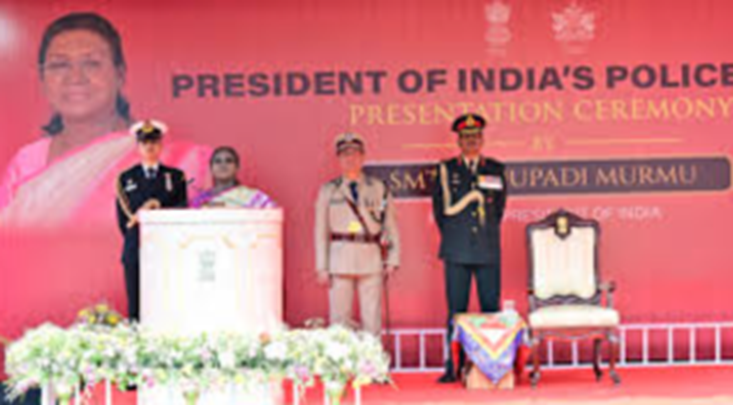
The President’s Police Colour, also known as Nishaan, was conferred upon the Sikkim Police by President Droupadi Murmu on 28 May 2026 at Paljor Stadium in Gangtok. This is considered the highest ceremonial honour awarded to a police force in India.
The President’s Police Colour is given in recognition of exceptional service, bravery, professionalism, discipline, and dedication towards national duty. The honour reflects the outstanding contribution of a police force in maintaining law and order and serving society.
Sikkim Police became the 15th state police force in India to receive this prestigious distinction. It also became the third police force in the Northeast region to receive the honour after Assam Police and Tripura Police.
The Sikkim Police was established in 1897 and operates in a strategically important Himalayan border state. The force is responsible for maintaining law and order, community policing, emergency response, crime prevention, and efforts against drug abuse.
The Ministry of Home Affairs issued the official communication regarding the award on 16 January 2026. The recognition highlights the commitment and efficiency of the Sikkim Police in ensuring public safety and national security.
Review Questions
The Sansad Ratna Award was instituted in which year?
A) 2005
B) 2008
C) 2010
D) 2012
Answer: C) 2010
Which organisation instituted the Sansad Ratna Award?
A) NITI Aayog
B) Prime Point Foundation
C) Election Commission of India
D) PRS Legislative Research
Answer: B) Prime Point Foundation
India’s Total Fertility Rate (TFR) in 2024 was recorded at:
A) 2.5
B) 2.3
C) 2.1
D) 1.9
Answer: D) 1.9
Which state recorded the highest Total Fertility Rate in 2024?
A) Uttar Pradesh
B) Bihar
C) Rajasthan
D) Madhya Pradesh
Answer: B) Bihar
India’s first women-led solar power project was inaugurated in which state?
A) Gujarat
B) Maharashtra
C) Telangana
D) Karnataka
Answer: C) Telangana
The women-led solar power plant inaugurated in Telangana has an installed capacity of:
A) 500 KW
B) 1 MW
C) 5 MW
D) 10 MW
Answer: B) 1 MW
The Dag Hammarskjöld Medal is associated with:
A) Sports Excellence
B) Scientific Research
C) United Nations Peacekeeping
D) Environmental Protection
Answer: C) United Nations Peacekeeping
MONUSCO is a UN peacekeeping mission operating in:
A) Lebanon
B) South Sudan
C) Democratic Republic of the Congo
D) Syria
Answer: C) Democratic Republic of the Congo
The President’s Police Colour is also known as:
A) Veer Chakra
B) Nishaan
C) Raksha Medal
D) Shaurya Padak
Answer: B) Nishaan
Sikkim Police became the ______ state police force in India to receive the President’s Police Colour.
A) 10th
B) 12th
C) 15th
D) 18th
Answer: C) 15th


