





In Monthly Defence Current Affairs for May 2026, we will see the latest national and international current affairs news. These important current affairs will be beneficial for your upcoming NDA, CDS, CDS OTA, AFCAT, TA, Agniveer Army, Agniveer Navy, Agniveer Air Force, Women Military Police, INET, MNS, ACC exams, SCO, PCSL, CAPF, and SSB interviews, and direct entries for Army, Navy, and Air Force like SSC Tech, TGC, JAG, NCC, TES, 10+2 Cadet. Download a PDF file about current events at the end of this article. Let us now see the Current Affairs.
Monthly Defence Current Affairs May 2026
Launch of Naval Anti-ship Missile-Short Range
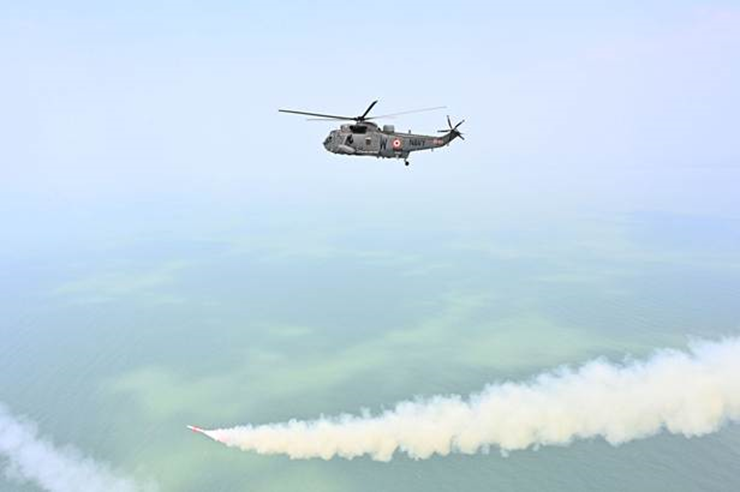
- DRDO and Indian Navy have successfully conducted the maiden salvo launch of Naval Anti-ship Missile-Short Range (NASM-SR) from the Navy’s helicopter platform off the coast of Bay of Bengal in Odisha.
- During the trial, two missiles were launched in quick succession from the same helicopter, making it the first salvo launch of an advanced air-launched anti-ship missile system.
- The NASM-SR missile uses a solid propulsion booster and long-burn sustainer. All critical subsystems like the seeker, integrated avionics module, advanced navigation and guidance using fibre-optic gyroscope-based Inertial Navigation System & radio-altimeter along with advanced control & guidance algorithm, high-bandwidth two-way data link and Jet-vane control developed indigenously by different laboratories of DRDO and Indian Industries.
- The missile system has been developed by Hyderabad-based Research Center Imarat in collaboration with other DRDO laboratories namely Defence Research & Development Laboratory, Hyderabad; High Energy Materials Research Laboratory, Pune; Terminal Ballistics Research Laboratory, Chandigarh & ITR Chandipur.
India Commissions First Indigenous 155mm Artillery Shell
- Electro Pneumatics and Hydraulics (India) Pvt Ltd has successfully delivered and commissioned India’s first indigenous 155mm artillery shell forging line, marking a major milestone in domestic defence manufacturing and self-reliance under Aatmanirbhar Bharat.
- The commissioning of this forging line represents a significant leap in India’s ability to design, engineer, and execute complex defence manufacturing solutions entirely within the country.
- The facility is dedicated to producing 155mm artillery shells, a critical component in modern battlefield operations, and is the first of its kind to be indigenously developed and operationalised.
- The integrated forging line incorporates advanced presses capable of performing cabbaging, piercing, and drawing operations within a single press. This consolidation of processes enhances efficiency, reduces production time, and ensures consistency in output quality.
- The achievement underscores India’s growing industrial capability in precision engineering and defence technology. By establishing this indigenous line, the country reduces dependency on imported shell forging systems and strengthens its ammunition manufacturing ecosystem.
‘Mahendragiri’ Delivered
- Mahendragiri (Yard 12654), the sixth ship of Nilgiri-class (Project 17A) and fourth ship of the class built at Mazagon Dock Shipbuilders Limited (MDSL), was delivered to the Indian Navy on 30 Apr 2026 at MDSL, Mumbai.
- The delivery marks a significant milestone in achieving self-reliance in warship design and construction.
- Project 17A frigates are versatile multi-mission platforms designed to address current and emerging challenges in the maritime domain.
- This state-of-the-art frigate reflects a quantum leap in naval design, stealth, firepower, automation, and survivability, and stands as an admirable symbol of Aatmanirbharta in warship building.
- P17A ships are fitted with an advanced weapon and sensor suite as compared to the P17 (Shivalik-class). These ships are configured with Combined Diesel or Gas propulsion plants, comprising a diesel engine and a gas turbine that drive a Controllable Pitch Propeller on each shaft, and a state-of-the-art Integrated Platform Management System (IPMS).
- Mahendragiri is the sixth P17A ship to be delivered to Indian Navy in the span of less than 17 months from the delivery of the first P17A (Nilgiri) by M/s MDSL on 20 Dec 2024.
- Delivery of Mahendragiri showcases the design, shipbuilding, and engineering prowess of the nation, and reflects Navy’s unrelenting focus on Aatmanirbharta in both ship design and shipbuilding. With an indigenous content of 75%.
India Successfully Tests Phase-II Long-Range Hypersonic Anti-Ship Missile
- India has successfully conducted a significant test of its long-range anti-ship hypersonic missile system from a defence facility off the Odisha coast.
- The DRDO achieved a milestone by testing Phase-II of the Long-Range Anti-Ship Hypersonic Missile which incorporates a two-stage hypersonic glide vehicle design. This marks a crucial advancement in India’s pursuit of next-generation strike capabilities.
- Top defence sources confirmed that the hypersonic missile achieved impressive range, precisely striking a target 1,500 km away—a breakthrough that extends the nation’s maritime defensive perimeter significantly farther into the ocean.
- The LR-AShM has been developed to meet the Indian Navy’s coastal defence requirements, with the ability to engage both stationary and moving maritime targets. It is designed to carry multiple payload configurations, enhancing its operational flexibility.
- The missile operates as a hypersonic glide vehicle, following a quasi-ballistic trajectory. It achieves speeds up to Mach 10 during its initial powered phase, before transitioning into a controlled glide phase at an average velocity of around Mach 5.
Olee Space Delivers India’s First Private DEW
- Pune-based deep-tech start-up OleeSpace has reportedly delivered what is being described as India’s first private sector-developed Directed Energy Weapon, or laser weapon system, to the Indian Army.
- Emerging from reported developments in early 2026, the company has concentrated on compact, AI-powered laser systems, marking a significant step forward for private sector involvement in India’s advanced defence technology landscape.The system unveiled by Olee Space is a compact 2-kilowatt AI-enabled laser sniper platform mounted on an Unmanned Ground Vehicle.
- It has been specifically designed for close-combat scenarios, perimeter defence, and anti-drone or UAV operations.The weapon is capable of neutralising, dazzling, or functionally damaging hostile personnel, vehicles, and equipment within seconds, offering a rapid response capability against diverse threats.
- The platform incorporates AI-based object recognition, enabling it to autonomously track and engage multiple targets simultaneously. This autonomous operation enhances its effectiveness in complex combat environments where speed and precision are paramount.
Exercise CINBAX-II 2026
- The Indian Army participated for the second edition of India – Cambodia Bilateral Military Exercise CINBAX-II 2026.
- The exercise is scheduled conducted at Techo Sen Phnom Thom Mreas Prov Royal Cambodian Air Force Training Centre (Camp Basil), Kampong Speu Province, Kingdom of Cambodia from 04 to 17 May 2026.
- The exercise conducted under the framework of Chapter VII of UN Mandate, showcasing Company level joint training for conduct of operations in sub-conventional environment.
- The Indian Army contingent comprises of 120 personnel, majorly from a Battalion of the Maratha Light Infantry Regiment. The Cambodian contingent comprises of 160 personnel, from Royal Cambodian Army.
- This aim was to achieved through various practical and comprehensive discussions as well as tactical exercises, leading to a comprehensive validation exercise. Special skill training, including that of Drone operations, Mortar and sniper tactics will be practiced as part of the exercise.
Project Deepak Celebrates its 66th Raising Day
- Project Deepak of Border Roads Organisation (BRO) celebrates its 66th Raising Day on May 04, 2026 at Shimla, Himachal Pradesh, marking over six decades of dedicated service in the strategically vital regions of the Western Himalayas.
- Having area of responsibility spanning key districts of Himachal Pradesh including Shimla, Kinnaur, Kullu and Lahaul-Spiti, Project Deepak- one of the oldest projects- has also been at the forefront of developing critical infrastructure such as the historic construction of historic Hindustan-Tibet Road and key stretches of Manali-Leh axis.
- Numerous rescue operations, under this project, have been successfully undertaken during natural calamities. Notably, in May 2023, BRO teams rescued around 300 stranded motorists at Baralachala Pass and in July 2023, over 250 civilians were evacuated from Chandrataal during a challenging high-altitude rescue mission.
- Raised in 1961, the project has been instrumental in executing critical infrastructure works in some of the most challenging terrains of the country.
Pixxel To Launch India’s First Orbital Data Centre Satellite
- Pixxel, a planetary intelligence company that builds and operates some of the world’s most advanced imaging satellites, today announced a strategic partnership with Sarvam to develop and build India’s first orbital data centre satellite.
- Under the partnership, Pixxel will design, build, launch, and operate the Pathfinder satellite. Sarvam will provide the AI backbone, handling both training and inference directly in orbit, with full-stack language models running on board the satellite.The Pathfinder, a 200 kg-class satellite, is scheduled to reach orbit as early as Q4 2026, reflecting both the urgency Pixxel sees in this market and the company’s growing capability to move from concept to orbit at speed.
- Unlike conventional satellite computing, which relies on low-power edge processors optimised for survival rather than performance, the Pathfinder satellite will host datacentre-class GPUs, the same generation of hardware as on-ground data centres that power frontier AI training and inference.
- The mission will validate real-time AI inference and data processing in the harsh space environment, testing performance, power management, thermal constraints, and real-time data workflows under operational conditions, to establish the technical and commercial groundwork for future orbital data centre systems.
MoD inks Rs 1,476 Crore Contract with BEL
- Ministry of Defence has signed a contract with Bharat Electronics Limited, Hyderabad for the procurement of five Ground-Based Mobile Electronic Systems, worth Rs 1,476 crore, for the Indian Army with minimum 72% indigenous content.
- The contract, under the Buy (Indian-Indigenously Designed, Developed and Manufactured) category, was inked in the presence of Defence Secretary Shri Rajesh Kumar Singh at Kartavya Bhawan-2, New Delhi on May 05, 2026.
- The system will modernise the Indian Army units and strengthen the indigenous defence manufacturing ecosystem of the country. The contract reinforces PM Narendra Modi-led Government’s commitment to Aatmanirbhar Bharat and Make-in-India in the defence sector.
Vietnam Set To Seal ₹5,800 Crores BrahMos Deal
- Vietnamese President To Lam’s upcoming visit to India is expected to centre on a landmark ₹5,800 crore BrahMos missile deal, which, if finalised, would make Vietnam the third Southeast Asian nation to acquire the Indo-Russian supersonic cruise missile.
- The agreement would significantly strengthen Hanoi’s coastal defence posture while boosting India’s defence export profile in the Indo-Pacific.
- President To Lam has chosen New Delhi as his first major foreign destination since assuming office, underscoring the importance of this defence engagement. The proposed package includes shore-based BrahMos missile batteries, comprehensive training programs, logistics support, and an initial batch of missiles.
- Valued at approximately ₹5,800 crore (around $700 million), this would be one of Vietnam’s largest defence acquisitions in recent years, reflecting its determination to modernise maritime security capabilities.
- The BrahMos missile system, jointly developed by India and Russia, is renowned for its supersonic speed of Mach 2.8, sea-skimming trajectory, and extended range variants. These features make it a formidable anti-ship weapon, difficult to intercept and ideal for long-range sea-denial operations.
- If concluded, Vietnam would join the Philippines, which signed a $375 million deal in 2022, and Indonesia, which has entered into a procurement pact, as the third Southeast Asian nation to induct BrahMos.
DRDO Secures 600 Acres In Andhra Pradesh
- India has formally approved a ₹1 lakh crore stealth fighter hub in Andhra Pradesh, with DRDO securing 600 acres in Puttaparthi to manufacture the Advanced Medium Combat Aircraft (AMCA).
- The facility will produce around 140 fifth-generation jets, marking a decisive step in India’s aerospace self-reliance and strategic positioning against regional rivals.
- The DRDO has secured 600 acres of land in Puttaparthi, Andhra Pradesh, for the establishment of a dedicated manufacturing and testing complex for AMCA.This project represents a pivotal moment in India’s defence modernisation, as the AMCA is designed to be a fifth-generation stealth fighter incorporating supercruise, advanced avionics, radar-absorbing materials, and network-centric warfare capabilities.
- The facility is expected to manufacture approximately 140 AMCA jets in its initial phase, with an additional 400 acres earmarked for future expansion. The total investment is projected at around ₹1 lakh crore, making it one of the largest defence manufacturing projects in India’s history.The Aeronautical Development Agency in Bengaluru will continue to handle systems design, testing, and module assembly, with these modules transported to Puttaparthi for final assembly and ground testing.
- This dual-location model ensures proximity to design expertise while leveraging Andhra Pradesh’s uncongested airspace for high-tempo flight trials.
- The timeline is ambitious, with the first prototype targeted for 2028–2029 and full-scale production by 2035. The IAF plans to induct up to 250 aircraft in phased variants, beginning with 40 MK-1 units powered by GE F414 engines, followed by more advanced MK-2 versions designed to replace the Sukhoi Su-30MKI fleet.
BRO Raising Day
- The Border Roads Organisation (BRO) celebrated its 67th Raising Day on May 7, 2026. Established in 1960, the BRO is the lead agency responsible for the high-altitude infrastructure that supports the Vibrant Villages initiative.
- Project Highlights from 2026:Project VARTAK: Celebrated its 66th Raising Day in Tezpur, Assam, commemorating over 60 years of work on critical axes like the Bhalukpong–Tawang road.
- Project DEEPAK: Celebrated its 66th Raising Day on May 4, 2026, in Shimla, highlighting its role in maintaining the Manali–Leh axis and the historic Hindustan–Tibet Road.
- Project DANTAK: Celebrated its 66th Raising Day in Bhutan on April 24, 2026, marking decades of Indo-Bhutan infrastructure partnership.
- Operational Motto: “Shramena Sarvam Sadhyam” (Everything is achievable through hard work).
- Current Focus: Accelerating all-weather connectivity, including the construction of the Shinku-La tunnel to provide year-round access to Ladakh.Synergy Between VVP and BROThe BRO provides the physical backbone (all-weather roads and bridges) that allows the Vibrant Villages Programme to deliver social and economic services (hospitals, schools, and markets) to previously inaccessible regionsVibrant Villages Programme (VVP)Launched to transform border villages from being seen as “last settlements” to the “first villages” of India, the programme has recently entered an expanded second phase.
- Phase II (VVP-II): Approved in April 2025 as a Central Sector Scheme with a total outlay of ₹6,839 crore until FY 2028-29.
- Expanded Scope: While Phase I focused on the China border, Phase II now covers 1,954 strategic villages along borders with Pakistan, Nepal, Bangladesh, Bhutan, and Myanmar.
- Key Goals:
- Prevent Migration: Creating livelihoods (tourism, cooperatives, skill development) to encourage border populations to stay in their ancestral homes, which is critical for national security.Saturation of Schemes: Ensuring 100% coverage of essential services like telecom, road connectivity, electricity, and health facilities.
- Strategic Assets: Training local populations to act as the “eyes and ears” of border guarding forces.
- Recent Update (May 6, 2026): Lt Governor Manoj Sinha launched several infrastructure projects under VVP Phase II in the border village of Regal, Jammu & Kashmir.
Joint Commanders’ Conference in Jaipur
- The second edition of Joint Commanders’ Conference, on the theme ‘Military Capability in New Domains’, held in Jaipur, Rajasthan on May 07 & 08, 2026.
- Raksha Mantri Rajnath Singh and CDS Anil Chauhan graced the conference, which assumes significance as it coincides with the first anniversary of Operation Sindoor, a landmark Tri-service operation that stands testament to India’s unflinching political will and military resolve characterised by surgical precision.
- Modern warfare is transitioning into a more complex and tech-driven paradigm with transformative impact of AI, development of unmanned systems & emerging threats that extend beyond traditional battlefields and target invisible frontiers.
- The conference provides a pivotal forum to evaluate the challenges in emerging domains of cyber, space and cognitive warfare and chart a roadmap for capability development for resilient and future ready force with a decisive edge.
- Central to the agenda was to accelerate indigenisation and Aatmanirbharta in defence production by fostering a domestic ecosystem of innovation & civil-military fusion.
- The conference also feature a demonstration of futuristic applications developed in-house and release of new doctrines pertaining to future warfare concepts and operational strategies.
MBDA to Develop Local Maintenance Facility for IAF
- European missile maker MBDA on Wednesday said it has signed an agreement with the Indian Air Force for the development of local capability for the maintenance, repair and midlife overhaul (MRO) of MICA missiles.
- The MRO facility will be set up, operated and maintained by the Indian Air Force, with MBDA supplying the industrial machinery and tools required, data packages, as well as training and technical support.MBDA’s Meteor beyond visual range air-to-air missile and Scalp cruise missile are the mainstay of the weapons package of the Rafale jets.
- “Developing these facilities locally will foster long-term capability building, secure technical expertise for years to come, and develop India’s strategic autonomy, reflecting the core principles of Atmanirbhar Bharat, the ambitious campaign launched by PM Narendra Modi in 2020,” the MBDA said.
Maiden Flight-Trial of Tactical Advanced Range Augmentation weapon
- DRDO and the IAF successfully conducted the maiden flight-trial of Tactical Advanced Range Augmentation (TARA) weapon off the coast of Odisha on May 07, 2026. TARA, the modular range extension kit, is India’s first indigenous glide weapon system to convert unguided warheads into precision guided weapons.
- TARA has been designed and developed by Research Centre Imarat (RCI), Hyderabad along with other DRDO laboratories to enhance the lethality and accuracy of a low-cost weapon to neutralise ground-based targets.
- It is the first glide weapon to utilise state-of-the-art low-cost systems. The development of the kit has been undertaken with Development cum Production Partners (DcPP) & other Indian industries, which have already started the production activity.
- Raksha Mantri Shri Rajnath Singh has congratulated DRDO, IAF, DcPP, and the Industry for the maiden flight-trial, describing it as a significant development in advancing India’s indigenous defence capabilities
- Secretary, Department of Defence R&D and Chairman DRDO Dr Samir V Kamat also congratulated the teams associated with the successful flight-trial.
Lt Gen NS Raja Subramani (Retd) Appointed as CDS
- The Government has appointed Lieutenant General NS Raja Subramani, PVSM, AVSM, SM, VSM (Retd) as the Chief of Defence Staff, who shall also function as the Secretary to Government of India, Department of Military Affairs, with effect from the date of assumption of charge and until further orders.
- The present Chief of Defence Staff General Anil Chauhan, PVSM, UYSM, AVSM, SM, VSM will complete his tenure on May 30, 2026.
- Lieutenant General NS Raja Subramani is currently Military Adviser, National Security Council Secretariat w.e.f. September 01, 2025. Prior to that, he was the Vice Chief of the Army Staff from July 01, 2024 to July 31, 2025 and was General Officer Commanding-in-Chief, Central Command from March 2023 till June 2024.
- The General Officer is a Graduate of the National Defence Academy and Indian Military Academy. He was commissioned into the 8th Battalion of the Garhwal Rifles on December 14, 1985.
- He is an alumnus of Joint Services Command Staff College, Bracknell (UK), and National Defence College, New Delhi. He holds a Master of Arts Degree from King’s College London and an M Phil in Defence Studies from Madras University.
- In his illustrious career spanning over 40 years, Lieutenant General NS Raja Subramani has served across a wide spectrum of conflict and terrain profiles and tenanted a host of Command, Staff and Instructional appointments.
- He commanded 16 Garhwal Rifles in Counter-Insurgency in Assam as part of Operation Rhino, 168 Infantry Brigade in Jammu & Kashmir and 17 Mountain Division in the Central Sector during a challenging operational environment.
- He also has the distinction of having commanded 2 Corps, the premier strike Corps of the Indian Army on the Western Front.
- For his distinguished service, the General Officer has been awarded the Param Vishisht Seva Medal, Ati Vishisht Seva Medal, Sena Medal and Vishisht Seva Medal.
Vice Admiral Krishna Swaminathan Appointed as Chief of the Naval Staff
- The Government has appointed Vice Admiral Krishna Swaminathan, PVSM, AVSM, VSM as the Chief of the Naval Staff. The present Chief of the Naval Staff Admiral Dinesh Kumar Tripathi, PVSM, AVSM, NM will be retiring from service on May 31, 2026.
- Vice Admiral Krishna Swaminathan assumed charge as the 34th Flag Officer Commanding-in-Chief of the Western Naval Command on July 31, 25. The Flag Officer was commissioned into the Indian Navy on July 01, 87 and is a specialist in Communication and Electronic Warfare.
- He is an alumnus of the National Defence Academy, Khadakvasla; the Joint Services Command and Staff College, Shrivenham, United Kingdom; the College of Naval Warfare, Karanja; and the United States Naval War College, Newport, Rhode lsland.
- A recipient of Param Vishisht Seva Medal, Ati Vishisht Seva Medal and Vishisht Seva Medal, the Admiral has held several key operational, staff and training appointments in his naval career including the Command of missile vessels INS Vidyut and Vinash; the missile corvette INS Kulish; the guided missile destroyer INS Mysore and the aircraft carrier INS Vikramaditya.
India Procures 83 Indigenous CADET Systems To Transform Mobile Air Defence
- India’s procurement of 83 CADET systems under the Buy (Indian‑IDDM) category represents a watershed moment in its air defence doctrine, shifting decisively from static deployments to mobile, network‑centric protection for mechanised forces.
- With over 65% indigenous content, CADET embodies the Aatmanirbhar Bharat vision while filling a critical operational gap in on‑the‑move air defence.
- The Ministry of Defence has formally initiated the acquisition of eighty‑three Carrier Air Defence Tracked (CADET) systems, a program that underscores India’s doctrinal transition towards mobile, integrated air defence.
- Unlike legacy static systems, CADET is designed as a tracked, armoured, and networked platform capable of moving seamlessly with mechanised formations. This ensures that advancing armoured columns are continuously shielded against aerial threats, a capability that has long been absent in India’s arsenal.
- The system is deeply integrated with the Akashteer C4ISR framework, which provides sensor fusion, real‑time threat evaluation, and shooter coordination. This transforms CADET from a standalone platform into a vital node within a digitised combat network.
- The tracked configuration allows CADET to maintain pace with tanks and infantry combat vehicles, ensuring protection against drones, loitering munitions, low‑altitude aircraft, and attack helicopters throughout all phases of combat.
Successful Flight-trial of Advanced Agni Missile
- India conducted the successful flight-trial of an Advanced Agni missile with Multiple Independently Targeted Re-Entry Vehicle (MIRV) system from Dr APJ Abdul Kalam Island, Odisha on May 08, 2026.
- The missile was flight-tested with multiple payloads, targeted to different targets spatially distributed over a large geographical area in the Indian Ocean Region.
- The telemetry and tracking was carried out by multiple ground and ship-based stations. These systems tracked the entire missile trajectory from lift-off till the impact of all payloads. Flight data confirmed that all mission objectives were met during the trial.
- With this successful trial, India once again demonstrated the capability to target multiple strategic targets using a single missile system. This missile is developed by DRDO laboratories with the support of Industries across the country. The trial was witnessed by senior scientists of DRDO and the Indian Army personnel.
ICGS ACHAL Commissions in Indian Coast Guard
- The Indian Coast Guard marked a significant enhancement in its operational capability with the commissioning of Indian Coast Guard Ship (ICGS) Achal, the latest vessel in the new-generation Adamya-class Fast Patrol Vessel series, at Goa Shipyard Limited on May 09, 2026.
- Named Achal, meaning ‘firm’, the vessel symbolizes the Indian Coast Guard’s steadfast commitment towards safeguarding national maritime interests, protecting life at sea, and ensuring the security of India’s maritime frontiers.
- The vessel will undertake a wide spectrum of maritime operations, including coastal and offshore surveillance, interdiction, Search and Rescue (SAR), anti-smuggling operations, and marine pollution response.
- XIncorporating more than 50 percent indigenous components, the vessel underscores the nation’s growing self-reliance in defence manufacturing and aligns with the Government of India’s Atmanirbhar Bharat and Make in India initiatives.
National Technology Day 2026
- Every year, India celebrates National Technology Day on May 11. For many people, it appears to be just another date connected to science and government events. But in 2026, the importance of technology in India has become much bigger than a symbolic celebration.
- Technology is now directly connected to:
- jobs, education,
- national security,
- digital payments,
- healthcare, startups, artificial intelligence,
- and India’s future economic growth.
- Significance: Marks 11 May 1998, when India successfully conducted the Operation Shakti (Pokhran-II) nuclear tests under former PM Atal Bihari Vajpayee.
- Other 1998 Milestones: On the same day, the Hansa-3 aircraft was tested and the Trishul missile was fired.
- Theme for 2026: “Responsible Innovation for Inclusive Growth,” focusing on ethical AI, indigenous technology, and bridging the digital divide.
Indian Army Gets Indigenous FPV Kamikaze Drones
- The Indian Army has received two new indigenous combat systems under Emergency Procurement (EP-6), including the UAV-Launched Precision Guided Munition (ULPGM) and the AGNIKAA VTOL-1 First-Person View (FPV) Kamikaze Drone.
- Defence sources said that the systems were handed over in Hyderabad in the presence of officials from the Army’s Western Command following successful high-altitude, electronic warfare (EW) and precision-guided munition firing trials.
- The two systems, ULPGM and AGNIKAA VTOL-1, have been designed, developed and manufactured indigenously.
- The ULPGM, co-developed by the DRDO and Ad Defence & Aerospace, is India’s first indigenous loitering munition in its category. The system is equipped with an Imaging Infrared (IIR) seeker and can be launched from UAVs to target both stationary and moving targets.
- The UAV has an operational range of up to 20 kilometres, while the munition itself has a strike range of 2.5 kilometres.
- The second system, AGNIKAA VTOL-1, has been described as India’s first FPV (First-Person View) kamikaze drone in its class.
- The drone has been developed as an anti-personnel precision-strike platform designed for urban warfare, confined spaces and open battlefield operations. It is capable of operating in GPS-denied and electronic warfare environments.
- The drone has a range of up to five kilometres, an endurance of 30 minutes and a top speed of 60 kmph.
Defence Manufacturing Gets Major Boost in Andhra Pradesh
- Union Defence Minister Rajnath Singh and Andhra Pradesh Chief Minister N. Chandrababu Naidu laid the foundation stones for two major defence facilities in Andhra Pradesh. These include the Advanced Medium Combat Aircraft (AMCA) Core Integration & Flight Testing Centre and a Naval Systems Manufacturing Facility.
- The projects are expected to strengthen India’s indigenous defence ecosystem and support the “Aatmanirbhar Bharat” initiative in the defence sector. During the event, Rajnath Singh stated that India’s defence production is likely to touch an all-time high of ₹1.75 lakh crore within the next one to two months.
- The AMCA programme is considered one of India’s most ambitious aerospace projects. It aims to develop a fifth-generation stealth fighter aircraft equipped with advanced avionics, artificial intelligence support, and modern combat capabilities. The new integration and testing centre will help speed up research, development, and flight trials for the aircraft.
- The Naval Systems Manufacturing Facility will focus on producing advanced naval equipment and systems for the Indian Navy. Experts believe the project will improve domestic production capacity and reduce dependence on foreign defence imports.
- The Andhra Pradesh government is also positioning the state as an emerging hub for aerospace and defence manufacturing by attracting investment and promoting industrial infrastructure.
India and UAE Sign Key Strategic Agreements
- Prime Minister Narendra Modi visited the United Arab Emirates and both nations announced several important agreements aimed at strengthening bilateral cooperation in energy, trade, infrastructure, and technology.
- One of the major outcomes was a strategic collaboration agreement between Indian Strategic Petroleum Reserves Limited (ISPRL) and Abu Dhabi National Oil Company (ADNOC). The agreement may allow ADNOC to store up to 30 million barrels of crude oil in India’s strategic petroleum reserves, including facilities in Visakhapatnam and future reserves planned in Odisha.
- The agreements are expected to improve India’s energy security by ensuring stable crude oil supplies during global disruptions. The partnership also reflects growing trust between India and the UAE in strategic sectors.
- Apart from energy cooperation, both countries discussed expanding investments, strengthening digital and technological collaboration, and improving trade connectivity. The visit further reinforced the Comprehensive Strategic Partnership shared by India and the UAE.
- Growing Global Role of India
- These developments show India’s increasing emphasis on becoming a global manufacturing and strategic power. While defence projects aim to strengthen military self-reliance, international partnerships like the UAE agreements help secure energy supplies and expand economic cooperation.
- Together, the announcements demonstrate how India is simultaneously focusing on domestic industrial growth and stronger international strategic partnerships to support long-term national development.
Sqn Ldr Saanya Becomes First Woman Officer To Earn Cat-A QFI Qualification
- The IAF said Sqn Ldr Saanya has achieved a historic first by becoming the first woman officer to earn the coveted Cat-A Qualified Flying Instructor (QFI) qualification. The IAF said it marks a proud milestone for the IAF and an inspiration for aspiring aviators across the nation.
- “Excellence takes flight. Sqn Ldr Saanya achieved a historic first by becoming the first woman officer to earn the coveted Cat-A Qualified Flying Instructor (QFI) qualification. Her achievement embodies dedication and relentless pursuit of excellence.
Multilateral Exercise Pragati 2026
- Multilateral military exercise PRAGATI 2026 commenced at Umroi Military Station, Meghalaya, with the participation from 12 friendly nations, namely Bhutan, Cambodia, Indonesia, Laos, Malaysia, Maldives, Myanmar, Nepal, Philippines, Seychelles, Sri Lanka and Vietnam.
- The contingents were accorded a warm and traditional welcome by the Indian Army on their arrival, reflecting India’s rich cultural heritage and hospitality.
- PRAGATI, which stands for Partnership of Regional Armies for Growth and Transformation in the Indian Ocean Region, is being conducted in the spirit of equality, friendship and mutual respect.
- Exercise provides a common platform for participating armies to engage in professional exchange, learn from one another’s experiences and build closer military-to-military ties.
- The two-week exercise will focus on counter-terrorism operations in semi-mountainous and jungle terrain. The training programme will include joint planning exercises, tactical-level drills and coordinated operations designed to improve adaptability, endurance and tactical proficiency of participating troops.
Launch of Sanghmitra, YARD 3039
- Yard 3039 (Sanghmitra), Next Generation Offshore Patrol Vessel (NGOPV), was launched at M/s GRSE, Kolkata on 20 May 2026 by Mrs Sarita Vatsayan, in the presence of VAdm Sanjay Vatsayan, Vice Chief of the Naval Staff.
- The construction of 11 NGOPVs is being undertaken concurrently at two shipyards (GSL, Goa and GRSE, Kolkata).
- These indigenously designed and built ships will augment the existing OPVs/ NOPVs for multi-domain operations, such as surveillance and defence in area of interest, search and rescue, protection of offshore assets, HADR, and anti-piracy missions.
- These ships derive their names from India’s heritage, with this ship being named ‘Sanghmitra’, after the daughter of King Ashoka. The crest design of the ship depicts the constellation of Ursa Major and a red and white coloured lighthouse.
- This is yet another significant milestone in Indian Navy’s pursuit towards indigenous shipbuilding and is in consonance with Government of India’s vision of Aatmanirbhar Bharat and Make in India initiative.
Bharat Forge To Establish India’s First Private Marine Gas Turbine Facility
- Bharat Forge Limited has taken a decisive step in India’s defence manufacturing journey by signing a Memorandum of Understanding with the Government of Andhra Pradesh to establish the country’s first private-sector marine gas turbine facility in Visakhapatnam.
- The facility will be strategically located near the Naval Dockyard and Eastern Naval Command in Visakhapatnam, ensuring proximity to India’s frontline naval assets.
- The scope of work will include blade restoration, rotor balancing, combustor liner repairs, component manufacturing, advanced testing infrastructure, and round-the-clock operational support for the Indian Navy.
- This initiative not only strengthens India’s naval self-reliance but also signals the growing role of private industry in defence manufacturing, complementing public sector undertakings and expanding the nation’s technological base in propulsion systems.
India Launches ₹37,500 Crore Coal Gasification Drive
- India has approved a ₹37,500 crore coal gasification scheme to convert 75 million tonnes of coal and lignite annually into syngas, fertilisers, synthetic fuels, and chemicals.
- The initiative is expected to mobilise ₹2.5–3 lakh crore in investment, generate 50,000 jobs, and significantly reduce India’s import bill for LNG, urea, ammonia, and methanol.
- The Union Cabinet’s decision marks the largest single push for coal gasification in India’s history, building upon the National Coal Gasification Mission of 2021 and superseding the earlier ₹8,500 crore scheme approved in January 2024.
- The program is central to India’s target of gasifying 100 million tonnes of coal by 2030, leveraging the country’s vast reserves of 401 billion tonnes of coal and 47 billion tonnes of lignite.
- Coal gasification involves feeding coal into high-temperature gasifiers, where it reacts with steam and limited oxygen to produce synthesis gas, or syngas.
- This versatile fuel can be used to manufacture fertilisers such as urea and ammonia, chemicals including methanol and olefins, clean fuels like synthetic natural gas and dimethyl ether, and even hydrogen for industrial applications.
- The scheme provides financial incentives of up to 20 per cent of plant and machinery costs, capped at ₹5,000 crore per project, ₹9,000 crore per product category, and ₹12,000 crore per corporate group.
- The economic rationale is compelling. India’s import bill for LNG, urea, ammonia, methanol, and related commodities stood at approximately ₹2.77 lakh crore in FY2025.
RRP Defence Wins ₹29.8 Crore BEL Contract
- RRP Defence has secured a ₹29.8 crore order from Bharat Electronics Limited (BEL) to supply high-precision germanium lenses, reinforcing India’s indigenous capabilities in electro-optics and thermal imaging.
- The deal highlights the growing importance of advanced optical components in defence applications, particularly for surveillance, weapon sights, and target acquisition systems.
- RRP Defence, an original equipment manufacturer specialising in electro-optical systems and thermal imaging technologies, will design, engineer, and customise the germanium lenses to meet BEL’s specific technical and operational requirements.
- These lenses are considered mission-critical because of their ability to efficiently transmit infrared radiation, which is essential for imaging accuracy in low-visibility and night-time conditions.
- RRP Defence, headquartered in Navi Mumbai, operates across multiple entities focused on semiconductors, defence systems, drones, and aerospace technologies. The group has been expanding its footprint in thermal imaging systems, unmanned aerial vehicle platforms, and semiconductor-linked technologies.
Successful Test-launch of Agni-1 Ballistic Missile
- Short Range Ballistic Missile ‘Agni-1’ was successfully test-launched from the Integrated Test Range at Chandipur, Odisha on May 22, 2026. The launch validated all operational and technical parameters. The test was carried out under the aegis of the Strategic Forces Command.
- The Agni-1 is a short-range ballistic missile with a strike range between 700 and 1,200 kilometres. They are claimed to be a part of the “Minimum Credible Deterrence”.
- It is capable of carrying both conventional and nuclear warheads, making it a versatile system within India’s arsenal.
- Developed in the aftermath of the 1999 Kargil war, Agni-1 was specifically created to fill the tactical gap between the shorter-range Prithvi-II missile, which has a range of 250 kilometres, and the longer-range Agni-II missile.
- India’s missile development trajectory reflects a deliberate strategy of balancing regional deterrence with global credibility. While longer-range systems such as Agni-5 and the proposed Agni-6 are designed to project power across continents, shorter-range systems like Agni-1 remain indispensable for immediate tactical requirements.
India To Launch ‘Smart Border’ Project
- Union Home Minister Amit Shah said the government will launch a “smart border” project in the next year to make the 6,000 km fronts with Pakistan and Bangladesh impenetrable and ensure that the “conspiracy” to change the demography of the areas is defeated.
- Delivering the annual Rustamji Memorial lecture hosted by the Border Security Force (BSF) here, the minister also reiterated that the government would find each and every infiltrator from the country and send them outside India.
- K F Rustamji was the first director general of the BSF after it was raised in 1965.
- The minister also urged BSF troops to ensure that the conspiracy to artificially change the demography of India is defeated. He said current state governments in Tripura, West Bengal and Assam — all led by the BJP — believe in the policy that there should no infiltration from across Indian borders.
Major Abhilasha Barak Honoured With UN Military Gender Advocate of the Year Award 2025
- Indian Army officer Major Abhilasha Barak, serving with the United Nations peacekeeping mission in Lebanon, has been honoured with the prestigious United Nations Military Gender Advocate of the Year Award for 2025.
- Major Barak is currently serving with the Indian Battalion as Commander of the Female Engagement Team in the United Nations Interim Force in Lebanon (UNIFIL). She is also the first woman combat helicopter pilot of the Indian Army.
- With this recognition, Major Barak becomes the third Indian peacekeeper to receive the honour. Earlier, Suman Gawani was awarded in 2019 for her service with the UN Mission in South Sudan, while Radhika Sen received the award in 2023 for her work with the UN Stabilisation Mission in the Democratic Republic of Congo.
- The award, instituted in 2016 by the Office of Military Affairs under the UN Department of Peace Operations, recognises a military peacekeeper who has shown exceptional commitment to promoting gender equality and implementing UN Security Council Resolution 1325 on Women, Peace and Security.
- The recipient is selected annually from nominations submitted by Force Commanders and Heads of Mission across UN peacekeeping operations worldwide.
- India remains one of the largest contributors of troops and police personnel to UN peacekeeping missions across the world.
IAF Announces Entry For Technical Branch
- IAF is pleased to announce the introduction of a scheme for induction into the Technical Branch (Officers Cadre), allowing eligible candidates to apply based on their Graduate Aptitude Test in Engineering (GATE) scores.
- Under this new initiative, candidates possessing a valid GATE score will be eligible for direct shortlisting for testing at the Air Force Selection Boards (AFSBs).
- Selection will be based on merit, effectively exempting these candidates from the preliminary written examination, such as the Air Force Common Admission Test (AFCAT).
- The GATE Score scheme will be applicable exclusively for induction into the Technical Branch. The AFCAT will continue to serve as the standard admission test for induction into all branches of the IAF, including the Technical Branch.
- The entry-level educational qualifications for the GATE Score scheme will remain consistent with the existing induction criteria for the Technical Branch via AFCAT. A comprehensive list of acceptable GATE subjects have been formally promulgated by the IAF in AFCAT Notification 02/2026.
- To provide maximum flexibility and opportunity to aspirants, eligible candidates may apply for the Technical Branch through both the AFCAT and the GATE Score schemes, as per their choice.
Adani Green Commissions World’s Largest 3.37 GWh Battery Storage
- Adani Green Energy has commissioned a massive 3.37 GWh Battery Energy Storage System (BESS) at Khavda, Gujarat, making it the world’s largest single-location battery storage project outside China.
- Completed in just 10 months, the system can power nearly one million homes for a day and is central to India’s clean energy expansion.
- Adani Green Energy Ltd (AGEL) has announced the commissioning of a cumulative 3.37 GWh battery storage system at its Khavda renewable energy park in Gujarat.
- This milestone strengthens India’s grid-scale clean energy infrastructure and represents one of the fastest utility-scale battery storage deployments globally. The project includes 1.37 GWh of capacity added in March 2026, taking the total operational storage at Khavda to 3.37 GWh.
- The Khavda site is already one of India’s largest renewable energy developments. AGEL operationalised 1,000 MW of solar capacity in March 2024 within just 12 months of starting work at the site.
- The broader project spans 538 square kilometres and is part of a 30 GW renewable energy build-out. Currently, 9.9 GW of renewable capacity is operational at Khavda, underscoring its role as a cornerstone of AGEL’s expansion strategy.
Oil India Finds New Gas-Bearing Zone in Rajasthan
- India has discovered the new natural gas bearing zone in the Rajasthan’s Dandewala field. This breakthrough is achieved by the state run Oil India Limited (OIL) and it marks the important step to reducing the India’s on imported energy.
- This is significant because it expands the hydrocarbon potential of the Dandewala field and it opens fresh opportunities for domestic gas production.
- The Dandewala field is located in the Rajasthan, within the hydrocarbon-rich Rajasthan sedimentary basin.
- This basin is one of the India’s major onshore oil and gas producing regions.
- As India remains heavily dependent on imported energy.
- Current dependence includes the,
- Over 85% of crude oil imports
- Around 50% of natural gas imports
- Oil India Limited (OIL) is one of the India’s leading upstream energy public sector companies.
- The company has been actively expanding the exploration efforts across multiple sedimentary basins.
- The discovery comes at the crucial time.
- As the global energy markets have faced uncertainty due to the,
- Geopolitical tensions in West Asia
- Supply disruptions
- Crude oil price volatility
- Rising international gas demand
India’s First Fully Cryogenic Bio-Methane And LoX Engine
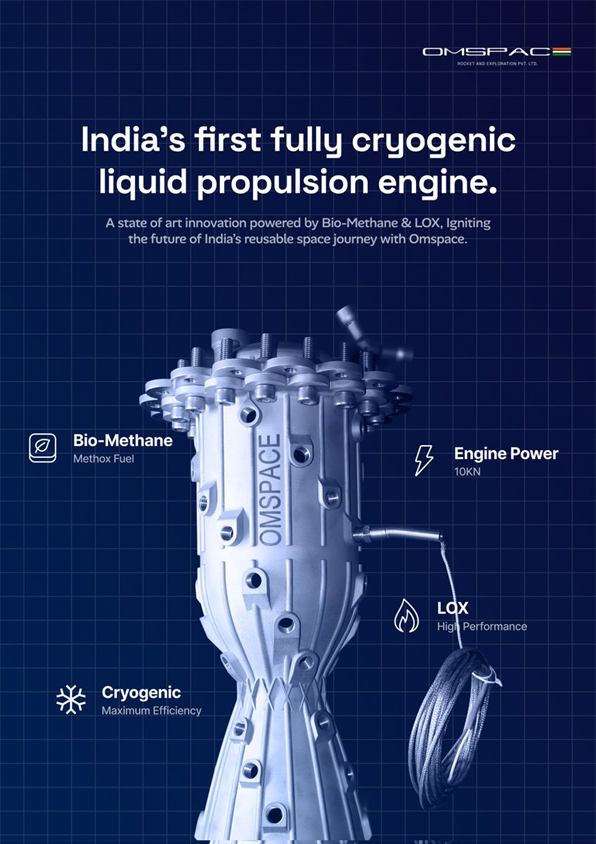
- India’s private space sector has marked another breakthrough with OMSPACE unveiling the country’s first fully cryogenic liquid propulsion engine powered by Bio-Methane and Liquid Oxygen (LOX).
- Delivering 10 kN of thrust, this engine is designed for reusable launch vehicles, combining sustainability with efficiency and proudly engineered on Indian soil.
- The new cryogenic propulsion system represents a significant leap in India’s indigenous aerospace capabilities. Unlike conventional cryogenic engines that rely on imported propellants, OMSPACE has been innovated by using Bio-Methane, a renewable fuel source, paired with LOX.
- This combination not only reduces environmental impact but also enhances reusability by minimising soot formation and thermal stress, which are common challenges in hydrocarbon-based engines.
- Generating 10 kN of thrust, the engine is tailored for small to medium reusable launch vehicles. While modest compared to heavy-lift propulsion systems, this thrust level is ideal for orbital infrastructure missions that demand frequent, low-cost launches.
- OMSPACE’s design philosophy focuses on enabling high-frequency access to space, aligning with global trends where reusability and sustainability are paramount.
- The cryogenic cycle employed ensures maximum efficiency by operating at extremely low temperatures, allowing propellants to remain in liquid form until combustion. This results in higher specific impulse compared to semi-cryogenic or solid propulsion systems.
- The use of Bio-Methane also positions OMSPACE as a pioneer in green propulsion, echoing international efforts to reduce carbon footprints in space exploration.
- The engine is expected to play a crucial role in building reliable orbital infrastructure. By enabling reusable launch vehicles, OMSPACE aims to drastically reduce launch costs, making space access more affordable for satellite operators, research institutions, and commercial ventures.
Review Questions
- The NASM-SR missile was jointly developed by DRDO and which organization?
A. Indian Air Force
B. Indian Army
C. Indian Navy
D. ISRO
ANSWER: C - What was unique about the NASM-SR missile trial conducted off the Odisha
coast?
A. It was launched from a submarine
B. It was tested at night
C. Two missiles were launched in quick succession from the same helicopter
D. It was tested without a guidance system
ANSWER: C - The indigenous 155mm artillery shell forging line in India was commissioned
by which company?
A. Bharat Electronics Limited
B. Hindustan Aeronautics Limited
C. Electro Pneumatics and Hydraulics (India) Pvt Ltd
D. Larsen & Toubro
ANSWER: C - INS Mahendragiri belongs to which class of warships?
A. Kolkata-class
B. Shivalik-class
C. Nilgiri-class
D. Talwar-class
ANSWER: C - INS Mahendragiri was built by which organization?
A. Hindustan Shipyard Limited
B. Garden Reach Shipbuilders & Engineers
C. Mazagon Dock Shipbuilders Limited
D. Cochin Shipyard Limited
ANSWER: C - The hypersonic anti-ship missile tested by India was developed by which
organization?
A. ISRO
B. HAL
C. BEL
D. DRDO
ANSWER: D - Exercise CINBAX-II is conducted between India and which country?
A. Vietnam
B. Thailand
C. Cambodia
D. Indonesia
ANSWER: C - Project Deepak is associated with which organization?
A. Indian Army
B. Border Roads Organisation
C. National Highways Authority of India
D. Central Public Works Department
ANSWER: B - Which of the following roads is a major contribution of Project Deepak?
A. Golden Quadrilateral
B. East-West Corridor
C. Hindustan–Tibet Road
D. Delhi-Mumbai Expressway
ANSWER: C - The MoD signed a ₹1,476 crore contract with which company for ground
based mobile electronic systems?
A. Hindustan Aeronautics Limited
B. Bharat Electronics Limited
C. Bharat Dynamics Limited
D. Larsen & Toubro
ANSWER: B - The export version of the Pralay Missile is capped at what range to comply
with international norms?
A. 150 km
B. 250 km
C. 290 km
D. 500 km
ANSWER: C - Which organisation developed the Pralay missile system?
A. Indian Space Research Organisation
B. Defence Research and Development Organisation
C. Bharat Electronics Limited
D. Aeronautical Development Agency
ANSWER: B - The proposed ₹5,800 crore BrahMos missile deal is expected to be signed
between India and which country?
A. Philippines
B. Indonesia
C. Vietnam
D. Thailand
ANSWER: C - The AMCA (Advanced Medium Combat Aircraft) manufacturing facility is
being set up in which state?
A. Karnataka
B. Tamil Nadu
C. Maharashtra
D. Andhra Pradesh
ANSWER: D - The Border Roads Organisation (BRO) celebrates its Raising Day every year on
which date?
A) 15 August
B) 26 January
C) 7 May
D) 1 July
Answer: C) 7 May - BRO was established in which year?
A) 1955
B) 1960
C) 1965
D) 1971
Answer: B) 1960 - The second edition of the Joint Commanders’ Conference 2026 was held in which
city?
A) Lucknow
B) New Delhi
C) Jaipur
D) Chandigarh
Answer: C) Jaipur - The theme of the Joint Commanders’ Conference 2026 was:
A) Secure Borders for Strong India
B) Military Capability in New Domains
C) Future Warfare Strategy
D) Defence Technology and Innovation
Answer: B) Military Capability in New Domains - Who has been appointed as the new Chief of Defence Staff (CDS) of India in
2026?
A) General Anil Chauhan
B) Lieutenant General NS Raja Subramani
C) Vice Admiral Krishna Swaminathan
D) General Manoj Pande
Answer: B) Lieutenant General NS Raja Subramani - Vice Admiral Krishna Swaminathan has been appointed as the new:
A) Chief of Army Staff
B) National Security Adviser
C) Chief of Naval Staff
D) Chief of Air Staff
Answer: C) Chief of Naval Staff - The CADET system procured by India is mainly related to:
A) Naval warfare
B) Space surveillance
C) Mobile air defence
D) Cyber security
Answer: C) Mobile air defence - The maiden flight-trial of the Tactical Advanced Range Augmentation (TARA)
weapon was conducted by:
A) ISRO and DRDO
B) DRDO and Indian Air Force
C) Indian Navy and DRDO
D) HAL and DRDO
Answer: B) DRDO and Indian Air Force
Explanation: The maiden flight-trial of TARA was successfully conducted by DRDO and
the Indian Air Force on May 7, 2026. - TARA is primarily designed to:
A) Launch satellites
B) Detect submarines
C) Convert unguided warheads into precision-guided weapons
D) Destroy enemy aircraft
Answer: C) Convert unguided warheads into precision-guided weapons
Explanation: TARA is India’s first indigenous glide weapon system designed to improve
the accuracy and range of unguided warheads. - Which DRDO laboratory led the development of the TARA weapon system?
A) ADE Bengaluru
B) DRDL Hyderabad
C) Research Centre Imarat (RCI)
D) GTRE Bengaluru
Answer: C) Research Centre Imarat (RCI)
Explanation: TARA was developed by Research Centre Imarat (RCI), Hyderabad along
with other DRDO laboratories. - India successfully conducted the flight-trial of the Advanced Agni missile with
which advanced capability?
A. Stealth technology
B. MIRV system
C. Laser guidance
D. Anti-submarine system
ANSWER: B - The successful flight-trial of the Advanced Agni missile was conducted from
which location?
A. Pokhran, Rajasthan
B. Chandipur, Odisha
C. Dr APJ Abdul Kalam Island, Odisha
D. Sriharikota, Andhra Pradesh
ANSWER: C - National Technology Day is celebrated in India on:
A. 15 August
B. 26 January
C. 11 May
D. 28 February
Answer: C. 11 May - What is the main objective of India’s ₹37,500 crore coal gasification scheme?
A. Increase coal exports
B. Produce syngas and industrial chemicals
C. Build nuclear plants
D. Import LNG
ANSWER: B - Which company awarded a ₹29.8 crore contract to RRP Defence for
germanium lenses?
A. HAL
B. DRDO
C. BEL
D. BDL
ANSWER: C - Where was the Agni-1 ballistic missile successfully test-launched in May 2026?
A. Pokhran, Rajasthan
B. Chandipur, Odisha
C. Sriharikota, Andhra Pradesh
D. Visakhapatnam, Andhra Pradesh
ANSWER: B - Major Abhilasha Barak received the UN Military Gender Advocate of the Year
Award for which year?
A. 2023
B. 2024
C. 2025
D. 2026
ANSWER: C
ALSO READ:
- Latest Daily Current Affairs and Defence Updates
- Latest Daily Current Affairs April 2026[DOWNLOAD PDF]
- Latest Daily Current Affairs March 2026[DOWNLOAD PDF]
- Latest Daily Current Affairs February 2026[DOWNLOAD PDF]
- Latest Daily Current Affairs January 2026[DOWNLOAD PDF]
- Latest Daily Current Affairs November 2025[DOWNLOAD PDF]
- Latest Daily Current Affairs October 2025[DOWNLOAD PDF]
- Latest Daily Current Affairs August 2025[DOWNLOAD PDF]
- Latest Daily Current Affairs July 2025[DOWNLOAD PDF]
- Monthly Defence Current Affairs June 2025 [DOWNLOAD PDF]
- Monthly Defence Current Affairs May 2025 [DOWNLOAD PDF]
- Monthly Defence Current Affairs April 2025 [DOWNLOAD PDF]
- Monthly Defence Current Affairs March 2025 [DOWNLOAD PDF]
- Monthly Defence Current Affairs February 2025 [DOWNLOAD PDF]
- Monthly Defence Current Affairs January 2025 [DOWNLOAD PDF]


