




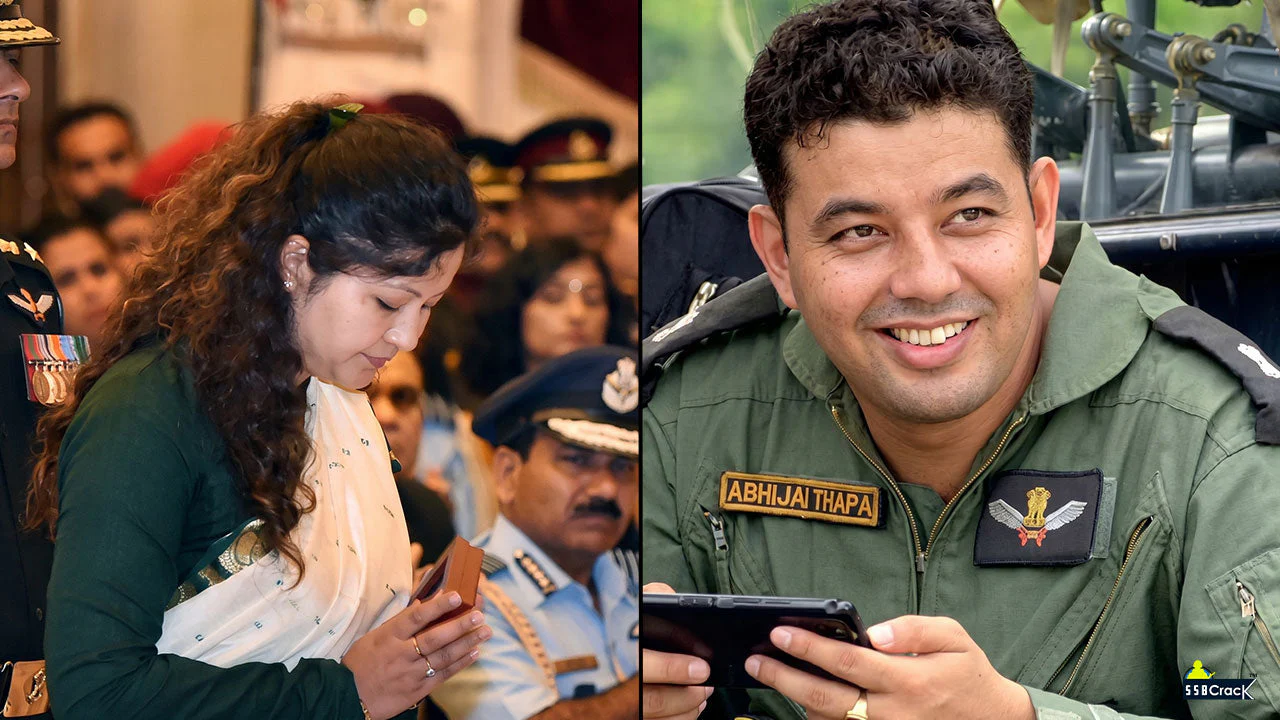
On October 1, 2014, Major Abhijai Thapa of the Indian Army Aviation Corps demonstrated remarkable valor and selflessness when his Cheetah helicopter experienced a catastrophic technical failure while flying near Bareilly, Uttar Pradesh. In a race against time, he made a life-altering decision that ultimately saved the lives of over 11,000 civilians and soldiers, albeit at the cost of his own life. For this extraordinary act of gallantry, Major Thapa was posthumously awarded the Shaurya Chakra, India’s third-highest peacetime gallantry award.
Born on June 5, 1985, in Dharamshala, Himachal Pradesh, Major Thapa grew up instilled with qualities of discipline, resilience, and commitment to service. He was the son of Sunil and Sunita Thapa and spent his formative years cultivating a deep sense of responsibility and determination. He was married to Anjali Thapa, who later remembered him as both a brave soldier and a loving husband.
Commissioned into the Corps of Engineers, Major Thapa’s military career took a significant turn when he qualified as a helicopter pilot. Transferred to the Army Aviation Corps, he quickly established himself in what is known for being one of the most challenging and operationally demanding branches of the Indian Army. By 2014, he had logged over 250 flying hours and was part of the 39 Independent Reconnaissance and Observation Flight at the Army Aviation Base in Bareilly.
The fateful day began as Major Thapa prepared for an operational readiness sortie, part of Operation Iron Fist, which was intended to prepare the squadron for deployment. Alongside him were Major Vikas Varyani and Captain Avinash Somvanshi. Approximately one hour into the flight, disaster struck when the helicopter suffered a catastrophic failure of its tail rotor over the Bhartol village.
Recognizing the perilous situation, Major Thapa took swift action. Knowing the potential devastation that a crash could cause in the populated area below, he expertly maneuvered the damaged helicopter away from the village and military lines, where a Sainik Sammelan was taking place. He also made a distress call to Air Traffic Control and severed the fuel supply to minimize the risk of fire upon impact.
Despite the aircraft being critically damaged, Major Thapa’s calmness and decisiveness prevented a greater catastrophe. The helicopter ultimately crashed away from civilians, leading to the loss of his life and those of Major Varyani and Captain Somvanshi. Their final act saved thousands of lives and showcased the highest ideals of military service.
The official citation for Major Thapa’s Shaurya Chakra highlighted his exceptional courage and decisiveness, noting that he exhibited “indomitable valour” and “utter disregard for personal safety.” His actions exemplified the traditions of the Indian Army — prioritizing the lives of others above his own.
For their bravery, Major Vikas Varyani and Captain Avinash Somvanshi were also posthumously recognized with the Sena Medal. Together, these three officers exemplified the virtues of sacrifice and service that lie at the heart of military ethics.
Survived by his parents and his wife, Major Thapa’s legacy lives on through his family and the countless individuals who draw inspiration from his life. His wife, Anjali, encapsulated their shared pain of loss while celebrating the profound pride of being married to a soldier who exemplified bravery and selflessness.
Major Thapa’s story serves not only as a powerful reminder of the ultimate sacrifice made in service to the nation but also as a source of inspiration for aspiring defense personnel. His life illustrates the essence of officer-like qualities, such as courage, quick decision-making, and responsibility, especially in moments of great peril.
As a lasting tribute to Major Abhijai Thapa’s heroism, his actions on that fateful day will be eternally memorialized in the annals of Indian military history. His decision to divert his crashing helicopter not only reflected immeasurable bravery but also highlighted the soldier’s creed: to serve before self, even in the most perilous circumstances.


