




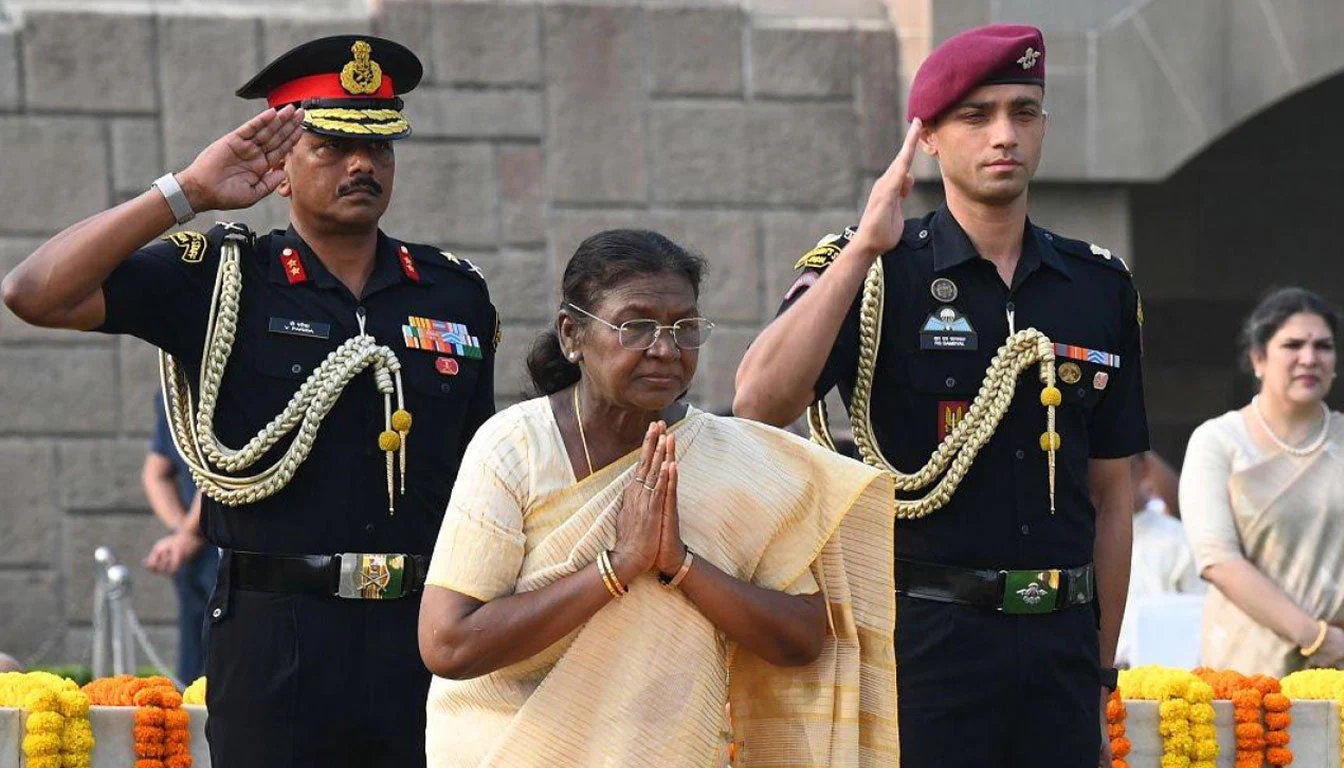
The President’s Bodyguard (PBG), renowned for its ceremonial prestige and visually striking displays, serves as the personal escort for the President of India. Stationed at Rashtrapati Bhavan, the PBG combines operational military capabilities with ceremonial duties associated with national events like Republic Day and official state visits.
A significant topic of discussion surrounding the PBG is the exclusive recruitment of troopers from three communities: Jats, Rajputs, and Jat Sikhs. The rationale behind this decision encompasses historical context, regimental tradition, and ceremonial needs. While India’s constitutional principles advocate for equality, the Indian Army maintains that the PBG’s fixed-class composition correlates directly to its unique ceremonial role rather than mere social identity.
Established in 1773 as the Governor-General’s Bodyguard, the unit was renamed on January 27, 1950, following India’s transition to a republic. As the Indian Army’s oldest regiment, the PBG is not merely a ceremonial entity. Its soldiers undergo extensive training in military skills, armoured warfare, and airborne operations, contributing to high-stakes operational duties in challenging environments.
The recruitment guidelines for the PBG restrict entries to the aforementioned communities, adhering to a “fixed class” composition that ensures equal representation among them. This system allows for uniformity in physical stature and ceremonial bearing, which is crucial during public appearances, where visual alignment is paramount. To maintain stringent operational standards, the PBG has a required minimum height of approximately six feet—a criterion traditionally met by candidates from these communities.
The ceremonial aspect of the PBG is crucial; the unit’s members often engage in high-profile events before dignitaries and the public. The Army argues that the PBG serves as a “show window” of military tradition, reflecting the dignity of the state through the impressive stature and disciplined formations of its troopers. This emphasis on uniformity extends to their appearance, which is considered critical to preserving the regiment’s ceremonial integrity.
Historically, the traditions governing the PBG’s recruitment are rooted in colonial practices, particularly the British classification of certain communities as “martial races.” While originally comprised of a more diverse group, the composition became more streamlined following the Partition in 1947, leading to the current structure.
Challenges to the fixed-class recruitment policy have emerged, with critics claiming it contradicts constitutional mandates for equality and non-discrimination, especially when qualified individuals from other communities are barred from applying. The Army has defended its position, emphasizing that the PBG’s recruitment strategy aligns with its functional needs and long-standing traditions.
The ongoing debate encapsulates broader questions regarding the balance between historical military customs and the equitable treatment of all citizens. Supporters of the PBG’s traditional recruitment argue that its specialized nature justifies the current system. In contrast, critics advocate for a shift toward more inclusive practices, reflecting modern democratic principles.
The matter remains sensitive, as it intertwines issues of caste, national pride, and the functioning of one of India’s highest constitutional offices. The PBG’s historical identity and ceremonial importance complicate discussions about equality and representation, as it continues to evoke strong feelings across various segments of society.
As it stands, the PBG persists with its entrenched recruitment policies, drawing troopers exclusively from the Jat, Rajput, and Jat Sikh communities. The distinction between maintaining tradition and fostering inclusivity continues to fuel conversations about the future of military recruitment in a modern republic, raising important questions about how best to integrate historic military identities with the commitment to equal opportunity for all citizens in India.


