




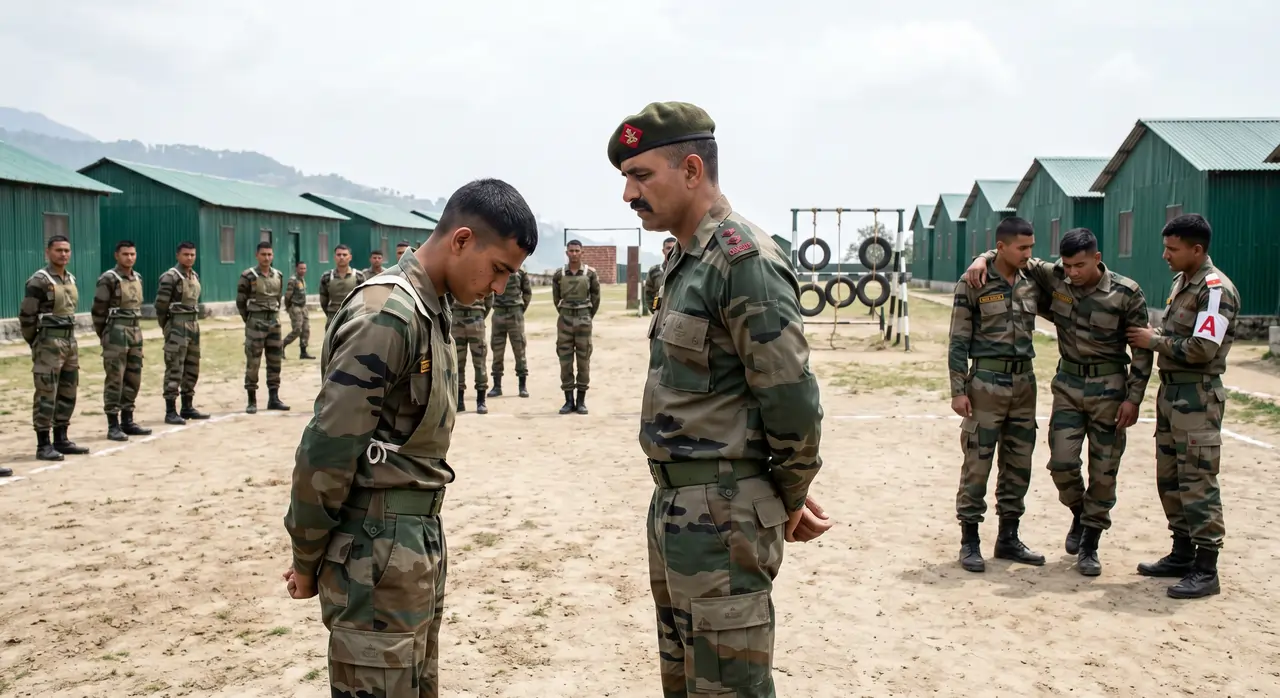
A serious incident during basic military training has led to the dismissal of a former Indian Army recruit, as the Madras High Court upheld the decision, emphasizing the unique standards of discipline required in the armed forces.
The case began when the recruit joined the Indian Army on December 19, 2016, and commenced his basic military training. On April 12, 2017, he became involved in a physical confrontation with a fellow recruit, which resulted in the latter suffering a serious injury—a fracture to the right mandible, categorized as a grievous injury.
Following the altercation, a complaint was lodged with superior authorities, prompting a Court of Inquiry on May 5, 2017. The inquiry resulted in two charges against the recruit: first, for failing to report at his designated place of duty without valid justification; second, for his conduct being prejudicial to good order and military discipline.
When confronted with the charges, the recruit admitted guilt and did not present any mitigating circumstances. Instead, he requested pardon and assured the authorities that he would refrain from similar conduct in the future.
Despite his plea, the Summary Court Martial deemed his actions unacceptable by military standards, and on January 10, 2018, he was dismissed from service. Subsequently, the former recruit contested his dismissal, but the Armed Forces Tribunal upheld the punishment without interference. His subsequent appeal to the Madras High Court also sought to overturn the dismissal.
The division bench, comprising Justices G R Swaminathan and R Poornima, carefully examined the circumstances and ultimately chose not to intervene in the dismissal. The justices pointed out that the recruit was still in training, akin to being a probationer, and thus was expected to demonstrate exemplary conduct.
While acknowledging that some provocation may have existed during the altercation, the court stated that such justification did not excuse the infliction of significant harm on another individual. The severity of the injury to the fellow trainee was emphasized, and the justices noted that such behavior could not be overlooked within a military context.
The court further underscored the necessity of maintaining discipline within the armed forces. It recognized that although courts can review punishment when an accused pleads guilty, the standards differ when it pertains to military discipline. The deputy solicitor general, representing the authorities, contended that the gravity of the recruit’s actions could have warranted imprisonment; however, the decision was made to dismiss him from service instead.
The High Court concurred with this argument, affirming that the punishment, in this case, was not excessive. The bench highlighted that the authorities exercised discretion appropriately by limiting the penalty to dismissal rather than imposing a more severe sentence.
Moreover, the court pointed out that the recruit had not fully transitioned into the armed forces, as he was still in the training phase. This fact, the justices asserted, made his conduct even more alarming, as fundamental aspects like discipline, obedience, and self-control are vital from the onset of military training.
In its ruling, the Madras High Court firmly stated that no compelling reasons existed to favorably interfere with the petitioner’s case. The court ultimately upheld the dismissal and dismissed his plea, a decision that serves as a stark reminder of the rigorous standards of conduct expected from military recruits.
This ruling carries a profound message for aspiring military personnel: a single act of indiscipline, especially one involving violence and serious injury, can lead to severe repercussions, as evidenced by the recruit’s premature end to a potentially promising military career.


