




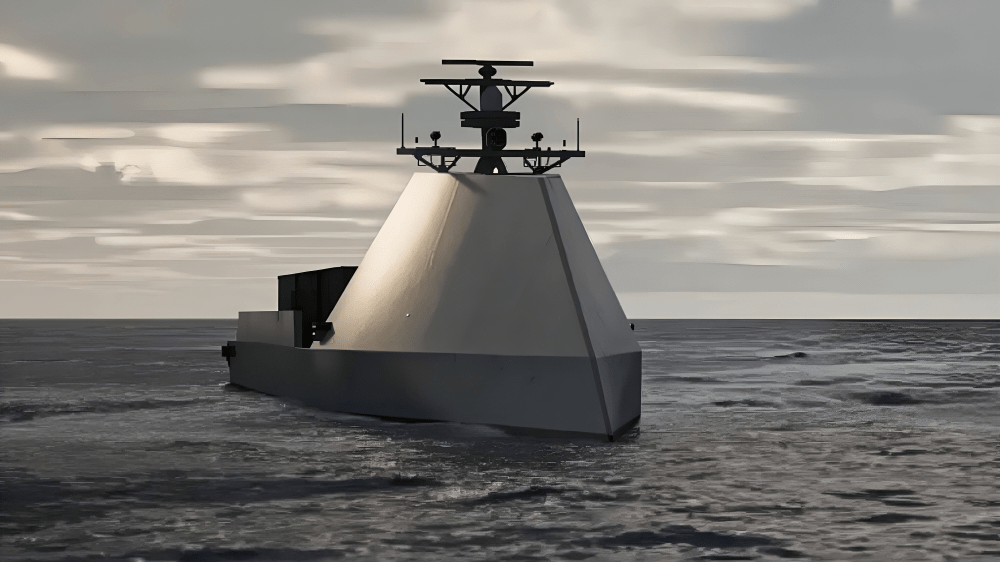
HII, in collaboration with its manufacturing partner Bayou Metal Supply & Manufacturing, has officially launched a dedicated production line in Slidell, Louisiana, aimed at expediting the construction of the ROMULUS unmanned surface vessel (USV). This development signifies a pivotal transition for the program, moving from the prototype stage into serial production.
The new production facility will focus on creating key structural components for the advanced, AI-enabled vessel. Specifically, it will handle tasks such as precision-cutting, bending, welding, and assembling these components, which will then be forwarded to Breaux Brothers Enterprises for final integration. This strategic move is intended to streamline the manufacturing process and alleviate potential bottlenecks by completing significant fabrication work prior to the components arriving at the shipyard.
In addition to the structural components, Bayou Metals will also provide the necessary marine-grade aluminum for the ROMULUS platform, further enhancing the efficiency of the production line.
HII’s executive vice president, Andy Green, emphasized the importance of partnerships like the one with Bayou Metals, stating that such collaborations are “essential to delivering capability at speed and scale.” He noted that combining material supply with advanced fabrication not only strengthens the production model but also minimizes risks and accelerates the delivery timeline of the ROMULUS USV to the fleet.
The establishment of the dedicated production line is the latest stride for the ROMULUS program as it gains momentum toward operational deployment. Earlier in March, HII also announced plans to build a new assembly center in Louisiana in collaboration with Breaux Brothers Enterprises at their New Iberia facility. Additionally, the company formed a partnership with engineering firm Nominal to enhance data collection and analysis for both its ROMULUS and REMUS unmanned underwater systems.
Looking ahead, HII has scheduled the ROMULUS platform for sea trials in late 2026, marking a significant milestone that underscores the program’s commitment to advancing unmanned maritime technology.


