




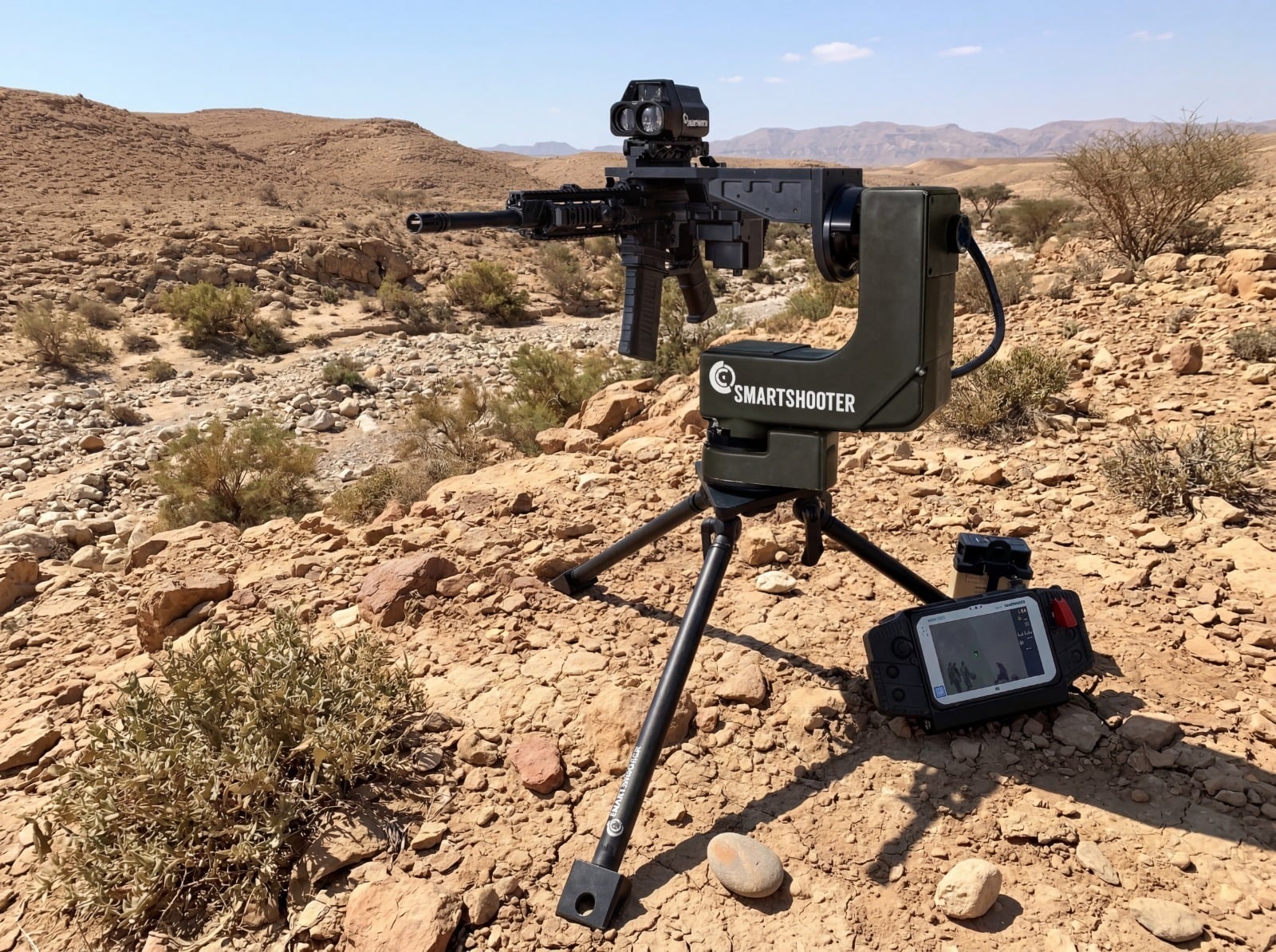
An Israel-based defense company has secured a contract valued at 5.8 million new shekels (approximately $1.9 million) to provide its advanced SMASH Hopper remote-controlled weapon stations to the Israel Ministry of Defense. The initial delivery of this cutting-edge equipment is slated to begin by the end of 2026, with the contract including a six-month extension option for additional spare parts and support services, contingent on user needs.
The contract has the potential to reach a total value of 7.4 million new shekels (about $2.5 million) if all additional options are exercised. The SMASH Hopper system, known for its compact and versatile design, can be deployed in both fixed and mobile configurations, making it suitable for a variety of mission profiles, including urban combat, border security, and the protection of critical infrastructure.
Weighing in at 25 kilograms (55 pounds), the SMASH Hopper is designed to be mounted on light vehicles and unmanned systems, allowing for enhanced operational flexibility. The system integrates seamlessly with existing command and control networks, enabling coordinated attacks alongside other weapon stations. Each unit comes equipped with essential components, including a tripod, a battery, a tilt unit, a remote trigger, and a specialized fire control system. Additionally, it features a Picatinny mount compatible with M4 5.56-millimeter and DMR 7.62-millimeter assault rifles.
In terms of performance, the SMASH Hopper can effectively engage ground targets from distances of up to 800 meters (2,625 feet) and airborne threats at ranges of 600 meters (1,969 feet), showcasing its tactical capabilities in various combat scenarios.
This contract follows a previous award granted in May, where the company was tasked with delivering weapon stations to Tel Aviv. That agreement, with a ceiling value of 14.6 million new shekels ($4.9 million), is set to run through September 2026. Reflecting on the recent deal, SMARTSHOOTER CEO Michal Mor expressed confidence in the operational value of their systems and highlighted the importance of the contract in further strengthening collaboration with the Israel Defense Forces.


