




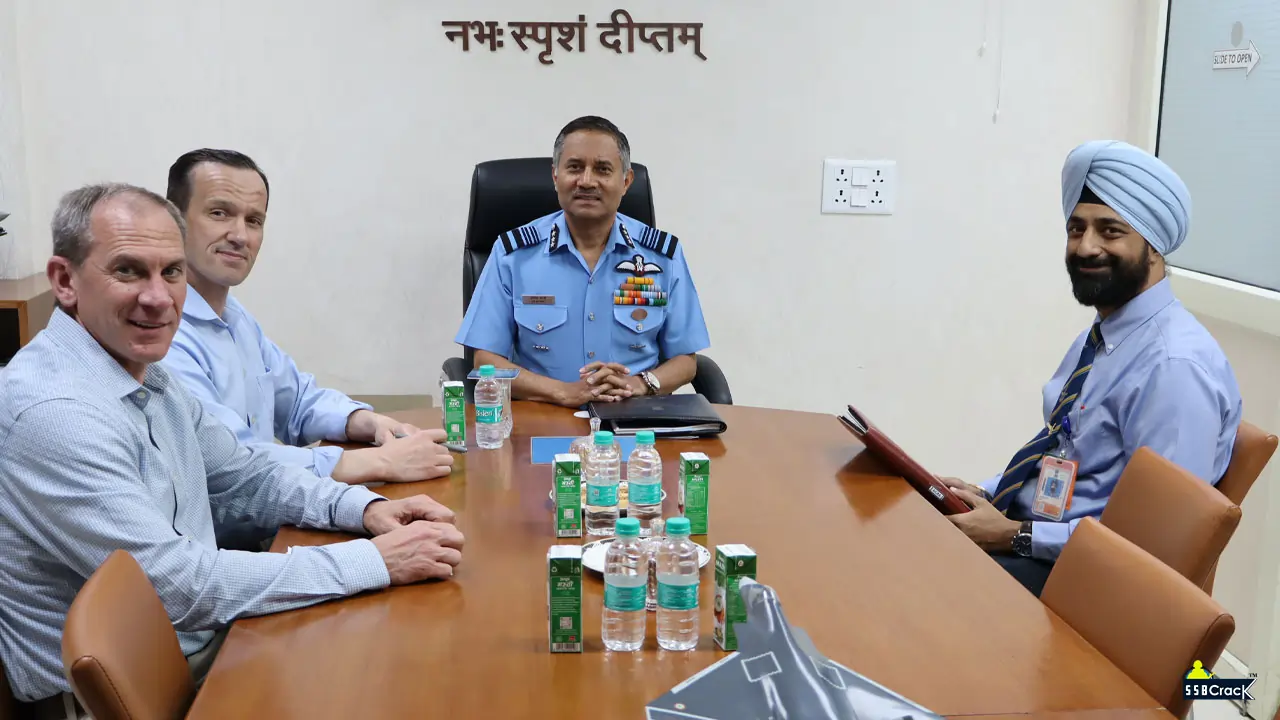
Renowned military scholars John Spencer and Liam Collins have embarked on an ambitious project to examine the significant four-day armed conflict between India and Pakistan that unfolded in May 2025. This confrontation is considered one of the most consequential military engagements between the two nuclear-armed neighbors in decades.
In a recent social media post, Spencer revealed that the authors are dedicating extensive hours to this volume, which will leverage primary-source research, distinguishing it from existing analyses that rely mainly on publicly available reports and battlefield assessments. The book’s development includes in-depth interviews with senior military officers from both India and Pakistan, as well as operational commanders and individuals directly involved in the conflict. Their research journey has taken them to key locations pertinent to the crisis, such as Pahalgam and the Line of Control.
Among those interviewed are top officers of the Indian Armed Forces, including Chief of the Army Staff General Upendra Dwivedi, Deputy Chief of the Air Staff Air Marshal Awadhesh Kumar Bharti, and Director General Naval Operations Vice Admiral A. N. Pramod. These military leaders provided insights, particularly Air Marshal Bharti, who publicly addressed Indian Air Force operations during Operation Sindoor, and Vice Admiral Pramod, who oversaw naval operations at that time.
Spencer emphasizes that their research will encompass perspectives from both sides of the conflict. This duality could enable them to reconstruct the way political directives were transformed into operational decisions across various military domains during the rapidly intensifying confrontation.
The backdrop to the conflict was a terrorist attack on April 22, 2025, in Baisaran near Pahalgam, where 26 individuals lost their lives. The victims were reportedly targeted based on their religion, provoking fears of communal discord within India. In the wake of this incident, tensions escalated between India and Pakistan, with New Delhi accusing Pakistani terrorist networks of orchestrating the attack and launching punitive measures that Pakistan vehemently denied.
Following a period of escalating military activities along the Line of Control, India initiated Operation Sindoor during the night of May 6-7, 2025. This operation involved targeted strikes on nine locations within Pakistan and Pakistan-occupied Jammu and Kashmir, which India claimed were associated with terrorist activities. The Indian government characterized the strikes as measured and focused, designed to avoid civilian and military installations.
In retaliation, Pakistan engaged in military action that led to an exchange of artillery, drones, missiles, and other advanced military technologies between the two nations. The conflict saw a range of operational tactics deployed, including strikes on military infrastructures and the use of integrated air-defense systems.
The confrontation, which lasted from May 7 to May 10, concluded when the Director General of Military Operations from Pakistan reached out to his Indian counterpart, resulting in a mutual agreement to cease hostilities. While both countries later declared their operations as successful, discrepancies emerged concerning losses and damages incurred during the conflict. The spread of misinformation further complicated efforts to ascertain the full scope of what transpired.
Reflecting on the conflict’s broader implications, Spencer asserts that Operation Sindoor was not just an isolated incident but could represent a significant shift in strategic paradigms. An examination of India’s deeper strikes into Pakistani territory suggests a potential departure from previous norms that regarded certain locations as secure from retaliation due to escalation risks.
This conflict also highlighted the growing importance of advanced military technologies and key aspects of escalation management. Notably, both nations were able to conclude their military exchanges without escalating to a full-scale war, showcasing a nuanced understanding of deterrence even amidst intense military operations.
The forthcoming book is anticipated to have a wider relevance beyond South Asia. It will examine the implications of the conflict for countries considering the performance and capabilities of military platforms and technologies, particularly those of Chinese origin, as employed by Pakistan.
The authors have yet to announce the title, publisher, or expected release date of their book. However, Spencer indicated that ongoing research and writing will continue, with more details expected in the future. This exhaustive primary-source approach could provide critical insights into the dynamics of deterrence, precision warfare, and strategic signaling in a complex geopolitical landscape. As questions about the 2025 conflict remain unanswered, the book promises to illuminate both the lead-up to the fighting and the pathways that led India and Pakistan to avoid further escalation.


