




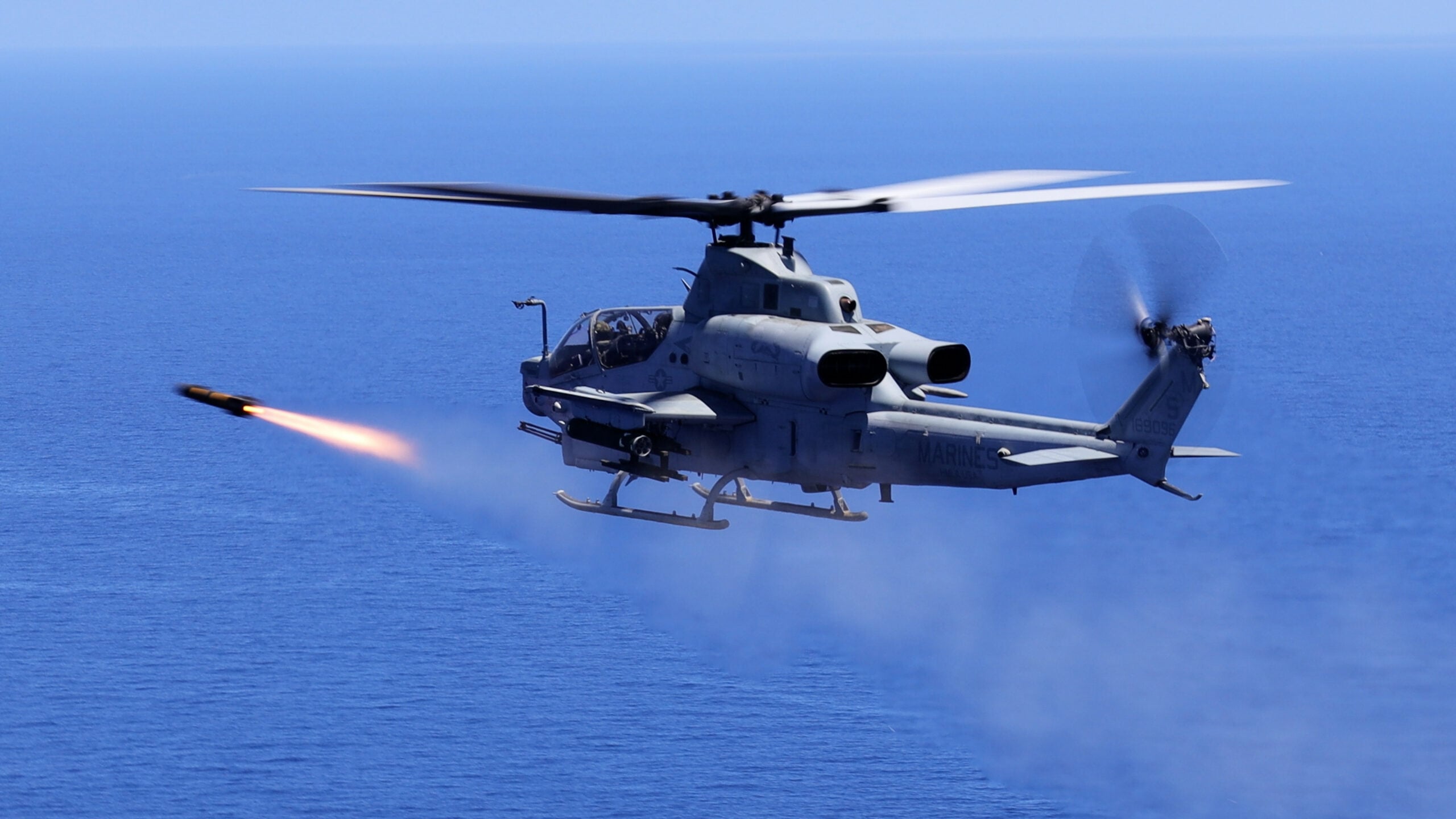
In recent military operations, the AH-1Z Viper helicopter has demonstrated its ability to provide critical air support from the sea. As ships navigate open waters, the Viper can be airborne within minutes, offering rapid response capabilities unreachable by land-based assets. This agility solidifies its appeal in expeditionary warfare, highlighting its dual utility on land and sea.
The AH-1Z Viper, characterized as an advanced twin-engine attack helicopter, is primarily operated by the US Marine Corps. Designed for multifaceted roles such as close air support, reconnaissance, escort missions, and anti-armor warfare, it brings a significant modern step forward from its predecessors. Following its introduction to replace the aging Cobra variants, the Viper boasts enhanced speed, survivability, and digital upgrades, making it an integral part of contemporary military operations.
The origins of the Viper trace back to the AH-1 Cobra, which was introduced during the Vietnam War. As battlefield dynamics evolved, it became clear that advancements in sensors and weaponry were required, leading to a series of upgrades. The H-1 modernization program, spearheaded by Bell Textron, culminated in the Viper’s first flight in 2000 and its operational rollout with the Marine Corps in 2011. With a corrosion-resistant airframe and a fully integrated mission combat suite, the helicopter is built to endure demanding maritime environments.
The Viper forms part of a larger operational ecosystem, including its direct predecessor, the AH-1W Super Cobra. This previous model pioneered the twin-engine format, enhancing survivability and endurance, but lacked the advanced avionics and integrated sensor systems of the Viper. In addition to domestic use, the Viper is also configured for allied nations through specific export variants that adapt to regional operational needs, showcasing its versatility beyond U.S. borders.
Key features of the AH-1Z Viper include advanced sensors for real-time target engagement in various visibility conditions. With a diverse arsenal, it can carry air-to-ground missiles, air-to-air missiles, rockets, and a 20mm cannon, allowing for rapid adjustments across mission profiles. Its sophisticated glass cockpit enhances battlefield communication and coordination with ground forces and other aircraft.
While the Viper boasts high survivability and multirole flexibility, it faces certain limitations, such as a reduced payload capacity compared to larger attack helicopters and demanding maintenance requirements. Moreover, its operational range can be constrained during extended land operations without refueling support.
Globally, the Viper is closely aligned with United States amphibious assault doctrine. Its presence is primarily felt in the Marine Corps Aviation component, but it has garnered interest from prospective operators around the world, including Nigeria, the Czech Republic, Slovakia, and Ukraine. Such interest underscores its relevance in modern warfare, although its export presence remains limited relative to other attack helicopters.
Looking ahead, the AH-1Z Viper is set to continue its service for decades, benefitting from upgrades in weapon systems, sensors, and communications. With the military landscape evolving towards data-driven combat, the Viper’s role is also adapting—from a standalone attack aircraft to a connected node within an extensive operational network, including unmanned systems and next-generation aviation platforms.


