




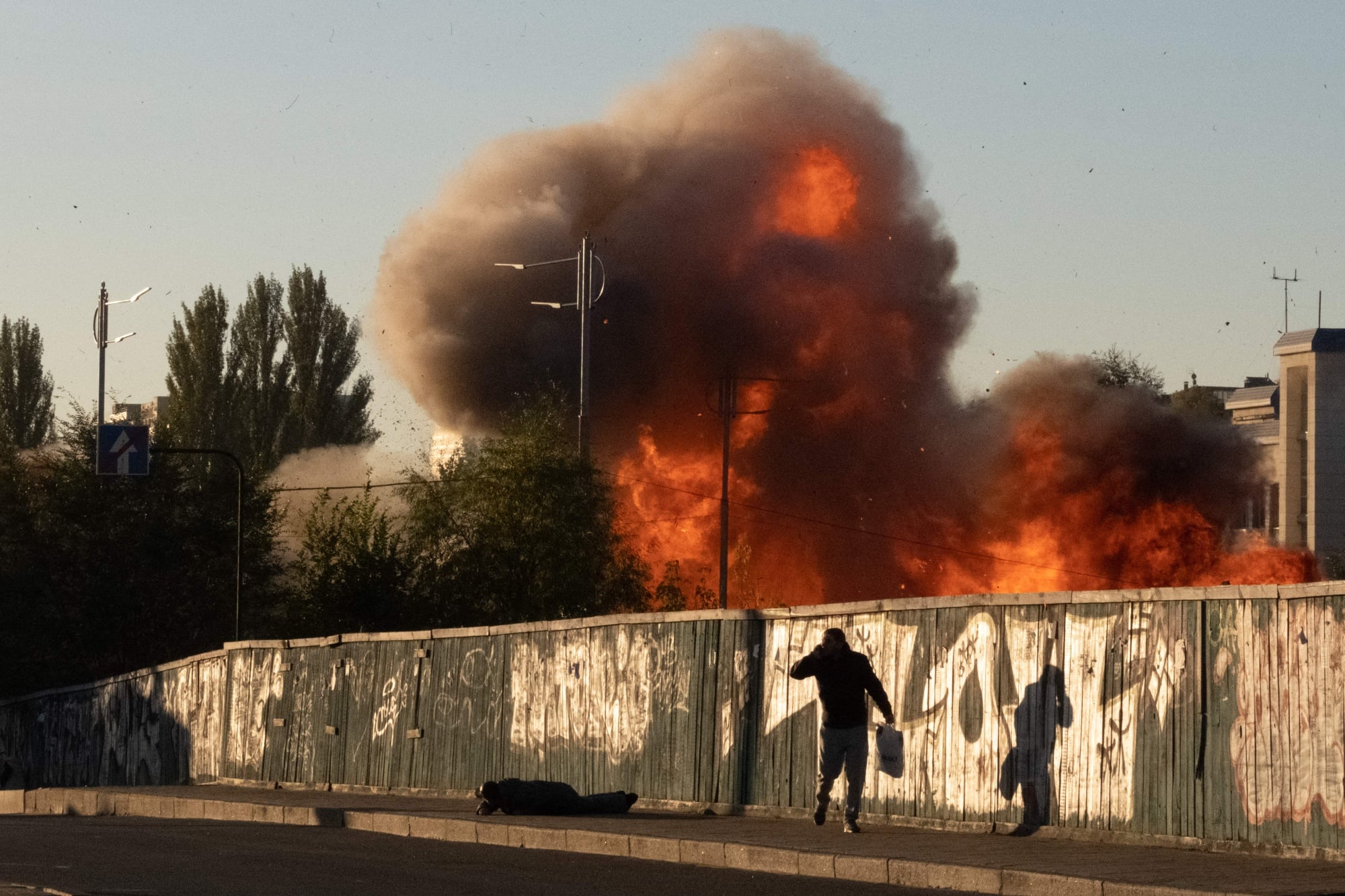
Russia launched a significant assault on Ukraine’s Kyiv region with ballistic missiles on Monday, claiming the lives of at least eight individuals and injuring dozens more, according to local authorities. This attack marks the second strike on the capital and its surrounding areas in under a week, highlighting an escalation in long-range military operations as the conflict enters its fifth year following Russia’s full-scale invasion.
As anticipation builds for a NATO summit set to begin in Ankara on Tuesday, U.S. President Donald Trump is expected to engage in discussions with Ukrainian President Volodymyr Zelensky concerning the ongoing war. Following their meeting, Trump plans to connect with Russian President Vladimir Putin in an effort to rejuvenate faltered peace initiatives.
Eyewitnesses in Kyiv reported hearing over ten explosions during a missile alert early Monday morning. About half an hour later, journalists observed flashes in the sky correlated with subsequent blasts. Tymur Tkachenko, head of the Kyiv region’s military administration, confirmed via Telegram that the enemy was indeed using ballistic missiles.
Kyiv Mayor Vitali Klitschko informed the public that air defense systems were actively engaged and urged residents to take shelter. The missile strikes resulted in four fires igniting within residential buildings, causing extensive damage in areas where residents were presumably asleep at the time of the attack, Tkachenko noted.
Local officials reported that the casualty count included seven fatalities in Kyiv and one in the Bucha district, located to the northwest of the capital. The number of injuries totaled at least 34 across Kyiv and its vicinity. “There are no words that can ease this pain,” remarked Tkachenko in a somber message.
In recent weeks, Ukraine has intensified its attacks on energy infrastructure within Russia in a bid to disrupt the Kremlin’s military capabilities. Additionally, Ukrainian forces have targeted territories in Crimea, which has been controlled by Russia since its annexation, suggesting a strategic approach to weaken Moscow’s grip on the region. Sevastopol’s governor, Mikhail Razvozhayev, reported that a Ukrainian strike had temporarily disabled electricity supplies in the area.
In Moscow, Mayor Sergei Sobyanin claimed that multiple waves of drones aimed at the capital were intercepted by Russian air defenses, indicating heightened tensions within the country as well.
The White House indicated that Trump’s meeting with Zelensky was primarily focused on strategies to conclude the war, which has become a longstanding goal for the U.S. administration. Following their discussions, Trump intends to speak with Putin, a move that underscores the ongoing efforts for diplomatic resolution amidst a backdrop of sustained violence.
Zelensky remarked on Sunday that Ukrainian forces continued to defend the strategically important town of Kostyantynivka in the Donetsk region, a site Russia claimed to have captured the previous Friday—a claim that Ukraine dismissed as false. Zelensky asserted that fighting persists in Kostyantynivka, warning of imminent large-scale attacks from Moscow in light of the upcoming NATO summit.
Both Zelensky and Putin had separate communications with Trump over the weekend, coinciding with the celebration of the 250th anniversary of U.S. independence, showcasing the complex intertwining of international relations amidst the ongoing conflict.


