





In Current Affairs for 08 July 2026, we will see the latest national and international current affairs news. These important current affairs will be beneficial for your upcoming NDA, CDS, CDS OTA, AFCAT, TA, Agniveer Army, Agniveer Navy, Agniveer Air Force, Women Military Police, INET, MNS, ACC exams, SCO, PCSL, CAPF, and SSB interviews, and direct entries for Army, Navy, and Air Force like SSC Tech, TGC, JAG, NCC, TES, 10+2 Cadet. Download a PDF file about current events at the end of this article. Let us now see the Current Affairs.
Current Affairs 08 July 2026
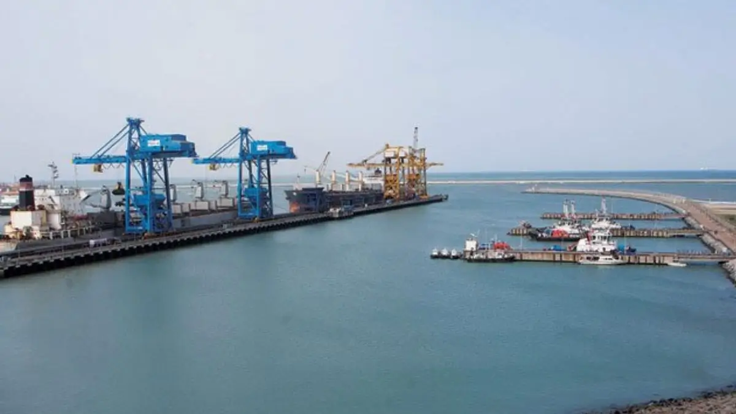
Kamarajar Port Achieves 18-Metre Draft Capability
Kamarajar Port Limited (KPL) has become the second major port in India to attain an operational draft depth of 18 metres after successfully completing the Capital Dredging Phase VI project. The infrastructure upgrade, completed with an investment of approximately ₹440 crore, significantly enhances the port’s cargo-handling capacity.
With the increased draft, the port can now receive fully loaded Capesize vessels carrying cargo of up to 1,70,000 Deadweight Tonnage (DWT). This achievement transforms Kamarajar Port into a Cape Compliant Port capable of accommodating some of the world’s largest dry bulk cargo ships.
Capesize vessels are too large to pass through the Panama Canal or the Suez Canal when fully loaded and therefore usually travel around the Cape of Good Hope. Handling such vessels allows ports to transport larger quantities of cargo in a single voyage, reducing transportation costs and improving operational efficiency.
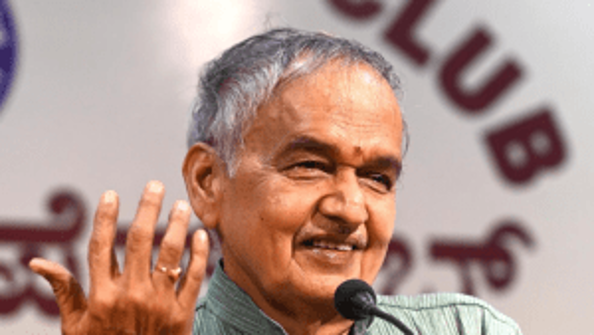
Girish Bharadwaj, the ‘Bridge Man of India’, Passes Away
Padma Shri awardee Girish Bharadwaj, widely known as the “Bridge Man of India,” passed away on 7 July 2026 at the age of 76 in Karnataka.
A mechanical engineering graduate from PES College of Engineering, Mandya, Bharadwaj devoted his life to constructing affordable suspension bridges that connected remote villages across India. His innovative engineering solutions greatly improved transportation and accessibility in rural and hilly regions.
Recognising his remarkable contribution to rural infrastructure and social development, the Government of India honoured him with the Padma Shri in 2017.
Suspension bridges, which rely on cables or chains to support the bridge deck, became his hallmark contribution to rural connectivity.
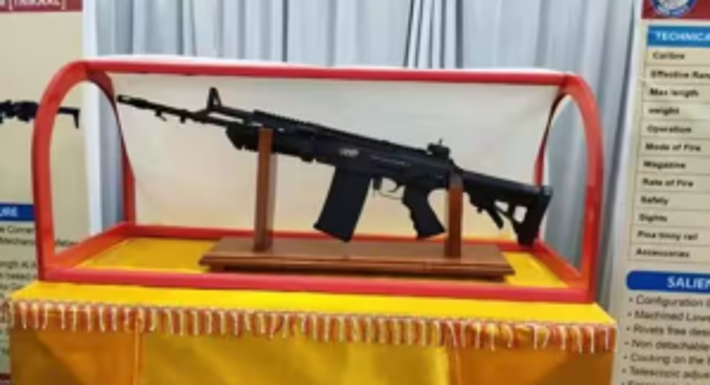
Indigenous Ugram Assault Rifle Successfully Clears Army Trials
India’s indigenous Ugram assault rifle has successfully completed the Indian Army’s General Staff Qualitative Requirement (GSQR) trials as well as the Ministry of Home Affairs evaluation process.
The 7.62×51 mm assault rifle has been jointly developed by the Armament Research and Development Establishment (ARDE), a laboratory under DRDO, in collaboration with Dvipa Defence India Private Limited.
Following successful trials, the rifle is expected to be inducted by several Central Armed Police Forces (CAPFs), including the CRPF, ITBP, SSB, and NSG.
The Ugram rifle is expected to strengthen India’s indigenous defence manufacturing ecosystem under the Atmanirbhar Bharat initiative while gradually reducing dependence on imported small arms.
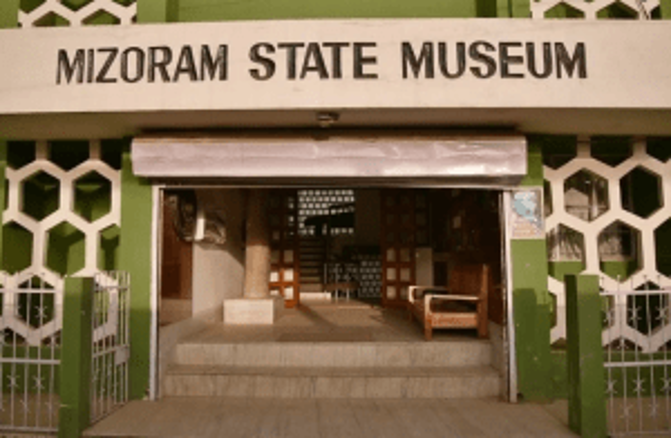
Natural History Museum in Aizawl Recognised as India’s 21st Designated Repository
The Natural History Museum at Mizoram University, Aizawl, has been officially recognised as India’s 21st designated repository under the Biological Diversity Act.
The designation was granted following recommendations from the National Biodiversity Authority and announced by the Union Ministry of Environment, Forest and Climate Change.
The museum will preserve biological materials, including voucher specimens and type specimens of newly identified species. It will maintain collections of flora and fauna from Mizoram and the North-Eastern region, including pteridophytes, macrofungi, reptiles, amphibians, fishes, moths, beetles, and butterflies.
The recognition strengthens biodiversity conservation, scientific research, and documentation of India’s rich ecological heritage.
Tripura Makes National Song and National Anthem Mandatory in Schools
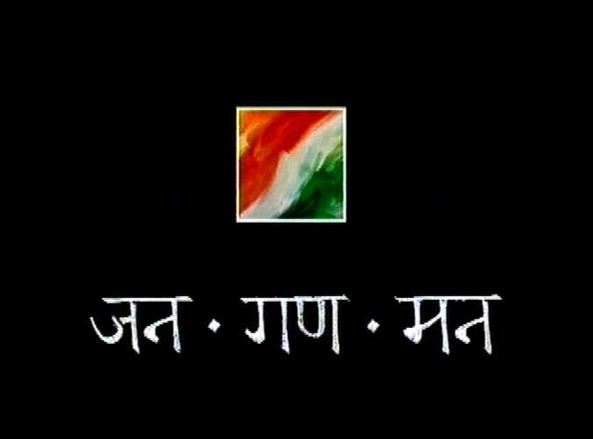
The Government of Tripura has made the full rendition of India’s National Song, Vande Mataram, and the National Anthem, Jana Gana Mana, compulsory in all government, government-aided, private schools, and recognised madrassas across the state.
The decision follows guidelines issued by the Ministry of Home Affairs regarding the proper protocol and respectful rendition of the National Song.
The policy was approved by the Tripura Council of Ministers and aims to promote constitutional values, patriotism, and national unity among students.
The National Anthem, Jana Gana Mana, was adopted by the Constituent Assembly on 24 January 1950, while Vande Mataram continues to hold a place of honour as India’s National Song.
India and Indonesia Deepen Strategic Partnership Through Defence Agreements
Prime Minister Narendra Modi’s official visit to Indonesia marked another milestone in India-Indonesia relations with the signing of more than eight agreements covering defence, technology, healthcare, education, maritime cooperation, and cultural exchanges.
The most significant outcome was the conclusion of the BrahMos missile agreement, making Indonesia an important defence partner in India’s growing security engagement across Southeast Asia.
India also agreed to supply the indigenous Astra Beyond Visual Range Air-to-Air Missile (BVRAAM) under a new arrangement involving Bharat Dynamics Limited, further enhancing defence cooperation between the two nations.
In addition to defence, both countries signed a framework on maritime safety and security to strengthen cooperation in protecting vital sea lanes across the Indo-Pacific.
The visit forms part of India’s broader Act East Policy and MAHASAGAR Vision, reflecting New Delhi’s commitment to ensuring a free, open, inclusive, and rules-based Indo-Pacific region.
Key Facts
Astra Missile
- Indigenous Beyond Visual Range Air-to-Air Missile (BVRAAM).
- Developed by DRDO.
- Equipped with an active radar seeker.
- Integrated with Su-30MKI and being inducted on HAL Tejas fighter aircraft.
BrahMos Missile
- World’s fastest operational supersonic cruise missile.
- Jointly developed by India and Russia.
- Can be launched from land, sea, air, and submarine platforms.
- Designed for precision strikes against land and naval targets while flying at low altitude to evade enemy radar.

Review Questions
1. Kamarajar Port recently became India’s second major port to achieve which operational draft capability?
A. 14 metres
B. 16 metres
C. 18 metres
D. 20 metres
Answer: C. 18 metres
Explanation: After the completion of the Capital Dredging Phase VI project, Kamarajar Port became the second major port in India to have an 18-metre operational draft.
2. The Capital Dredging Phase VI project enables Kamarajar Port to handle which type of vessels?
A. Panamax vessels
B. Handymax vessels
C. Aframax tankers
D. Capesize vessels
Answer: D. Capesize vessels
Explanation: The project transformed Kamarajar Port into a Cape Compliant Port capable of handling fully loaded Capesize vessels carrying up to 1,70,000 DWT.
3. Girish Bharadwaj, popularly known as the “Bridge Man of India,” was honoured with which civilian award?
A. Padma Vibhushan
B. Padma Bhushan
C. Bharat Ratna
D. Padma Shri
Answer: D. Padma Shri
Explanation: Girish Bharadwaj received the Padma Shri in 2017 for his outstanding contribution to rural infrastructure through low-cost suspension bridges.
4. The indigenous Ugram assault rifle has been jointly developed by DRDO’s Armament Research and Development Establishment (ARDE) and which private company?
A. Tata Advanced Systems
B. Bharat Forge
C. Adani Defence
D. Dvipa Defence India Private Limited
Answer: D. Dvipa Defence India Private Limited
Explanation: The 7.62×51 mm Ugram assault rifle is a joint development of ARDE (DRDO) and Dvipa Defence India Private Limited.
5. The Ugram assault rifle uses which calibre ammunition?
A. 5.56 × 45 mm
B. 7.62 × 39 mm
C. 7.62 × 51 mm
D. 9 × 19 mm
Answer: C. 7.62 × 51 mm
Explanation: Ugram is chambered for the 7.62×51 mm NATO calibre, providing greater stopping power and range.
6. The Natural History Museum at Mizoram University has become India’s:
A. 18th designated repository
B. 19th designated repository
C. 20th designated repository
D. 21st designated repository
Answer: D. 21st designated repository
Explanation: The museum in Aizawl was designated as India’s 21st repository under the Biological Diversity Act.
7. Which state has made the full rendition of both Vande Mataram and Jana Gana Mana mandatory in all schools?
A. Assam
B. Meghalaya
C. Nagaland
D. Tripura
Answer: D. Tripura
Explanation: The Tripura Government made the National Song and National Anthem compulsory in all government, aided, private schools, and recognised madrassas.
8. During Prime Minister Narendra Modi’s visit to Indonesia, India agreed to supply which indigenous air-to-air missile?
A. Akash
B. Nag
C. Rudram
D. Astra
Answer: D. Astra
Explanation: India signed an agreement to supply the indigenous Astra Beyond Visual Range Air-to-Air Missile (BVRAAM) to Indonesia.
9. Which vision guides India’s maritime cooperation and Indo-Pacific engagement highlighted during the Indonesia visit?
A. SAGAR Vision
B. Vision 2047
C. Neighbourhood First Policy
D. MAHASAGAR Vision
Answer: D. MAHASAGAR Vision
Explanation: The agreements with Indonesia align with India’s Act East Policy and the MAHASAGAR Vision for a free, open, and secure Indo-Pacific.
10. Which of the following statements is correct regarding the BrahMos missile?
A. It is an air-to-air missile developed solely by DRDO.
B. It is a ballistic missile with hypersonic speed.
C. It is a supersonic cruise missile jointly developed by India and Russia.
D. It can only be launched from naval ships.
Answer: C. It is a supersonic cruise missile jointly developed by India and Russia.
Explanation: BrahMos is the world’s fastest operational supersonic cruise missile, jointly developed by India and Russia. It can be launched from land, sea, air, and submarine platforms.


