




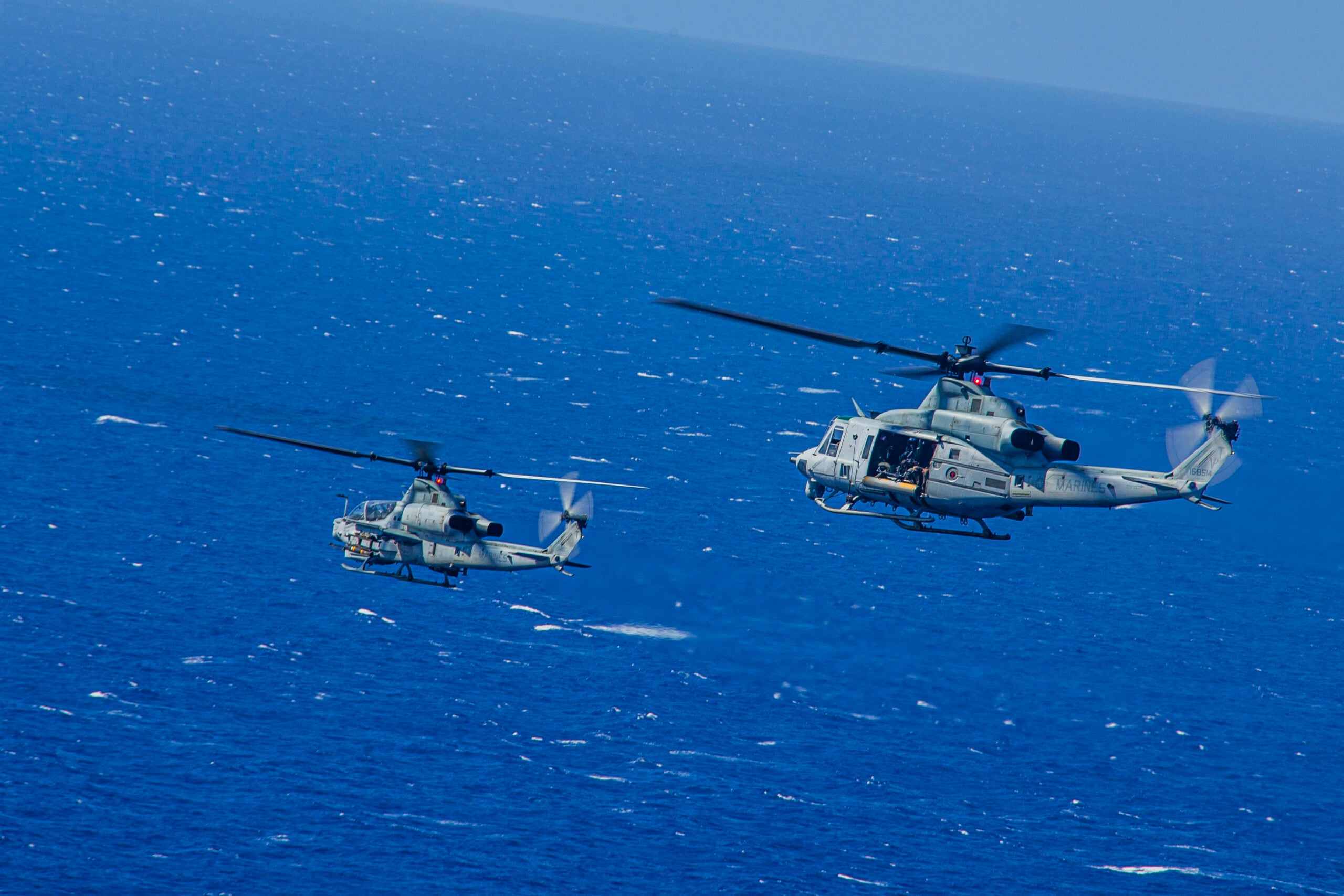
A military flight line becomes a hive of activity as a helicopter prepares to take off, underscoring the vital role of the Bell UH-1Y Venom in supporting the United States Marine Corps’ operations. This modern utility helicopter combines decades of combat aviation experience with cutting-edge technology, allowing for efficient transportation of Marines and equipment in diverse operational scenarios.
The UH-1Y Venom is designed for flexibility, embodying the Marine Corps’ expeditionary doctrine by facilitating transport, coordination, logistics, and fire support in a singular platform. Its capabilities include troop transport, medical evacuation, battlefield communications, and armed escort, allowing the helicopter to adapt swiftly to changing mission requirements.
### Overview of the UH-1Y Venom
The UH-1Y Venom is classified as a medium utility helicopter and operates under various roles, including transportation, medical evacuation (MEDEVAC), command and control, and escort support. Manufactured by Bell Textron, this aircraft supports a crew of 2 to 4, utilizing twin General Electric T700-GE-401C engines that enhance its performance. With a maximum speed of over 170 knots and an operational range of approximately 250 nautical miles, the Venom is equipped with an impressive array of armament, including miniguns, machine guns, rockets, and optional Hellfire missiles.
### Evolution and Development
The Venom arose from Bell Textron’s H-1 modernization program aimed at revitalizing the aging fleet of UH-1 and AH-1 helicopters. While the legacy Huey gained fame during the Vietnam War, the contemporary battlefield called for improvements in lift capacity, survivability, and digital integration. The redesign not only modernized the aircraft structurally but also improved its speed, payload capabilities, and maintenance efficiency, ultimately producing a helicopter that could operate in tandem with its companion, the AH-1Z Viper.
### Operational Capabilities
Equipped with powerful twin engines, the UH-1Y can perform effectively in various climates and conditions, delivering stable performance even in high-altitude environments. The helicopter’s digital avionics system migrates from traditional analog setups, allowing for real-time navigation and situational awareness, thus facilitating its operation within the Marine Air-Ground Task Force framework. This connectivity enhances the helicopter’s multi-mission flexibility, enabling it to switch roles seamlessly without extensive reconfiguration.
### Strengths and Limitations
The Venom’s versatility is among its strongest attributes, allowing rapid role transitions that bolster its effectiveness within expeditionary operations. It shares many components with the AH-1Z, simplifying maintenance and logistics for Marine aviation units. However, the aircraft is not a dedicated attack platform and cannot compete with specialized attack helicopters in terms of firepower. Performance can also be affected by extreme environmental conditions, particularly when fully loaded.
### Global Presence and Usage
The UH-1Y Venom has established itself as a key asset not only in the US Marine Corps but also internationally. It has seen action in Afghanistan’s rugged terrain, where its capabilities were critical for quick troop insertions and evacuations. Additionally, the helicopter is making strides in global defense partnerships; Ukraine recently inked a deal for the acquisition of both the AH-1Z and UH-1Y, establishing a local subsidiary for support in the process. The Czech Republic is also integrating the UH-1Y into its modernized fleet, reflecting a broader trend of nations seeking advanced military capabilities.
### Future Outlook
As the UH-1Y Venom continues to serve, it is poised to remain an integral part of Marine aviation for decades. Future upgrades are anticipated to enhance its digital networking capabilities, survivability systems, and integration with unmanned aerial vehicles. Rather than being replaced, the Venom is evolving into a more interconnected platform, embracing interoperability while maintaining its crucial role in modern expeditionary warfare.
In a landscape where rapid response is essential for mission success, the UH-1Y Venom stands as a versatile and reliable component of the Marine Corps’ aviation arsenal.


