




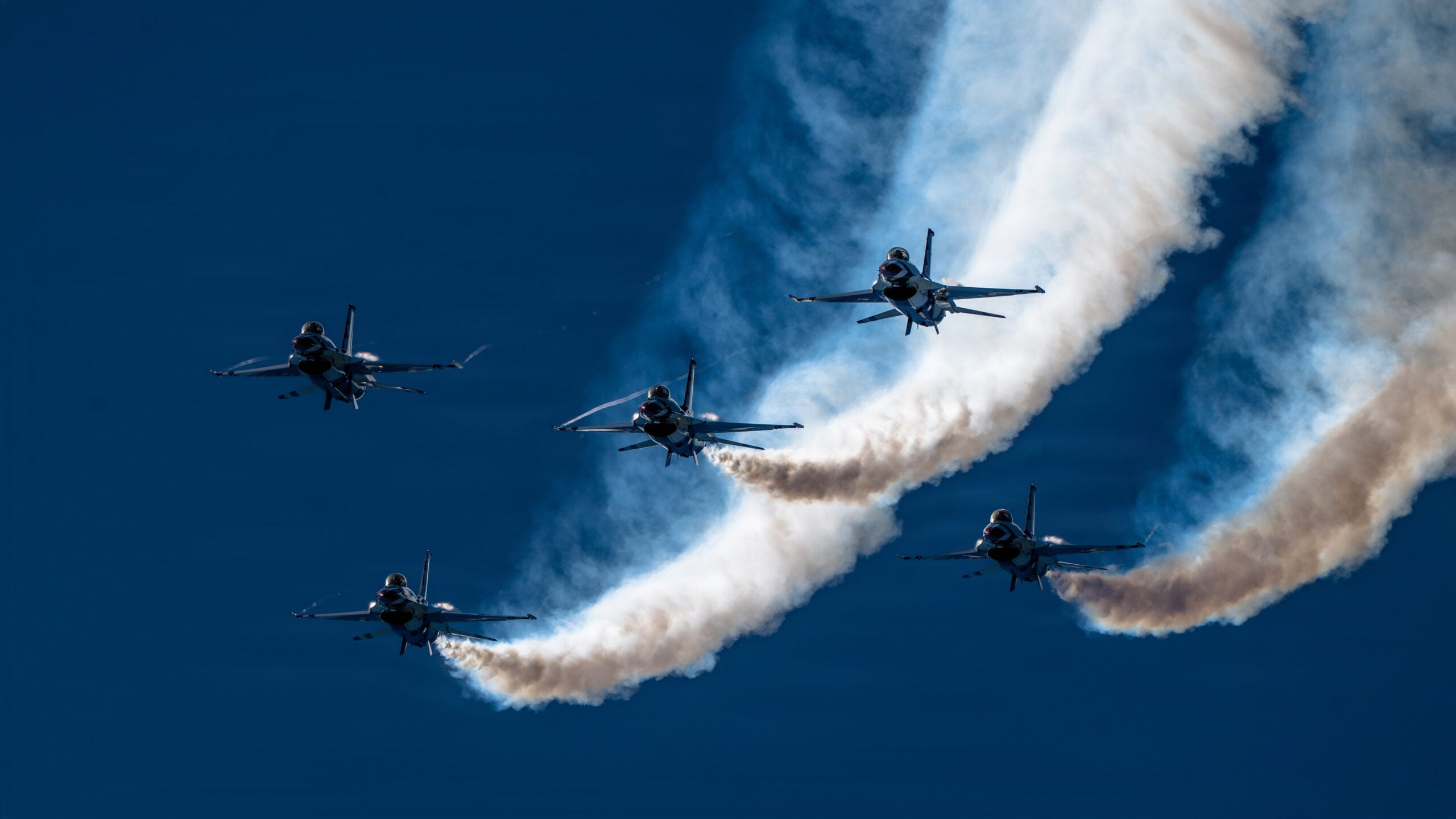
In an era marked by the demand for more efficient and adaptable military aircraft, the F-16 Fighting Falcon emerged as a groundbreaking solution in the early 1970s. Conceived by a group of reform-minded Pentagon officials who critiqued the trajectory of American fighter design for being excessive in size, complexity, and cost, the F-16 was crafted to embody a principle of simplicity and effectiveness. Its design emphasized a lightweight approach, focusing on the pilot’s experience rather than merely adhering to procurement specifications.
Fast forward fifty years, the F-16 continues to play a vital role in air forces around the world, demonstrating its lasting impact on discussions surrounding maneuver warfare, cost-effective airpower, and the development of fourth-generation fighters.
The F-16 Fighting Falcon is classified as a single-engine multirole fighter aircraft capable of undertaking a diverse array of missions, including air-to-air combat, ground strikes, close air support, interception, and reconnaissance. Its adaptability is anchored by a potent combination of advanced avionics and a flexible combat platform.
The jet was initially developed under the US Air Force’s Lightweight Fighter program, with General Dynamics (now Lockheed Martin) at the helm. Its first flight occurred in the 1970s, and by 1974, the YF-16 prototype had clinched the Air Force’s Lightweight Fighter competition. The F-16 officially entered military service in 1978 and was soon adopted by multiple NATO allies throughout the 1980s, reinforcing its reputation through significant combat use during the Gulf War in 1991.
The aircraft has undergone continual modernization over the decades, evolving into several variants tailored for specific operational needs. Key configurations include the F-16A/B for initial training, the F-16C/D for enhanced combat capability, and the advanced F-16E/F Block 60 for export with superior sensors. The F-16V, or Viper, represents the latest upgrades featuring advanced radar and system improvements.
A defining characteristic of the F-16 is its intentional aerodynamic instability, designed to enhance agility. This inherent instability requires constant corrections, which are managed by a sophisticated fly-by-wire system, allowing the aircraft to respond swiftly to pilot inputs. Such precision in control enables the F-16 to outmaneuver competing aircraft during engagements.
The avionics and combat systems integrated into the F-16 add further layers of capability, equipping it with digital systems, GPS navigation, and advanced radar technologies. Its ability to carry a wide range of munitions—from air-to-air missiles to precision-guided bombs—grants it remarkable mission versatility.
Despite its advantages, the F-16’s single-engine design limits redundancy, which can be a disadvantage compared to twin-engine fighters. Additionally, while it boasts a large global support network and numerous upgrade options, the platform’s older airframes necessitate ongoing modernization efforts to maintain operational relevance.
Today, over 4,600 F-16 aircraft have been produced, making it one of the most extensively deployed combat aircraft globally. It serves as a foundational platform for air forces in over 25 countries, including NATO allies and partner nations across various regions. Its operational history spans decades and includes significant deployments in conflicts such as the Gulf War, NATO interventions in the Balkans during the 1990s, and recent operations against ISIS.
Looking into the future, the F-16 is expected to sustain its operational presence through ongoing upgrades and modernization programs, notably the F-16V standard. As new fighters emerge across the globe, the F-16’s versatility and inherent capacity for upgrades will likely ensure its continued utility and relevance on the modern battlefield.


