




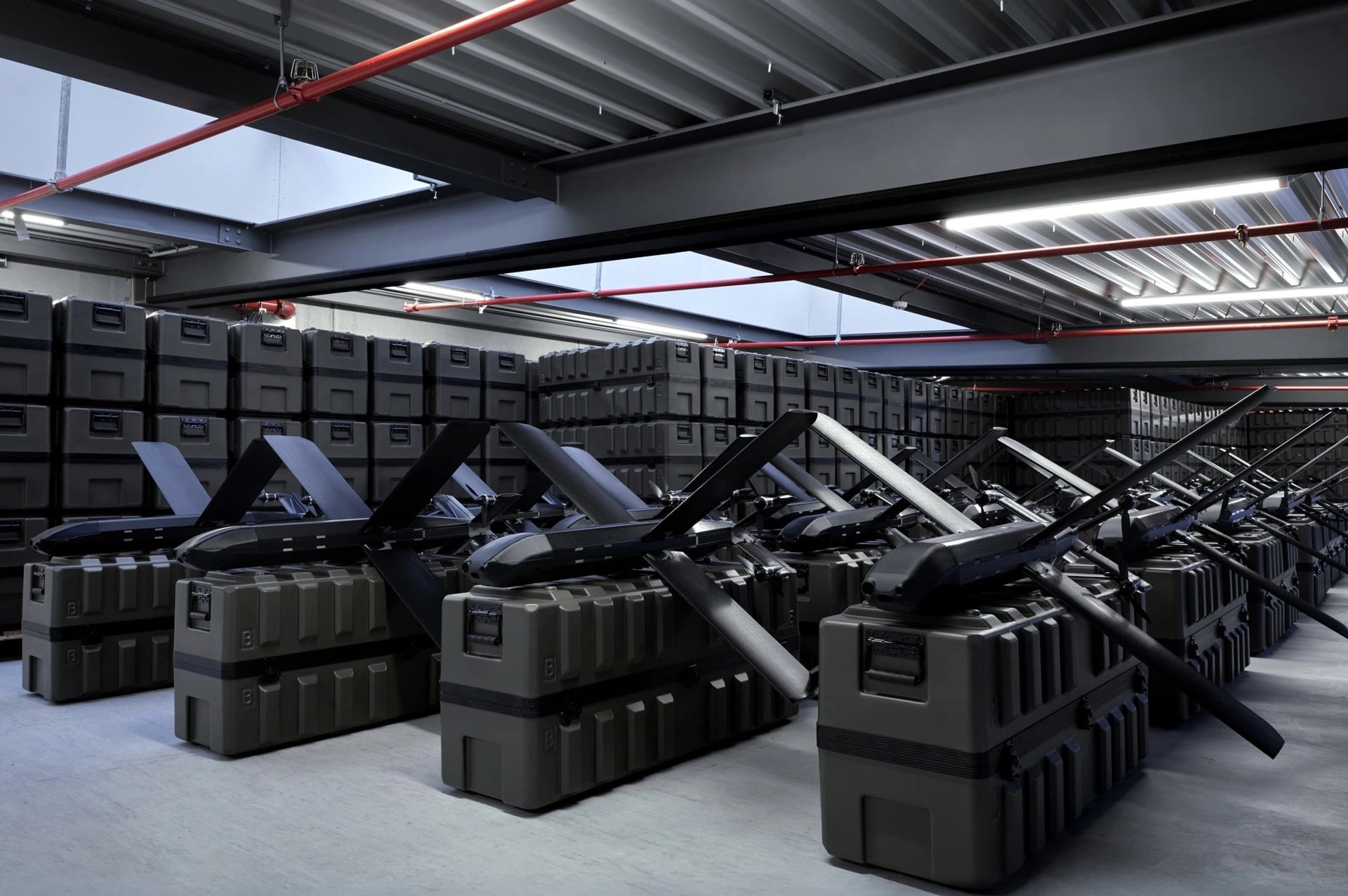
In a significant move to strengthen its presence in the US defense sector, German defense technology firm Helsing has announced a $50 million investment to establish a new manufacturing facility for its HX-2 strike drone in Martinsburg, West Virginia. This expansion marks Helsing’s transition beyond its traditional European operations to tap into the growing demand for advanced military technologies in the United States.
According to state officials, the new facility is projected to create at least 60 full-time jobs, offering competitive salaries with an average of $125,000 annually. This initiative is expected to contribute positively to the local economy and bolster employment in Berkeley County.
The HX-2 is an advanced AI-enabled strike drone designed for large-scale deployment on the battlefield, underscoring Helsing’s commitment to innovation in defense technologies. Jennifer McArdle, General Manager of Helsing US, highlighted the advantages that West Virginia brings to the table, citing the availability of a skilled workforce, robust infrastructure, and manufacturing capabilities essential for the company’s strategic expansion into the US defense market. “A strong defense industrial base depends on trusted partnerships and the ability to scale advanced manufacturing where it matters most,” she remarked.
Helsing’s decision to set up operations in the US is part of a broader trend among foreign defense companies seeking to enhance their manufacturing capacities in response to increasing demand for military equipment. Recent expansions by several international firms illustrate this trend. For instance, Sweden’s Saab established a new office in Auburn Hills, Michigan, which will act as an engineering and program management hub for its forthcoming munitions facility slated to open in Grayling in 2026.
Additionally, Norway’s Kongsberg Defence & Aerospace broke ground earlier this year on its first US missile production facility in Virginia, while the German defense group Rheinmetall recently scaled its operations in Fairfax County, Virginia, leasing a new hub intended for American Rheinmetall Defense and Munitions.
These strategic moves by foreign defense entities emphasize the importance of localized production, highlighting the growing intersection of global defense partnerships and the need for advanced manufacturing capabilities in the United States, particularly as geopolitical dynamics continue to evolve.


