




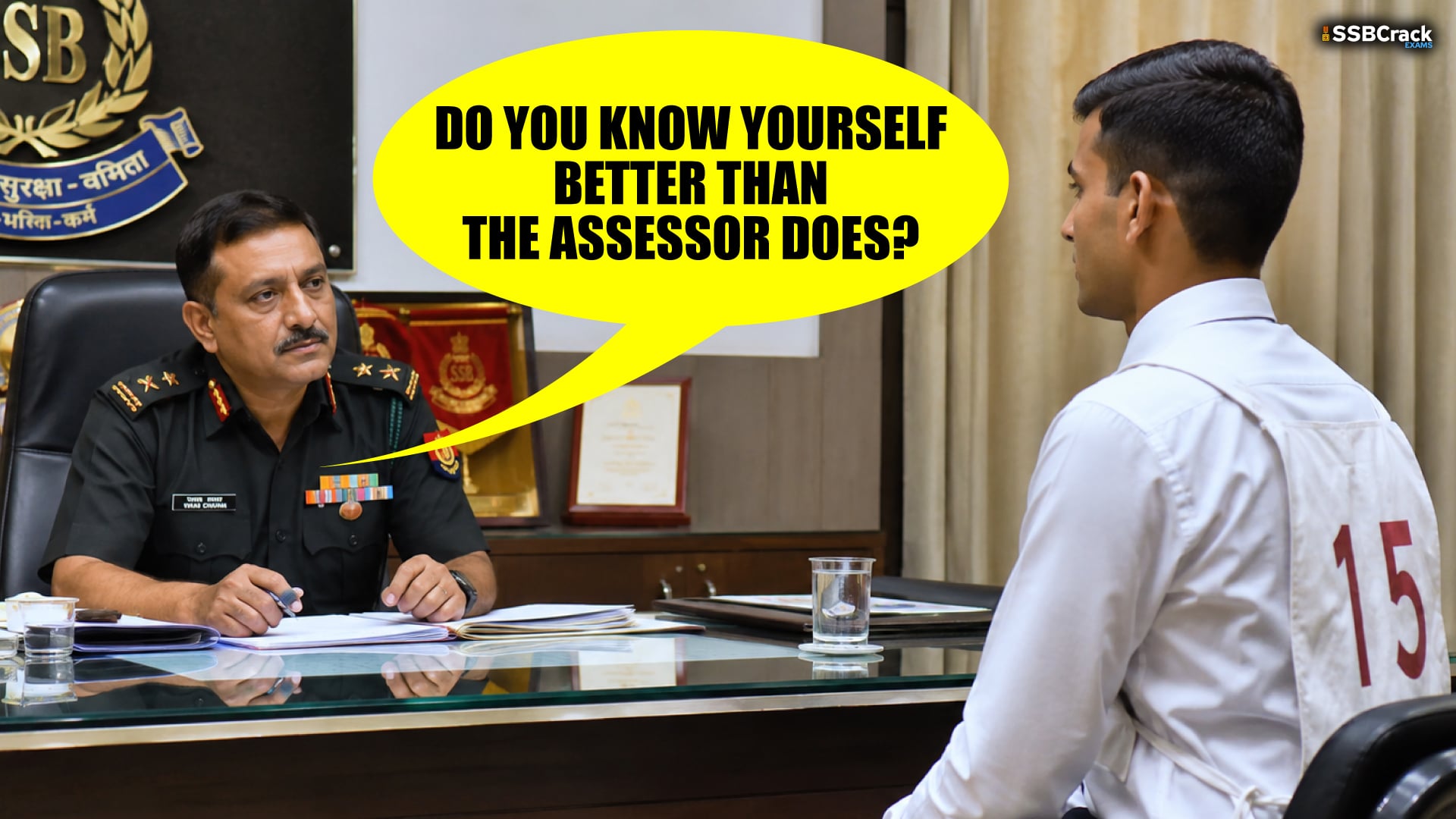
If you are a Psychology graduate preparing for the SSB Interview, then this video is specially designed for you. Psychology graduates are often expected to possess strong interpersonal skills, emotional intelligence, observation skills, and an understanding of human behavior. However, the Interviewing Officer is not looking for textbook definitions or psychological theories. Instead, they want to understand your personality, leadership potential, practical thinking, and Officer Like Qualities.
In this session, we will discuss 20 commonly asked SSB Interview questions for Psychology graduates, understand why they are asked, learn the correct approach to answering them, and review sample responses.
Question 1: Tell me about yourself.
Why is it asked?
To assess your communication skills, self-awareness, confidence, and overall personality.
How to answer:
Provide a brief introduction covering your educational background, family, interests, achievements, and career aspirations.
Sample Answer:
“My name is Priya Sharma. I completed my Bachelor’s degree in Psychology from XYZ University. I belong to a family of four members. I enjoy reading books on human behavior, participating in social activities, and mentoring younger students. My goal is to serve the nation as an officer while continuously developing my leadership and interpersonal skills.”
Question 2: Why did you choose Psychology as your subject?
Why is it asked?
To understand your academic interests and decision-making process.
How to answer:
Discuss your genuine interest in understanding human behavior and mental processes.
Sample Answer:
“I have always been curious about how people think, behave, and make decisions. Psychology offered me an opportunity to understand human behavior scientifically and develop better communication and problem-solving skills.”
Question 3: What have you learned from studying Psychology?
Why is it asked?
To evaluate how effectively you have applied your education.
How to answer:
Focus on practical lessons rather than theoretical concepts.
Sample Answer:
“Psychology taught me the importance of empathy, effective communication, emotional intelligence, and understanding diverse perspectives. These lessons have helped me interact better with people and work effectively in teams.”
Question 4: Why do you want to join the Armed Forces?
Why is it asked?
To assess your motivation and commitment.
How to answer:
Highlight service to the nation, leadership opportunities, discipline, and personal growth.
Sample Answer:
“I want to serve the nation while working in a challenging and disciplined environment. The Armed Forces provide opportunities to lead people, take responsibility, and contribute meaningfully to society.”
Question 5: How does Psychology help in military leadership?
Why is it asked?
To assess your ability to connect academic knowledge with practical situations.
How to answer:
Discuss understanding human behavior, teamwork, motivation, and communication.
Sample Answer:
“Psychology helps leaders understand team dynamics, motivation, stress management, and communication. These skills can improve decision-making and strengthen group cohesion during challenging situations.”
Question 6: What are your strengths?
Why is it asked?
To evaluate self-awareness and confidence.
How to answer:
Mention genuine strengths supported by examples.
Sample Answer:
“My strengths include empathy, active listening, adaptability, and teamwork. These qualities have helped me build strong relationships and effectively handle group projects during my academic journey.”
Question 7: What are your weaknesses?
Why is it asked?
To assess honesty and self-improvement efforts.
How to answer:
Mention a real weakness along with steps taken to improve it.
Sample Answer:
“I sometimes overanalyze situations before making decisions. However, I have learned to set deadlines for decision-making and focus on practical solutions.”
Question 8: Describe a situation where you resolved a conflict.
Why is it asked?
To assess interpersonal and leadership skills.
How to answer:
Share a real example and explain your role.
Sample Answer:
“During a college project, two team members disagreed over task allocation. I listened to both sides, facilitated a discussion, and helped distribute responsibilities based on individual strengths. The project was completed successfully.”
Question 9: What is the most important quality of a leader?
Why is it asked?
To understand your perception of leadership.
How to answer:
Choose a quality and justify it logically.
Sample Answer:
“I believe responsibility is the most important leadership quality because a leader must be accountable for decisions and the welfare of the team.”
Question 10: How do you handle stress?
Why is it asked?
To evaluate emotional stability.
How to answer:
Discuss practical coping mechanisms.
Sample Answer:
“I manage stress by planning my tasks, exercising regularly, and maintaining a positive outlook. These habits help me stay calm and productive under pressure.”
Question 11: Have you ever failed at something?
Why is it asked?
To assess resilience and learning ability.
How to answer:
Discuss the failure honestly and focus on lessons learned.
Sample Answer:
“I once failed to secure a leadership position in a student organization. I analyzed my shortcomings, improved my communication skills, and later successfully led a major college event.”
Question 12: How would your friends describe you?
Why is it asked?
To cross-check your personality traits.
How to answer:
Mention qualities reflected in your actions.
Sample Answer:
“My friends would describe me as approachable, dependable, and a good listener. They often seek my advice when facing personal or academic challenges.”
Question 13: What is emotional intelligence?
Why is it asked?
To assess conceptual understanding and practical application.
How to answer:
Provide a simple explanation and practical relevance.
Sample Answer:
“Emotional intelligence is the ability to understand and manage one’s emotions while effectively understanding and responding to the emotions of others. It helps build strong relationships and make balanced decisions.”
Question 14: What would you do if a team member was underperforming?
Why is it asked?
To evaluate leadership and teamwork skills.
How to answer:
Focus on support, communication, and improvement.
Sample Answer:
“I would first understand the reasons behind the underperformance, offer support and guidance, and work together to improve productivity while maintaining team morale.”
Question 15: What leadership experiences do you have?
Why is it asked?
To assess leadership potential.
How to answer:
Mention actual experiences and responsibilities.
Sample Answer:
“I coordinated a college awareness campaign where I managed a team of volunteers, delegated tasks, and ensured the successful completion of the event.”
Question 16: What is your biggest achievement?
Why is it asked?
To understand your priorities and confidence.
How to answer:
Choose a meaningful achievement and explain its significance.
Sample Answer:
“My biggest achievement was organizing a mental health awareness workshop that benefited hundreds of students and encouraged open discussions about psychological well-being.”
Question 17: What would you do if you disagreed with your senior?
Why is it asked?
To assess maturity and discipline.
How to answer:
Show respect while presenting your viewpoint professionally.
Sample Answer:
“I would respectfully present my perspective with supporting facts. If the final decision remains unchanged, I would carry out my duties professionally while maintaining discipline.”
Question 18: What do you know about Officer Like Qualities?
Why is it asked?
To assess your awareness of SSB expectations.
How to answer:
Discuss key OLQs with practical understanding.
Sample Answer:
“Officer Like Qualities include effective intelligence, responsibility, initiative, teamwork, courage, self-confidence, determination, and the ability to influence a group positively.”
Question 19: Why should the Armed Forces select you?
Why is it asked?
To evaluate confidence and self-assessment.
How to answer:
Connect your strengths with the requirements of an officer.
Sample Answer:
“I possess strong communication skills, empathy, adaptability, leadership potential, and a genuine desire to serve the nation. I am willing to learn, take responsibility, and contribute effectively as an officer.”
Question 20: What are your long-term goals?
Why is it asked?
To assess vision and commitment.
How to answer:
Align your goals with service and professional growth.
Sample Answer:
“My long-term goal is to become an effective military leader who contributes positively to the organization while continuously developing professionally and personally.”
As a Psychology graduate, remember that the Interviewing Officer is not evaluating your ability to quote psychological theories or famous psychologists. They are interested in understanding your personality, practical intelligence, leadership qualities, emotional stability, and suitability for military life. Be honest, natural, and confident while answering every question.
We hope these questions help you prepare effectively for your upcoming SSB Interview. Practice answering these questions in your own words, analyze your strengths and experiences, and focus on developing your Officer Like Qualities. Stay confident, remain authentic, and continue working towards your dream of becoming an officer in the Armed Forces. Wishing you all the very best for your SSB journey. Jai Hind!


