




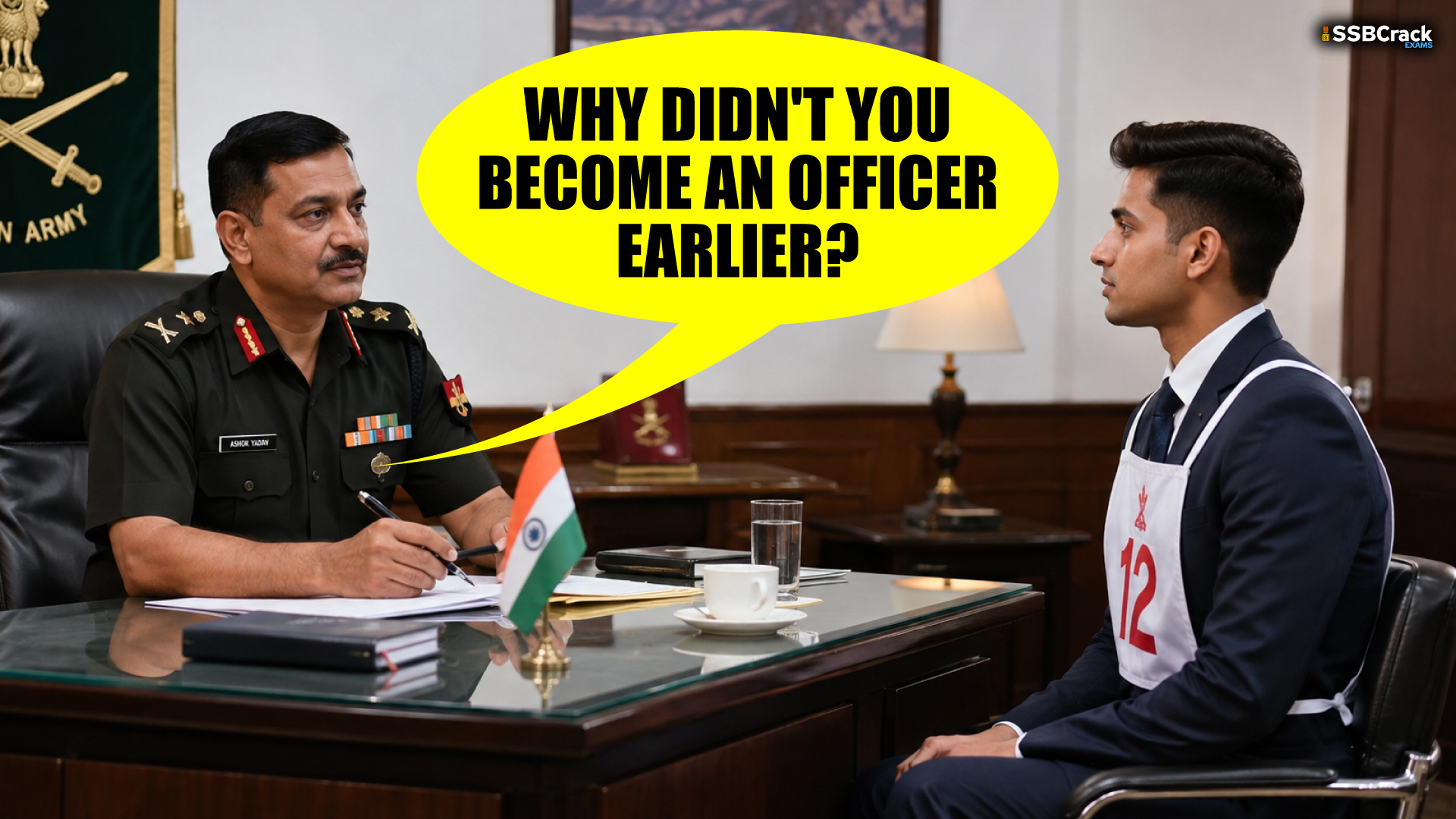
This session is specially designed for candidates appearing for the Special Commissioned Officer (SCO) Entry. SCO Entry is one of the most respected opportunities for Junior Commissioned Officers (JCOs) and Other Ranks to become Commissioned Officers in the Indian Army. Unlike civilian entries, SCO candidates bring years of military experience, operational exposure, administrative responsibilities, and an in-depth understanding of Army culture.
The Interviewing Officer knows that you have already proven yourself as a capable soldier or JCO. However, the SSB is not evaluating your past service alone—it is assessing whether you possess the vision, leadership, strategic thinking, emotional intelligence, and officer-like qualities required to command troops and shoulder greater responsibilities. Therefore, many questions are based on your service experiences, leadership philosophy, troop management, military ethics, and decision-making.
In this session, we will discuss 20 unique and thought-provoking SSB Interview questions for SCO Entry. Along with every question, we will understand why it is asked, how to answer it effectively, and a sample answer.
Question 1: After serving for so many years, why do you still aspire to become a Commissioned Officer?
Why is it asked?
To understand your motivation and whether your ambition is driven by responsibility rather than rank.
How to answer:
Focus on leadership, larger responsibilities, and contributing to the organization.
Sample Answer:
“My years of service have given me valuable practical experience. Becoming a Commissioned Officer would allow me to contribute at a higher level by taking greater responsibility for operational planning, leadership, and the welfare of troops.”
Question 2: Which leadership mistake have you observed in officers, and how would you avoid it?
Why is it asked?
To evaluate observation skills, maturity, and leadership philosophy.
How to answer:
Avoid criticizing individuals. Discuss the lesson professionally.
Sample Answer:
“I have observed that delayed communication sometimes creates confusion. As an officer, I would ensure timely and clear communication so that everyone understands the objective and expectations.”
Question 3: How has your experience as a JCO shaped your understanding of leadership?
Why is it asked?
To assess the impact of service experience on your personality.
How to answer:
Discuss practical leadership experiences.
Sample Answer:
“My experience has taught me that leadership is about earning trust through consistency, fairness, and leading by example rather than relying solely on authority.”
Question 4: If commissioned, how would you earn the respect of officers who are younger than you in age but senior in rank?
Why is it asked?
To assess professionalism and adaptability.
How to answer:
Emphasize military discipline and mutual respect.
Sample Answer:
“I would respect the rank and appointment irrespective of age. Professionalism, teamwork, and continuous learning are essential for maintaining healthy working relationships.”
Question 5: What is one Army tradition you believe should always be preserved?
Why is it asked?
To assess your appreciation of military values.
How to answer:
Discuss traditions that strengthen the organization.
Sample Answer:
“The tradition of leading from the front should always be preserved because it builds confidence, trust, and morale among troops.”
Question 6: Describe an incident where you had to motivate soldiers during a difficult situation.
Why is it asked?
To evaluate leadership under pressure.
How to answer:
Explain the situation, action, and outcome.
Sample Answer:
“During an extended field exercise, fatigue affected morale. I encouraged the team by setting achievable milestones, appreciating their efforts, and maintaining a positive attitude, which helped everyone complete the task successfully.”
Question 7: What qualities should every senior leader possess before expecting discipline from subordinates?
Why is it asked?
To understand your leadership values.
How to answer:
Focus on fairness, integrity, and accountability.
Sample Answer:
“A senior leader should be disciplined, impartial, competent, and willing to accept responsibility because subordinates are influenced by their leader’s conduct.”
Question 8: If one of your soldiers repeatedly challenged your instructions, how would you deal with the situation?
Why is it asked?
To assess conflict management and leadership.
How to answer:
Balance empathy with discipline.
Sample Answer:
“I would first understand the reason behind the behaviour, counsel the individual, and, if necessary, take disciplinary action according to Army procedures while maintaining fairness.”
Question 9: Which military posting has contributed the most to your growth?
Why is it asked?
To evaluate practical learning.
How to answer:
Discuss responsibilities and lessons.
Sample Answer:
“My field posting taught me resilience, resource management, and the importance of teamwork under demanding operational conditions.”
Question 10: What does responsibility mean to you as a future officer?
Why is it asked?
To assess your understanding of officership.
How to answer:
Discuss responsibility toward mission, men, and the nation.
Sample Answer:
“Responsibility means ensuring mission success while safeguarding the welfare, development, and morale of the soldiers under my command.”
Question 11: If you had to choose one officer you served under as your role model, what qualities would you adopt?
Why is it asked?
To assess your ability to learn from others.
How to answer:
Mention qualities rather than personality.
Sample Answer:
“I would adopt his calm decision-making, fairness, humility, and willingness to listen before making important decisions.”
Question 12: What is one administrative challenge you have faced during your service?
Why is it asked?
To assess organizational ability.
How to answer:
Explain the challenge and solution.
Sample Answer:
“Managing personnel schedules during operational commitments required careful planning and communication. By coordinating effectively, we maintained operational efficiency.”
Question 13: If selected, what would be your first priority as a newly commissioned officer?
Why is it asked?
To understand your priorities.
How to answer:
Focus on learning and leading.
Sample Answer:
“My first priority would be understanding my unit thoroughly, learning from experienced officers and soldiers, and building professional credibility.”
Question 14: Have you ever admitted your mistake before your subordinates?
Why is it asked?
To assess humility and integrity.
How to answer:
Share a genuine example.
Sample Answer:
“Yes. During a planning discussion, I overlooked an important detail. I acknowledged my mistake, corrected it immediately, and appreciated the soldier who pointed it out.”
Question 15: How would you balance discipline with compassion while leading troops?
Why is it asked?
To evaluate emotional intelligence.
How to answer:
Show balanced leadership.
Sample Answer:
“Discipline is essential for military effectiveness, but understanding genuine personal difficulties helps build trust and strengthens team cohesion.”
Question 16: What distinguishes authority from influence?
Why is it asked?
To assess leadership philosophy.
How to answer:
Explain the difference clearly.
Sample Answer:
“Authority comes from rank, while influence comes from character, competence, and the ability to inspire confidence.”
Question 17: If you could improve one aspect of leadership training in the Army, what would it be?
Why is it asked?
To assess innovation and critical thinking.
How to answer:
Provide practical suggestions.
Sample Answer:
“I would include more scenario-based leadership exercises involving ethical dilemmas and operational decision-making to prepare leaders for complex situations.”
Question 18: How has military life changed your perspective on success?
Why is it asked?
To understand your values.
How to answer:
Discuss personal growth.
Sample Answer:
“Earlier, I associated success with personal achievement. Military life has taught me that true success lies in accomplishing the mission while ensuring the welfare and development of the team.”
Question 19: If you are not selected this year, how will you respond?
Why is it asked?
To assess resilience and determination.
How to answer:
Demonstrate a positive attitude.
Sample Answer:
“I will accept the outcome positively, analyse my shortcomings, improve them, and continue serving with the same commitment while preparing for future opportunities.”
Question 20: What legacy would you like to leave when you retire as an officer?
Why is it asked?
To understand your long-term vision and values.
How to answer:
Focus on leadership and service.
Sample Answer:
“I would like to be remembered as a fair, competent, and compassionate leader who developed future leaders, upheld Army values, and inspired confidence through integrity and professionalism.”
As an SCO candidate, your greatest strength is your experience. Unlike civilian candidates, you have lived the military life, worked under different commanders, faced operational challenges, and led soldiers in real situations. During the SSB Interview, your objective is not to impress the board with years of service alone but to demonstrate how those experiences have shaped you into a mature leader capable of shouldering the responsibilities of a Commissioned Officer. Speak honestly, reflect on your experiences, and answer every question with confidence, humility, and clarity.
We hope these SCO-specific SSB Interview questions help you prepare more effectively for your upcoming selection process. Continue strengthening your Officer Like Qualities, remain professionally competent, and reflect deeply on the lessons you have learned throughout your military career. Every experience—whether success or setback—has prepared you for greater responsibility.
We wish you all the very best for your SCO SSB Interview and your journey towards becoming a Commissioned Officer in the Indian Army.
Jai Hind!


