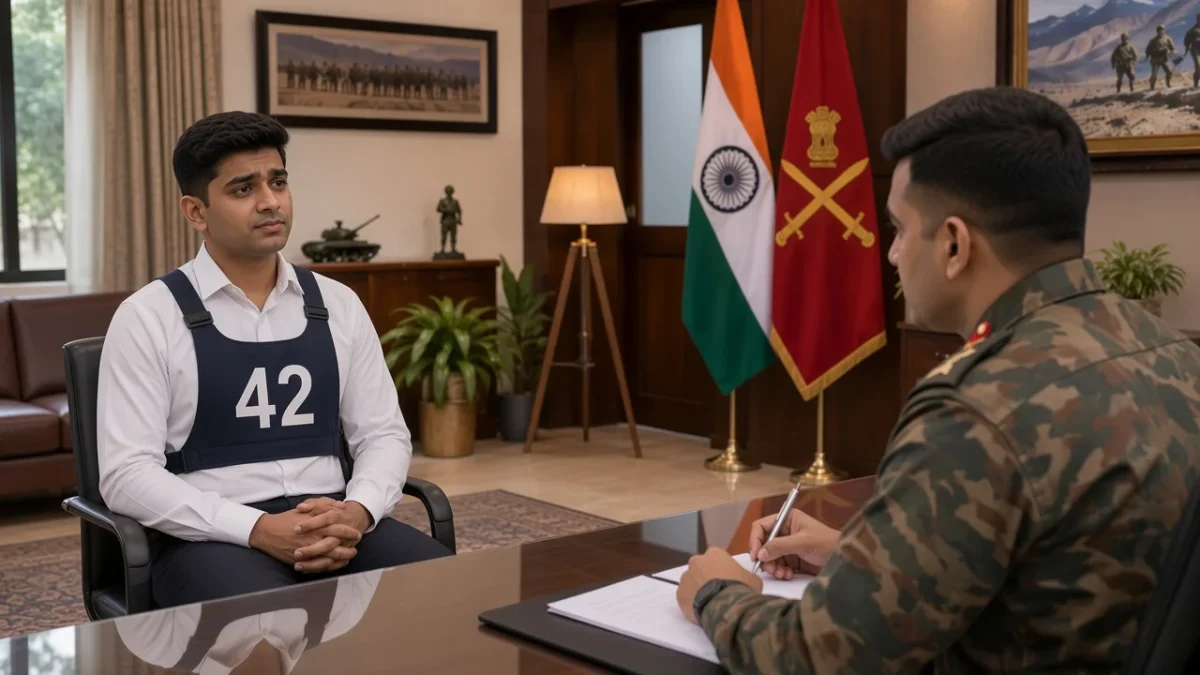
Clearing the written exam is only half the battle. For every NDA, CDS, AFCAT, TES or other officer entry, the real test is the Services Selection Board (SSB) interview: five days of testing in which a team of assessors decides whether you have the makings of an officer.
The SSB does not reject candidates for one wrong answer or one weak task. It looks at your whole personality across Stage I screening (the Officer Intelligence Rating test and the Picture Perception and Discussion Test), and Stage II: psychology tests (TAT, WAT, SRT and Self Description), Group Testing Officer (GTO) tasks, the personal interview and, finally, the conference. Three sets of assessors, the psychologist, the GTO and the Interviewing Officer, each judge you independently against the 15 Officer Like Qualities (OLQs). What matters is whether their pictures of you match.
That is why most rejections come from patterns, not single slips. Below are 10 common mistakes that lead to rejection at the SSB, where each one shows up, why it hurts and how to fix it before your call-up letter arrives.
1. Reporting Unprepared: Documents, Timings and Instructions
Where it shows up: Reporting day and documentation, before any test begins
Why it hurts: Candidates without valid documents can be returned before testing
How to fix it: Read the call-up letter line by line and pack a checked document folder
Some SSB journeys end before they begin. The call-up letter lists the documents you must carry, such as original certificates, identity proof, photographs and any entry-specific forms, along with reporting time and place. At reporting, the board completes documentation and allots chest numbers. A missing original, a mismatch in your date of birth or name, can cost you the board.
Treat the call-up letter as your first order from the Services. Make a checklist, keep originals and two sets of photocopies in one folder, confirm your train timings well in advance and carry the instructions with you.
2. Filling the PIQ Form Carelessly or Dishonestly
Where it shows up: Personal Information Questionnaire (PIQ), filled early in the process and used by every assessor
Why it hurts: The Interviewing Officer builds many questions from it; any inconsistency is exposed quickly
How to fix it: Fill it neatly, accurately and only with things you can explain in detail
The PIQ asks for your family background, education and marks, sports, hobbies, NCC, responsibilities held and previous SSB attempts. Many candidates rush through it or decorate it, writing “captain of the football team” for a one-off match or listing hobbies they have not touched in years. In the interview, the IO will ask about exactly those entries, and a vague or false answer damages your credibility for the rest of the conversation.
Practise filling a PIQ at home before you report. Note your marks in Class 10, 12 and graduation, the dates of key achievements and the exact positions you have held. A modest but truthful PIQ is far stronger than an impressive one you cannot defend.
3. Taking Stage I Screening Lightly
Where it shows up: Day 1: Officer Intelligence Rating (OIR) test and Picture Perception and Discussion Test (PPDT)
Why it hurts: Candidates not screened in are returned the same day, so there is no chance to show their strengths later
How to fix it: Practise verbal and non-verbal reasoning under time pressure and rehearse story writing and narration
Many aspirants prepare hard for the interview and GTO but treat screening as a formality. It is not. In the PPDT, a hazy picture is shown briefly, after which you write a story, narrate it to the group and then take part in a group discussion. Candidates go wrong by writing negative or confused stories, missing basic details in the picture such as the number of characters, freezing during narration, or either shouting down others or staying silent in the discussion.
Practise reasoning questions with a timer, because the OIR is fast-paced. For the PPDT, write stories with a clear hero, a realistic situation, a sensible action and a positive outcome. Narrate them aloud within the time limit. In the discussion, speak early, listen to others, include their ideas and help the group arrive at a common story.
4. Writing Memorised Stories and Responses in Psychology Tests
Where it shows up: Thematic Apperception Test (TAT), Word Association Test (WAT) and Situation Reaction Test (SRT)
Why it hurts: Projective tests are designed to reveal your natural thinking; copied templates look artificial and inconsistent
How to fix it: Practise to build speed and positive thinking, not to memorise answers
The psychology tests are tightly timed so that you respond spontaneously. A common mistake is to arrive with a stock of “ideal” stories and sentences from coaching material, then force them onto pictures or words that do not fit.
The other extreme is just as harmful: leaving many responses incomplete, writing pessimistic or careless reactions in the SRT, or showing a hero who depends on others for everything. The fix is regular, honest practice. Write TAT stories from fresh pictures, attempt full WAT and SRT sets within the time limit, and review them for realism and constructive action. Your responses should sound like a positive, practical version of you, not a textbook.
5. Projecting a Fake Image in the Self Description
Where it shows up: Self Description Test (SD), and later in the interview and conference
Why it hurts: Assessors compare what you say about yourself with what your parents, teachers and friends would say, and with your behaviour in other tests
How to fix it: Ask people who know you for honest feedback before the SSB and write a balanced description
In the SD, you write what your parents, teachers or employers, and friends think of you, what you think of yourself and the qualities you want to develop. Many aspirants write a list of perfect qualities and no weaknesses, or describe themselves very differently from how they behave in the group tasks. That gap is a red flag, because the SSB is looking for consistency between your words, your writing and your actions.
Before you report, ask your parents, a teacher and a close friend what they genuinely see as your strengths and weaknesses. Use specific, believable points, and mention areas for improvement along with what you are doing about them.
6. Dominating or Disappearing in the GTO Tasks
Where it shows up: Group Discussion, Group Planning Exercise, Progressive Group Task, Half Group Task and Final Group Task
Why it hurts: The GTO looks for cooperation, initiative and influence on the group, not loudness or silence
How to fix it: Contribute early with practical ideas, listen, support good ideas from others and keep the group moving
GTO tasks are designed so that no single candidate can finish them alone. Two opposite mistakes cause trouble. Some candidates try to dominate: they shout over others, reject every idea that is not theirs and push the group around. Others become passengers: they wait for someone else to take a decision, carry loads silently and say almost nothing in the discussions and planning exercise.
Both patterns show a lack of the social adaptability, cooperation and ability to influence the group that an officer needs. The better approach is simple: understand the task and rules, offer a workable idea quickly, accept a better plan if someone else has it, and act on it energetically. The GTO notices who makes the group better.
7. Breaking Rules and Neglecting Fitness in Individual Tasks
Where it shows up: Individual Obstacles, Command Task, Lecturette and outdoor tasks
Why it hurts: Ignoring the rules of a task or avoiding obstacles suggests poor discipline and low courage and determination
How to fix it: Learn the rules of each task, build stamina before you report and attempt everything with full effort
Outdoor GTO tasks come with rules, such as which colour-coded materials and structures may be used and which may not be touched. In the excitement of a task, candidates often break these rules, or repeat a mistake after being warned. In the individual obstacles, some candidates attempt only a few easy ones, give up after one failure or are visibly exhausted.
Start running, skipping and doing body-weight exercises like push-ups and pull-ups weeks before the SSB. During the tasks, listen carefully to the GTO’s briefing, follow the rules and attempt every obstacle you can. If you fail one, go back and try again if time allows. Effort and attitude are noticed as much as the final result.
8. Bluffing or Being Evasive in the Personal Interview
Where it shows up: Personal interview with the Interviewing Officer (IO), usually the President or Deputy President of the board
Why it hurts: The IO probes answers with follow-up questions, and a bluff often collapses within a minute
How to fix it: Answer honestly, admit what you do not know and stick to facts from your own life
The interview is a conversation about you. The IO may ask about your family, education, friends, hobbies, achievements, failures and reasons for joining, often in quick succession. Candidates hurt themselves by giving memorised speeches, exaggerating achievements, blaming others for failures or guessing confidently when they do not know an answer.
If you do not know something, say so politely. If you failed at something, explain what you learned. Prepare by reviewing the most common questions asked in the SSB Personal Interview and our golden tips for the SSB Personal Interview, but practise answering in your own words rather than learning scripts.
9. Ignoring Current Affairs, Academics and the Service You Want to Join
Where it shows up: Interview, group discussions and lecturette
Why it hurts: Weak awareness suggests low curiosity and poor preparation for a career you claim to want
How to fix it: Build a daily habit of reading news and revise your own academic subjects
Many aspirants cannot explain basic facts about the entry they have applied for, the training academy they will join, the ranks of their chosen service or major national and defence developments of recent months.
Read a reliable newspaper daily, follow official defence sources such as the Ministry of Defence and the Press Information Bureau, and note key events in a notebook. Revise the core concepts of your own subjects. Learn about your chosen service: its structure, training, roles and recent milestones.
10. Losing Steam After a Bad Task, and Freezing at the Conference
Where it shows up: Across all five days, especially after a weak performance, and at the conference on the last day
Why it hurts: The SSB judges your consistency and resilience; giving up halfway shows a lack of determination
How to fix it: Treat every task as a fresh start and stay natural, positive and honest till the end
Almost every candidate has at least one task that does not go well. The mistake is letting it affect everything that follows: becoming withdrawn in the next group task, writing hurried psychology responses or entering the interview already convinced it is over.
The conference is the final step, where the board members meet you together and discuss your performance before announcing results. Many candidates panic here, give new or contradictory answers, or change their stated motivation. Stay calm, answer briefly and honestly, and remain consistent with everything you have said and written during the week.
Conclusion
SSB rejection is rarely about a lack of intelligence. It usually comes from poor preparation for the process, inconsistency between what you write, say and do, and an attempt to be someone you are not. The 10 mistakes above, from careless documents and PIQ entries to memorised psychology answers, GTO domination, interview bluffing and losing heart after a bad task, can all be fixed with honest self-assessment and steady practice.
Prepare your documents and PIQ carefully, practise for screening, build your fitness, read the news every day and, above all, be natural. The board is looking for a future officer, not a perfect performer.
Frequently Asked Questions (FAQs)
1. Can a single bad performance lead to rejection in the SSB?
Not usually. Three sets of assessors, the psychologist, the GTO and the Interviewing Officer, evaluate you independently across several tests, and the final decision is taken at the conference. A weak moment in one task can be balanced by consistent performance elsewhere, but repeated weaknesses or inconsistency between tests are hard to overcome.
2. What happens if I am not screened in at Stage I?
Candidates who do not clear Stage I (the OIR test and PPDT) are returned the same day and do not take the Stage II tests. You can attempt the SSB again when you next qualify through an eligible entry.
3. Is it wrong to prepare answers for the SSB interview?
Preparation is necessary, but memorised scripts are a mistake. Know your PIQ, your academics, current affairs and your reasons for joining thoroughly, then answer in your own natural words. The IO is looking for genuine personality, not rehearsed speeches.
4. Do coaching templates help in TAT, WAT and SRT?
They can help you understand the format, but copying ready-made stories and sentences usually makes responses look artificial. Use practice material to build speed and positive thinking, and let your answers reflect your own thoughts and experiences.
5. Can I clear the SSB after being conferenced out?
Yes. Many recommended candidates were not selected in earlier attempts. Reflect honestly on your performance, work on specific areas such as fitness, communication or awareness, and appear again with an improved, natural approach.