




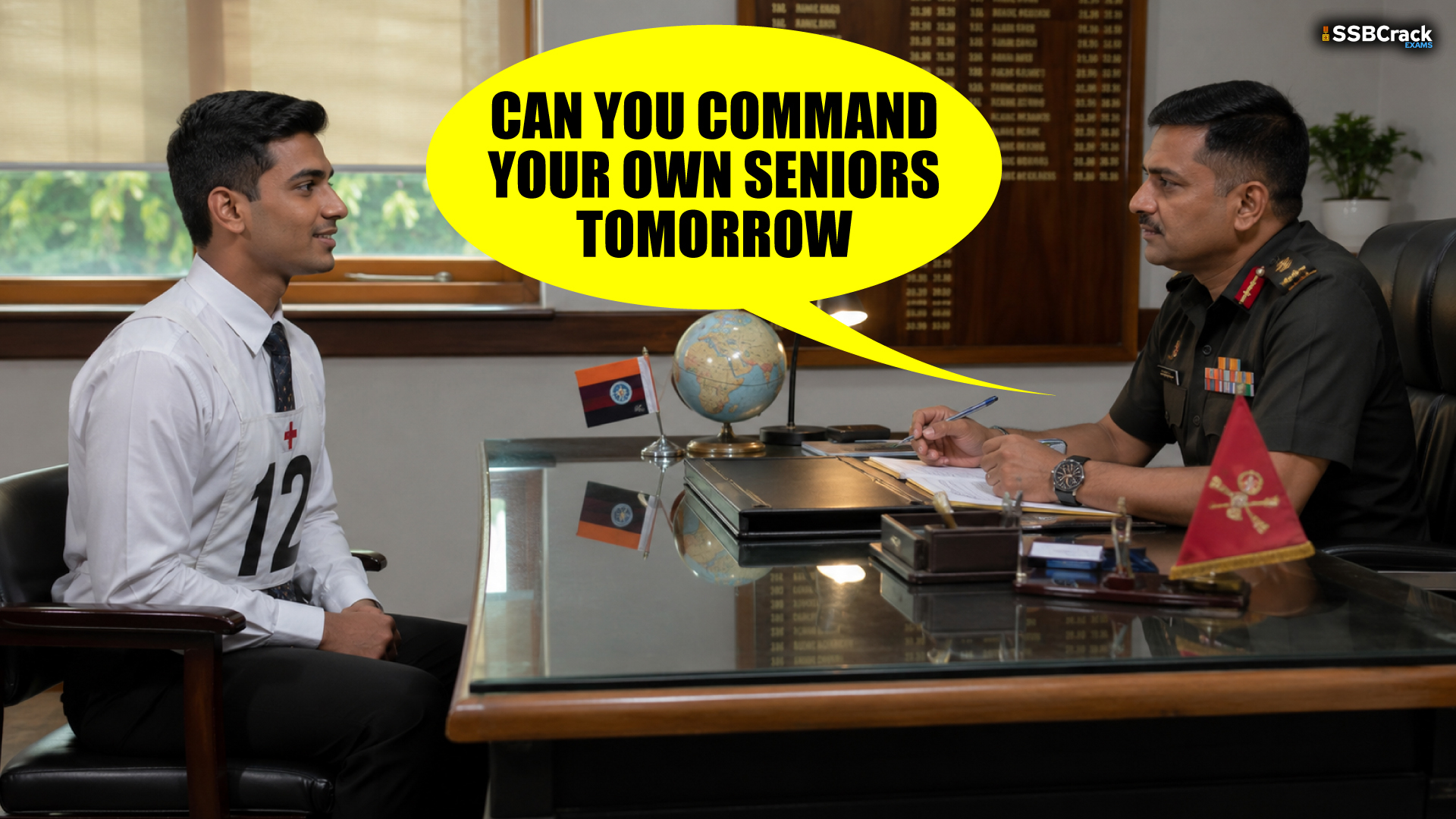
This session is exclusively designed for candidates appearing for the Army Cadet College (ACC) Entry. ACC is one of the most prestigious officer-entry schemes for serving personnel of the Indian Army. Through this entry, soldiers with leadership potential are given an opportunity to become Commissioned Officers after undergoing rigorous academic and military training.
Since ACC candidates already have experience as serving soldiers, the Interviewing Officer expects a higher level of maturity, practical understanding of military life, leadership exposure, and awareness of organizational functioning. The interview is not merely about your service record; it is about assessing whether you possess the qualities, vision, and potential required to lead men as an officer in the future.
In this session, we will discuss 20 unique and thought-provoking SSB Interview questions specifically tailored for ACC Entry candidates. Along with each question, we will understand why it is asked, how to answer it effectively, and review a sample answer.
Question 1: What is one leadership lesson you learned as a soldier that every future officer should know?
Why is it asked?
To assess leadership understanding based on practical military experience.
How to answer:
Share a genuine lesson learned through service experience.
Sample Answer:
“I learned that soldiers observe actions more than words. An officer who leads by example earns trust and respect much faster than one who relies solely on authority.”
Question 2: What is the biggest challenge a young officer faces when leading experienced soldiers?
Why is it asked?
To assess understanding of officer-subordinate relationships.
How to answer:
Discuss professionalism, competence, and trust-building.
Sample Answer:
“The biggest challenge is earning credibility. Experienced soldiers respect officers who are competent, fair, and willing to understand ground realities.”
Question 3: If you become an officer tomorrow, what is one thing you would never forget from your life as a soldier?
Why is it asked?
To assess humility and empathy.
How to answer:
Highlight lessons about troop welfare and ground realities.
Sample Answer:
“I would never forget the importance of listening to soldiers. Understanding their concerns helps build trust and improve unit effectiveness.”
Question 4: What is one policy or practice in the Army that you think can be improved?
Why is it asked?
To assess analytical thinking and organizational awareness.
How to answer:
Offer constructive suggestions respectfully.
Sample Answer:
“I believe greater use of digital systems for administrative documentation could improve efficiency and reduce paperwork in certain areas.”
Question 5: Describe a situation where you took initiative without being ordered.
Why is it asked?
To assess initiative and responsibility.
How to answer:
Explain the situation, action, and outcome.
Sample Answer:
“During a training activity, a logistical issue emerged unexpectedly. I coordinated available resources and informed my seniors while ensuring the activity continued without delay.”
Question 6: What separates an average officer from an exceptional officer?
Why is it asked?
To understand your concept of military leadership.
How to answer:
Discuss qualities beyond rank and authority.
Sample Answer:
“An exceptional officer inspires confidence, develops subordinates, remains calm under pressure, and consistently places the mission and welfare of troops above personal comfort.”
Question 7: Have you ever questioned your decision to join the Army?
Why is it asked?
To assess commitment and honesty.
How to answer:
Answer truthfully while emphasizing long-term conviction.
Sample Answer:
“There were challenging periods during field postings, but those experiences strengthened my commitment rather than weakening it.”
Question 8: What do soldiers expect most from their officers?
Why is it asked?
To assess your understanding of troop psychology.
How to answer:
Focus on fairness, competence, and concern.
Sample Answer:
“Soldiers expect officers to be competent, fair in decision-making, approachable, and willing to lead from the front.”
Question 9: If a soldier openly disagreed with your decision, how would you handle it as an officer?
Why is it asked?
To assess conflict resolution and leadership.
How to answer:
Balance authority with understanding.
Sample Answer:
“I would listen to his concerns, evaluate whether there is merit in his viewpoint, explain the reasoning behind my decision, and maintain discipline throughout the discussion.”
Question 10: Which posting or appointment taught you the most about responsibility?
Why is it asked?
To evaluate practical leadership experience.
How to answer:
Discuss a meaningful role and lessons learned.
Sample Answer:
“My appointment as section in-charge taught me the importance of accountability because I was responsible not only for my tasks but also for the performance of the team.”
Question 11: What is more difficult—obeying orders or giving orders?
Why is it asked?
To assess leadership maturity.
How to answer:
Provide a balanced explanation.
Sample Answer:
“Giving orders is more difficult because leaders must consider consequences, morale, resources, and mission success before making decisions.”
Question 12: What would you do if your troops trusted you personally but doubted your professional competence?
Why is it asked?
To assess self-awareness and growth mindset.
How to answer:
Focus on improvement and credibility.
Sample Answer:
“I would work harder to improve my professional knowledge and demonstrate competence through consistent performance while maintaining their trust.”
Question 13: What is one quality you have observed in the best officer you have served under?
Why is it asked?
To understand leadership values.
How to answer:
Use a real example.
Sample Answer:
“The best officer I served under was highly approachable. Despite his authority, he listened carefully to every soldier’s concerns and took timely action.”
Question 14: If you had to choose between mission accomplishment and troop comfort, what would you prioritize?
Why is it asked?
To assess judgment and understanding of military priorities.
How to answer:
Balance mission requirements with troop welfare.
Sample Answer:
“Mission accomplishment remains the priority, but a good leader ensures troop welfare is protected as much as possible while achieving the mission.”
Question 15: How would becoming an officer change your responsibilities toward your family and your men?
Why is it asked?
To assess maturity and understanding of responsibility.
How to answer:
Discuss both professional and personal aspects.
Sample Answer:
“My responsibilities would increase significantly. I would need to balance family commitments while taking responsibility for the welfare, training, and performance of my troops.”
Question 16: What is one lesson from military service that civilians can learn from?
Why is it asked?
To assess reflection and communication.
How to answer:
Discuss a universally valuable lesson.
Sample Answer:
“Discipline and teamwork are lessons that can benefit anyone, regardless of profession.”
Question 17: If you were asked to redesign ACC training, what would you add?
Why is it asked?
To assess innovation and vision.
How to answer:
Suggest improvements relevant to officer development.
Sample Answer:
“I would include more leadership simulation exercises involving ethical dilemmas and operational decision-making.”
Question 18: What would you do if you were selected for ACC but one of your close friends was not?
Why is it asked?
To assess emotional intelligence and maturity.
How to answer:
Show humility and empathy.
Sample Answer:
“I would encourage my friend to learn from the experience and prepare for future opportunities while remaining humble about my own success.”
Question 19: What does the word ‘commission’ mean to you beyond rank and status?
Why is it asked?
To assess depth of understanding.
How to answer:
Focus on responsibility and trust.
Sample Answer:
“A commission represents the nation’s trust in an individual to lead soldiers responsibly, ethically, and courageously.”
Question 20: Ten years after becoming an officer, how would you like your troops to remember you?
Why is it asked?
To assess values and leadership aspirations.
How to answer:
Describe the legacy you hope to leave.
Sample Answer:
“I would like my troops to remember me as a fair, competent, and dependable leader who cared for his men, upheld military values, and always led from the front.”
For ACC candidates, the SSB Interview is an opportunity to demonstrate how your journey as a soldier has prepared you for greater responsibilities as an officer. The Interviewing Officer is looking for maturity, leadership potential, sound judgment, empathy, initiative, and the ability to think beyond individual tasks toward organizational goals. Your practical military experiences are your greatest strength, but they must be presented thoughtfully and honestly.
We hope these ACC-specific questions help you prepare effectively for your upcoming SSB Interview. Reflect on your military experiences, identify the lessons they have taught you, and learn to connect those experiences with the responsibilities of an officer. Stay confident, remain humble, continue learning, and approach the selection process with determination and sincerity.
We wish you all the very best for your ACC SSB journey and your future career as a Commissioned Officer in the Indian Army.
Jai Hind!


