




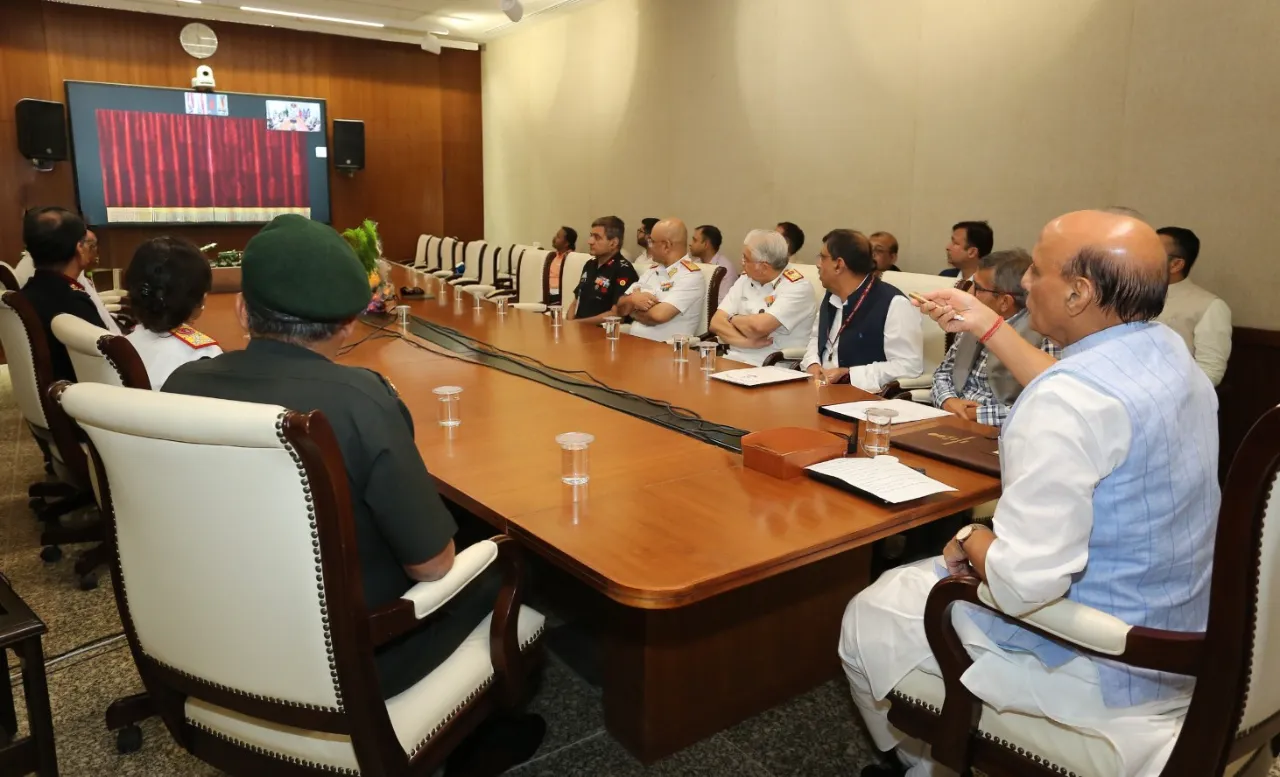
On Tuesday, the Department of Military Medicine was virtually inaugurated by Raksha Mantri Rajnath Singh at the Command Hospital (Central Command) in Lucknow. This initiative marks a significant advancement in military healthcare, establishing India’s first dedicated academic and operational department aimed specifically at military medicine. The primary goals are to elevate combat medical preparedness, foster indigenous research, devise specialized military medical doctrines, and enhance Armed Forces capabilities to tackle emerging challenges on the battlefield and in humanitarian efforts.
Under the Directorate General of Medical Services (Army), the newly established department functions as a cornerstone for bolstering the operational readiness of the Armed Forces Medical Services (AFMS). It is envisioned as a hub for research and development and aims to serve as a Centre of Excellence. The department will cultivate specialized expertise to support military operations in both conventional and non-conventional conflict scenarios, while also improving India’s disaster response skills.
In his address, Rajnath Singh underscored the importance of robust armed forces for national sovereignty and progress. He expressed strong belief that the newly founded Department of Military Medicine would greatly bolster national security by providing world-class medical support to soldiers in demanding operational environments. “The department will strengthen the confidence of our soldiers by assuring them that they will receive the best possible care and support whenever they need it,” he noted, highlighting that medical preparedness is vital for effective combat operations.
The Department of Military Medicine aims to establish itself as the principal institution for military medicine in India, offering structured education, specialized training, and postgraduate programs in various fields, including combat medicine, combat surgery, and trauma care. It will also promote localized research specific to India’s unique operational needs.
Key focus areas for the department will encompass Military Trauma and Damage Control, Combat Psychiatry and Psychological Resilience, Environmental and Operational Medicine, Military Medical Logistics, Chemical, Biological, Radiological, Nuclear and Explosive (CBRNe) Medical Response, Emergency Medicine and Critical Care, Disaster Medicine, Humanitarian Assistance, and Disaster Relief (HADR). Additional initiatives will explore innovations in emerging disciplines such as technology-enhanced battlefield medicine, telemedicine, and AI-driven medical decision-making systems.
Singh pointed out that military medicine plays a crucial role in contemporary security, especially as soldiers often operate under extreme conditions. Drawing parallels with aerospace medicine, he explained that military medicine focuses on understanding the physical and psychological impacts of warfare and operational deployments, leading to the formulation of tailored medical protocols for diverse scenarios.
Additionally, he noted the continuing threats posed by weapons of mass destruction, affirming that the new department will act as a significant R&D hub equipped to prepare the nation to confront emerging challenges from rapid technological changes and evolving warfare.
The phased development plan for the department begins with establishing academic programs and infrastructure, planning subsequent enhancements to include Centers of Excellence for Humanitarian Assistance and Disaster Relief and CBRNe Medicine. Eventually, this initiative aims to achieve national and international recognition in military medicine and battlefield healthcare research.
Rajnath Singh emphasized India’s expanding global role in humanitarian efforts, highlighting the country’s position as a leading contributor to United Nations peacekeeping missions. He asserted that the Department of Military Medicine would enhance expertise in disaster response, field hospital deployment, epidemic management, and mass casualty care, thereby reinforcing both national and international humanitarian operations.
The Minister also addressed the significance of preventive healthcare, advocating for a strong framework focusing on various health aspects such as disease surveillance, immunization, and sanitation among military personnel. He proposed the integration of advanced technologies like AI and health-monitoring devices for real-time soldier health assessments.
Furthermore, the establishment of the department is anticipated to attract young doctors to the Army Medical Corps, providing opportunities for specialized education in military medicine. This initiative aims to not only strengthen the intellectual foundation of the Armed Forces but also elevate India’s status in the realm of global military medical research.
The Department of Military Medicine will serve as a critical training venue for Army Medical Corps officers, particularly in areas like battlefield nursing and operational medicine, ensuring readiness to provide specialized medical care in combat settings.
Concluding the event, Rajnath Singh hailed the establishment of the department as a transformative step in India’s military healthcare landscape. He called for collaborative efforts from all stakeholders to shape it into a premier Battlefield Medicine Research Centre, capable of addressing future needs of the Indian Armed Forces.
The inauguration was attended by several high-ranking officials, including the Chief of the Army Staff, General Dhiraj Seth, and other senior military and government representatives. This initiative aligns with the Indian government’s vision for enhancing indigenous capabilities, fortifying defense preparedness, and redefining the Armed Forces Medical Services to be more modern and operationally adept.


